

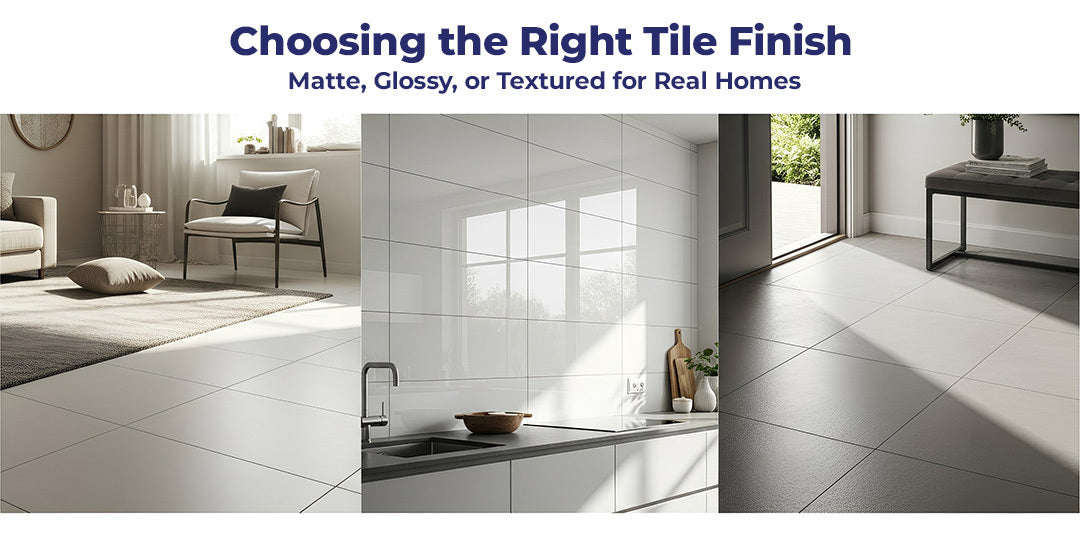
When homeowners choose tile, the conversation often starts with color or size. But one factor quietly shapes how a space looks, feels, and performs over time: tile finish. Matte, glossy, and textured finishes behave very differently once installed in a real home with foot traffic, moisture, pets, and daily wear.
A finish that looks perfect under showroom lighting can feel slippery, show constant marks, or require more maintenance than expected. On the other hand, choosing the right finish for the right space can improve safety, simplify cleaning, and help a room age better over time.
This guide breaks down matte, glossy, and textured tile finishes in practical terms. You’ll learn how each finish performs in kitchens, bathrooms, living areas, entryways, and other high-use spaces. Whether you’re planning a small renovation or selecting tile for an entire home, this article will help you make a finish choice that works beyond first impressions.
Why Tile Finish Matters More Than You Think
Tile finish affects more than appearance. It influences how light reflects, how safe the surface feels underfoot, and how visible dirt, water spots, and wear become over time.
In real homes, finish choice impacts:
- Slip resistance, especially in wet areas.
- How often is cleaning needed.
- Whether footprints, smudges, and streaks are visible.
- How light interacts with the surface.
- Long-term comfort and usability.
For families, pet owners, and busy households, these factors often matter more than aesthetics alone. Floors Center regularly helps customers who love the look of a tile sample but want reassurance that it will work for daily life.
Understanding the Three Main Tile Finishes

Most residential tile falls into one of three finish categories: matte, glossy, or textured. Each serves a purpose, and none is universally “better.” The right choice depends on where and how the tile will be used.
Matte Tile Finish: Practical, Balanced, and Low-Glare
Matte tile has a soft, non-reflective surface that absorbs light instead of bouncing it back. This creates a calm, grounded appearance that works well in modern and transitional interiors.
How Matte Tile Performs in Real Homes
Matte finishes do an excellent job of hiding dust, minor scuffs, and water spots. This makes them a practical option for high-traffic areas where constant cleaning isn’t realistic. Matte tiles also provide better traction than glossy surfaces, which is important in kitchens, bathrooms, and entryways.
Because matte tile doesn’t reflect light aggressively, it creates a more even visual field across large floor areas. This helps reduce glare and makes spaces feel more comfortable throughout the day.
Best Uses for Matte Tile
- Kitchen floors.
- Living rooms and open floor plans.
- Hallways and entryways.
- Bathroom floors.
- Bedrooms.
Matte porcelain tile flooring is one of the most common choices Floors Center customers select for busy households because it balances durability with everyday comfort.
What to Keep in Mind
Lighter matte tiles can absorb stains if spills are left unattended. Choosing quality porcelain or properly glazed ceramic tile helps minimize this risk and improves long-term performance.
Glossy Tile Finish: Bright, Reflective, and Clean-Looking
Glossy tile has a smooth, polished surface that reflects light. It’s often chosen to brighten smaller spaces or add contrast to neutral designs.
How Glossy Tile Performs in Real Homes
Glossy tile reflects natural and artificial light, which can make compact rooms feel larger and more open. The smooth surface resists staining and is easy to wipe clean, making it a popular option for walls.
However, glossy finishes can become slippery when wet, which limits where they should be used on floors.
Best Uses for Glossy Tile
- Kitchen backsplashes.
- Bathroom wall tile.
- Shower walls.
- Feature walls.
- Accent areas.
Glossy ceramic and porcelain tiles are frequently used vertically rather than on floors. Floors Center often recommends glossy finishes for walls when customers want brightness without compromising floor safety.
What to Keep in Mind
Glossy tile shows water spots, streaks, and fingerprints more easily. In homes with hard water or frequent splashing, this can mean more frequent cleaning to maintain a uniform look.
Textured Tile Finish: Grip, Depth, and Real-World Safety
Textured tile includes surfaces with raised patterns, grain, or stone-like variation. These finishes are designed to add traction and visual depth.
How Textured Tile Performs in Real Homes
Textured tile provides increased grip, making it especially useful in wet or transitional areas. Many stone-look porcelain tiles and natural stone tiles fall into this category.
Textured finishes also help disguise dirt and wear, which is useful in entryways or spaces exposed to outdoor elements.
Best Uses for Textured Tile
- Bathroom floors.
- Shower floors.
- Entryways and mudrooms.
- Outdoor areas.
- Commercial or high-traffic residential spaces.
Porcelain pavers and textured floor tiles are commonly selected at Floors Center for homes that need added slip resistance without sacrificing durability.
What to Keep in Mind
Textured surfaces can hold debris more easily than smooth tiles. Regular sweeping and proper cleaning tools help keep these surfaces looking consistent.
Choosing the Right Tile Finish by Room

Kitchen Floors
Kitchens experience spills, foot traffic, and temperature changes. Matte or lightly textured porcelain tile flooring works best here. These finishes provide traction and hide minor messes better than glossy surfaces.
Glossy tile is better reserved for kitchen backsplashes, where it’s easy to clean and adds light without slip concerns.
Bathrooms
Bathrooms require careful finish selection. For floors, matte or textured tile improves safety in wet conditions. For walls and shower surrounds, glossy tile works well because it reflects light and resists moisture staining.
Many homeowners mix finishes, matte floors with glossy walls to balance function and appearance.
Living Rooms and Open Spaces
In living areas, matte tile creates a natural, comfortable look that works well with different lighting conditions. Large-format matte porcelain tiles are popular for open layouts because they reduce glare and create visual continuity.
Entryways and Mudrooms
These spaces handle dirt, moisture, and frequent use. Textured or matte finishes are the most practical choice, providing traction and minimizing visible wear.
Outdoor Areas
Outdoor tile must withstand moisture, temperature changes, and foot traffic. Textured porcelain pavers are the preferred option for patios, walkways, and covered outdoor spaces.
Maintenance Differences Between Tile Finishes
Each finish comes with different maintenance expectations:
- Matte tile hides dust well but benefits from prompt spill cleanup.
- Glossy tile wipes clean easily but shows streaks and water spots.
- Textured tile may require extra attention during cleaning to remove debris from surface variations.
Using tile-appropriate cleaners and maintaining grout properly helps preserve any finish over time.
Slip Resistance and Safety Considerations
Slip resistance is a major factor when selecting tile finishes for floors. Matte and textured tiles generally provide better traction than glossy finishes, especially in wet areas.
This is particularly important for:
- Bathrooms.
- Kitchens.
- Entryways.
- Homes with children or older adults.
Floors Center often helps customers compare tile options based on slip resistance when safety is a priority.
How Lighting Impacts Tile Finish Selection
Lighting changes how tile finishes appear once installed:
- Glossy finishes amplify light and can highlight surface imperfections.
- Matte finishes soften light and reduce glare.
- Textured finishes create shadows and depth under directional lighting.
Considering both natural daylight and artificial lighting helps ensure the tile looks consistent throughout the day.
Mixing Tile Finishes for Better Results
Many homeowners successfully mix finishes within the same room. Examples include:
- Matte floor tiles with glossy wall tiles in bathrooms.
- Textured shower floors paired with smooth wall tiles.
- Matte main floors with glossy accent walls.
This approach improves safety and functionality without sacrificing visual interest.
How Floors Center Helps You Choose the Right Tile Finish
Floors Center offers a wide selection of floor tiles, wall tiles, porcelain tile flooring, ceramic tile flooring, natural stone tiles, and porcelain pavers designed for real-world use.
Customers benefit from:
- Clear product specifications.
- Guidance for kitchens, bathrooms, living areas, and outdoor spaces.
- Options for both residential and commercial projects.
- Nationwide delivery within the U.S.
- Support for homeowners, designers, and contractors.
Whether you’re selecting matte floor tiles for a busy home, glossy wall tiles for a backsplash, or textured tiles for added safety, Floors Center helps you choose finishes that perform well over time.
Conclusion
Tile finish plays a critical role in how a space functions day to day. Matte finishes offer balance and practicality, glossy finishes bring brightness and clean lines, and textured finishes provide grip and durability where safety matters most.
There is no single finish that works everywhere. The best choice depends on room function, moisture exposure, lighting, and lifestyle needs.
By understanding how matte, glossy, and textured tiles behave in real homes, you can make informed decisions that hold up long after installation. With a broad selection and expert support, Floors Center makes it easier to choose tile finishes that match both design goals and everyday living.
FAQs
Q) Is matte tile better than glossy for floors?
A) Yes. Matte tile generally provides better traction and hides dust and water spots, making it more practical for most floors.
Q) Can glossy tile be used on floors?
A) Glossy tile can be used in low-traffic or dry areas, but it’s more commonly recommended for walls due to slip concerns.
Q) Is textured tile harder to clean?
A) Textured tile may require slightly more effort to clean, but regular maintenance keeps it looking consistent.
Q) What tile finish works best in bathrooms?
A) Matte or textured tile is best for bathroom floors, while glossy tile works well on walls and shower surrounds.
Q) Can I mix different tile finishes in one space?
A) Yes. Mixing finishes is common and often improves both safety and visual balance.
1 comment
Bathroom Remodeling Portland OR
Great guide for choosing the right tile finish! Matte, glossy, and textured options each bring a different look and feel, so considering your space, maintenance needs, and lifestyle can help you find the perfect fit. https://www.bathroomremodelportland.com/