

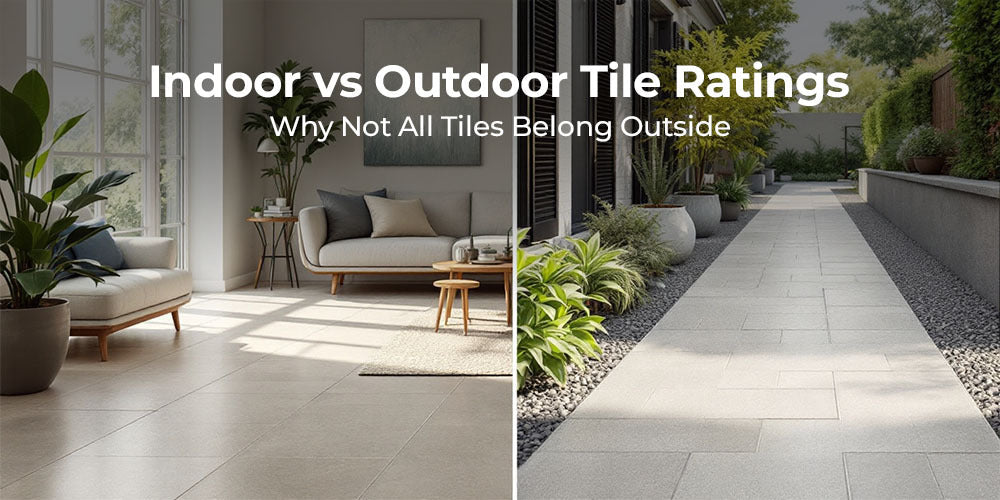
Tile is often seen as one of the most reliable surface materials for both homes and commercial spaces. Because tile is hard, water-resistant, and easy to clean, many homeowners assume that any tile can be used anywhere, including patios, porches, and outdoor walkways. This assumption leads to one of the most common and costly flooring mistakes: installing indoor-rated tile outdoors.
Indoor and outdoor tiles are engineered differently. Their ratings, density, surface texture, and performance expectations vary based on where they are meant to be installed. When tile is used outside without the proper rating, it can crack, become slippery, discolor, or fail completely.
This guide explains why indoor and outdoor tile ratings matter, how to read those ratings correctly, and how to choose tile that performs safely and reliably in exterior environments.
Why Tile Ratings Exist in the First Place
Tile ratings are not marketing labels. They are performance indicators based on how a tile reacts to real-world conditions such as moisture, temperature changes, foot traffic, and surface wear.
Manufacturers test tile to determine:
- Water absorption.
- Density and strength.
- Slip resistance.
- Wear resistance.
- Resistance to freeze-thaw cycles.
These results determine whether a tile is suitable for interior floors, walls, light outdoor use, or heavy exterior conditions.
The Core Difference Between Indoor and Outdoor Tile
The biggest difference between indoor and outdoor tile comes down to environmental exposure.
Indoor tile is designed for:
- Controlled temperatures.
- Minimal moisture exposure.
- Stable subfloors.
- Foot traffic without weather stress.
Outdoor tile must handle:
- Rain, snow, and ice.
- Direct sunlight and UV exposure.
- Heat expansion and cold contraction.
- Freeze-thaw cycles.
- Higher slip-resistance requirements
A tile that performs perfectly inside may fail quickly outside if it lacks the correct rating.
Understanding Water Absorption Ratings

Water absorption is one of the most critical factors when determining whether tile belongs outdoors.
High Absorption Tiles
Tiles with higher water absorption rates can soak up moisture. Indoors, this is usually not a problem. Outdoors, absorbed water can freeze, expand, and crack the tile.
Low Absorption Tiles
Outdoor tiles must have very low water absorption, which prevents moisture from penetrating the body of the tile.
Porcelain tile is often used outdoors because it has a much lower absorption rate than most ceramic tiles.
Freeze-Thaw Resistance: A Non-Negotiable Requirement
In many parts of the U.S., outdoor surfaces experience repeated freezing and thawing. This cycle places extreme stress on the tile.
When indoor tile is exposed to freeze-thaw conditions:
- Moisture enters the tile body.
- Freezing causes expansion.
- Thawing creates internal stress.
- Cracks or delamination occur over time.
Outdoor-rated tile is tested specifically for freeze-thaw resistance, making it suitable for patios, walkways, and exterior steps.
Slip Resistance and Safety Considerations

Slip resistance is another major distinction between indoor and outdoor tile.
Indoor tile often prioritizes:
- Smooth finishes.
- Easy cleaning.
- Visual consistency.
Outdoor tile must prioritize:
- Traction when wet.
- Textured or structured surfaces.
- Reduced slip risk in rain or snow.
Tiles designed only for indoor use can become dangerously slippery outdoors, especially near pools, entryways, or covered patios.
PEI Ratings and Why They Matter Outdoors
PEI (Porcelain Enamel Institute) ratings measure a tile’s resistance to surface wear.
- Low PEI ratings are suitable for walls or light foot traffic.
- Higher PEI ratings are designed for heavy residential or commercial use.
Outdoor areas often experience:
- Dirt and grit tracked from outside.
- Footwear with abrasive debris.
- Greater surface wear over time.
Using a tile with an insufficient PEI rating outdoors leads to premature surface wear and loss of finish.
Indoor Tile Types and Their Limitations Outdoors

Ceramic Tile
Ceramic tile is widely used indoors for kitchens, bathrooms, and walls. However, most ceramic tiles:
- Have higher water absorption.
- Are not freeze-thaw rated.
- Are not slip-resistant enough for exterior use.
Ceramic tile generally does not belong outdoors unless explicitly rated for exterior conditions.
Porcelain Tile
Glossy porcelain tile may look durable, but its smooth surface is often unsuitable for outdoor floors. While the tile body may resist moisture, the surface finish can become slippery when wet.
Glossy porcelain is better suited for:
- Indoor floors.
- Walls.
- Covered, low-traffic areas.
What Makes Outdoor Tile Different
Outdoor tile is engineered with performance as the priority.
Key characteristics include:
- Dense tile bodies.
- Low water absorption.
- Textured or anti-slip surfaces.
- Resistance to UV fading.
- Tested freeze-thaw durability.
These features allow outdoor tile to maintain its integrity across seasons.
Porcelain Pavers: A Common Outdoor Solution
Porcelain pavers are specifically designed for exterior environments. Compared to standard tile, they are:
- Thicker.
- Heavier.
- More impact-resistant.
They are often used for:
- Patios.
- Walkways.
- Rooftop terraces.
- Pool surrounds.
Porcelain pavers are one of the safest and most reliable outdoor tile options available.
Indoor vs Outdoor Tile for Walls
Not all exterior tile applications are floors. Walls also require proper ratings.
Exterior wall tile must withstand:
- Moisture exposure.
- Temperature changes.
- UV light.
Some indoor wall tiles may work outdoors in protected areas, but this should always be confirmed by the manufacturer's specifications.
Substrate and Installation Play a Major Role
Even properly rated outdoor tile can fail if installed incorrectly.
Outdoor installations require:
- Proper drainage.
- Expansion joints.
- Weather-appropriate adhesives.
- Frost-resistant mortar and grout.
Indoor installation methods often do not account for these conditions.
Why Using Indoor Tile Outdoors Leads to Failure
Common problems caused by incorrect tile selection include:
- Cracked or popped tiles.
- Loose tiles after seasonal changes.
- Staining and discoloration.
- Slippery surfaces.
- Costly replacement projects.
These issues are preventable by choosing the correct tile rating from the start.
How to Read Tile Labels and Specifications?
When selecting tile, always check:
- Intended use (indoor vs outdoor).
- Water absorption rating.
- Freeze-thaw resistance.
- Slip resistance classification.
- PEI rating for floors.
Product descriptions alone are not enough, technical specifications matter.
Regional Climate Considerations
Outdoor tile performance varies by region.
- Cold climates require freeze-thaw-rated tile.
- Humid regions require low absorption materials.
- Hot, sunny areas require UV-stable finishes.
Choosing tile based on local climate improves longevity and safety.
Commercial vs Residential Outdoor Tile
Commercial outdoor spaces experience:
- Higher foot traffic.
- Greater wear.
- Stricter safety requirements.
Tiles rated for commercial outdoor use are built to withstand heavier loads and continuous exposure.
How Floors Center Helps You Choose the Right Tile
Floors Center offers a wide range of tile options for both indoor and outdoor applications. By providing access to porcelain tile, outdoor-rated tile, and porcelain pavers, Floors Center helps customers select materials that match their installation environment.
With clear specifications and product categories, homeowners and contractors can make informed decisions and avoid misusing tile in areas it was not designed for.
Conclusion
Not all tiles are created for the same conditions. Indoor tile and outdoor tile differ in density, water absorption, slip resistance, and durability. Installing tile outside without the proper rating often leads to cracking, safety issues, and early failure.
Understanding tile ratings helps ensure surfaces remain safe, functional, and visually consistent over time. Whether planning a patio, entryway, or interior floor, choosing tile based on performance, not appearance alone, is essential.
Making the right choice upfront saves time, money, and frustration later.