

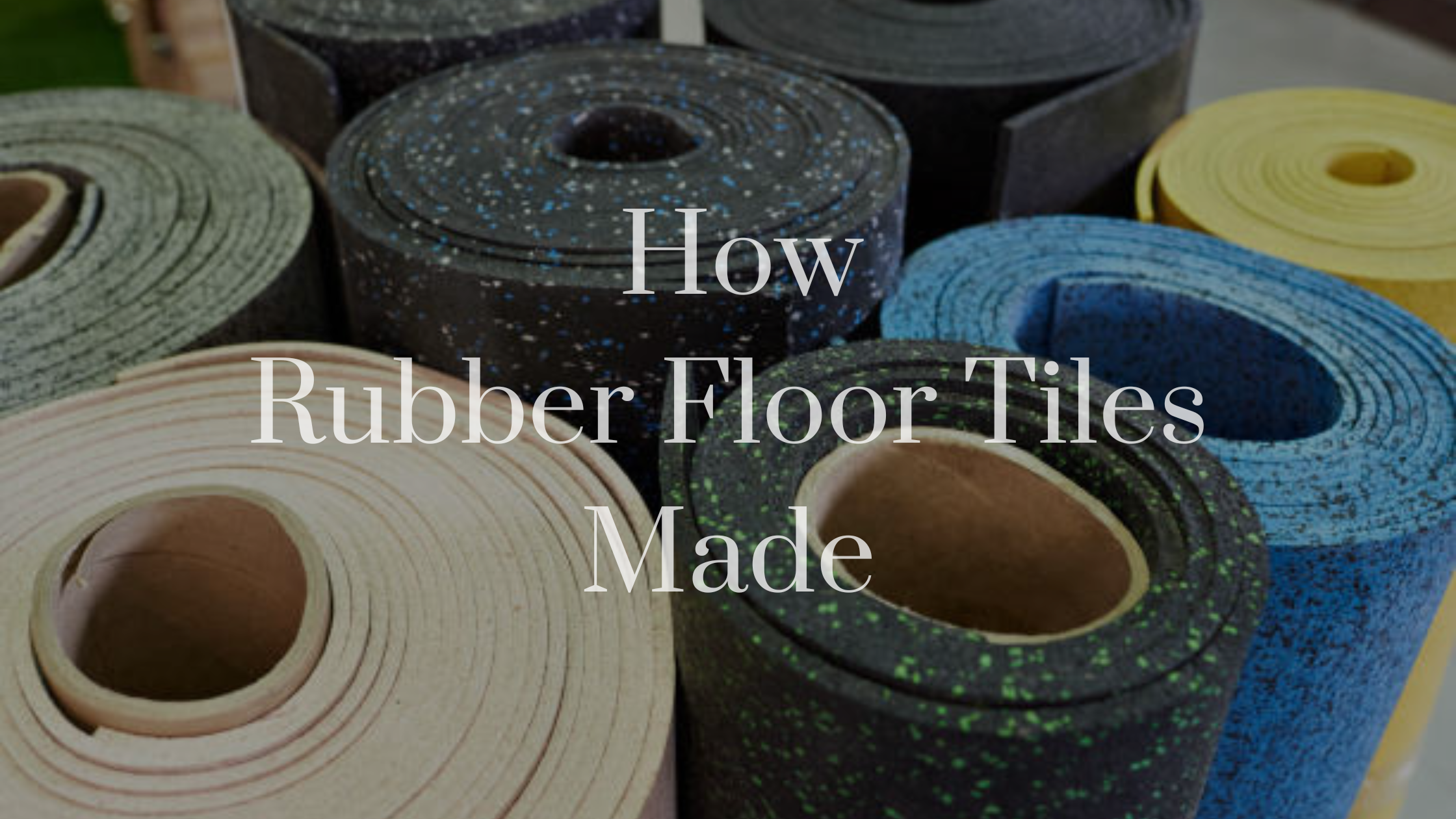
Rubber floor tiles show up in places where flooring takes constant impact, including commercial gyms, playgrounds, garages, and even basements. These rubber tiles, along with rubber mats and rolls, are expected to absorb shock, handle moisture, and stay stable under heavy use. That level of performance comes from how rubber flooring is processed, bonded, and cured during manufacturing.
Materials Used in Rubber Floor Tiles
The base of rubber tiles comes from natural rubber, synthetic rubber, or recycled rubber, depending on where and how the rubber flooring will be used.
Natural Rubber: Sourced from rubber tree sap, known for its flexibility and tensile strength. It performs well where resilience and elasticity matter.
Synthetic Rubber: Produced from petroleum-based compounds. It holds up better in environments exposed to chemicals, moisture, or temperature variation.
Recycled Rubber: Commonly made from shredded tire rubber (crumb rubber). It’s widely used in rubber floor tiles, mats, and rolls because it delivers durability while reusing waste material.
Along with rubber, manufacturers add binders, pigments, and performance additives. These control color, surface texture, UV resistance, and how the rubber tile reacts to wear over time.
Step-by-Step Process of Making Rubber Flooring
1. Material Preparation
The rubber is cleaned and processed into uniform granules. In recycled rubber flooring, this step removes steel, fibers, and debris from tire material. Consistent granule size is important. It affects density, surface finish, and overall strength of the final rubber floor tiles.
2. Mixing and Binding
The granules are blended with polyurethane-based binders. This binder is what locks the rubber flooring material together. Pigments are added at this stage for color, while additives improve resistance to UV exposure, moisture, and heavy traffic across rubber tiles, mats, and rolls.
3. Molding and Pressing
The mixture is placed into molds based on the required size and thickness. For rubber floor tiles, this step defines shape and edge precision, while for rubber rolls and mats, the material is formed into continuous or larger formats. These molds are subjected to high pressure and heat. The pressure compacts the material, while heat activates the binder, forming a dense, stable rubber floor.
4. Cooling and Curing
After pressing, the rubber tiles are cooled and left to cure. This step stabilizes the shape and strengthens the internal bond. Proper curing is what prevents rubber flooring from warping, cracking, or breaking down under long-term use.
5. Surface Finishing and Quality Inspection
Some rubber floor tiles and mats receive surface texturing to improve grip, especially for wet or high-traffic areas. Each rubber tile is then trimmed and checked for thickness consistency, density, and surface quality before being packaged.
Why Rubber Flooring Is a Popular Choice
Rubber flooring, whether in the form of floor tiles, mats, or rolls, is used in environments where standard flooring would fail under stress.
- Gym flooring absorbs the impact of dropped weights and reduces strain on joints.
- Playground surfaces provide cushioning to reduce injury risk from falls.
- Commercial spaces handle constant foot traffic without wearing down quickly.
- Garage and basement floors resist water, oil, and temperature fluctuations.
Each of these uses ties back to how the rubber tile or rubber floor is manufactured. Density, bonding strength, and surface design all play a role.
What Affects the Quality of Rubber Floor Tiles?
Not all rubber floor tiles perform the same. The differences usually come from how the material is processed rather than just the type of rubber used.
One of the biggest factors is binder quality. High-grade polyurethane binders create a stronger internal bond, helping the rubber tile hold its shape under pressure. Lower-quality binders can lead to crumbling or surface breakdown over time.
Density also plays a major role. Rubber floor tiles made with well-compacted, uniform granules tend to last longer and feel more stable underfoot. Low-density rubber flooring may feel softer at first, but it wears out faster, especially in high-traffic areas.
The curing process is another critical step. Properly cured rubber tiles maintain their structure and resist warping. If curing is rushed or inconsistent, the rubber floor may lose shape or develop weak spots.
Finally, the quality of raw material, especially in recycled rubber, affects consistency. Clean, well-processed crumb rubber creates more reliable rubber tiles, mats, and rolls, while poorly processed material can lead to uneven texture and reduced durability.
These factors are not always visible at first glance, but they determine how the rubber flooring performs over time.
Final Thoughts
Rubber floor tiles are not just molded sheets of material. Their performance comes from controlled processing: clean raw material, proper binding, high-pressure molding, and accurate curing. Whether in the form of rubber tiles, mats, or rolls, when these steps are done right, the result is a rubber floor that holds up for years under conditions that would wear out most other surfaces.
FAQs
Q) What are rubber floor tiles made of?
A) Rubber floor tiles are typically made from natural rubber, synthetic rubber, or recycled rubber, often combined with polyurethane binders, pigments, and performance additives.
Q) What is the difference between rubber tiles, mats, and rolls?
A) Rubber tiles are individual pieces that fit together, mats are smaller and often used for targeted areas, and rolls are large, continuous sheets used for covering bigger spaces with fewer seams.
Q) Why are recycled materials used in rubber flooring?
A) Recycled rubber, often from old tires, is widely used because it offers strong durability while reducing environmental waste. It also helps maintain performance in high-impact areas like gyms and playgrounds.
Q) What makes rubber floor tiles durable?
A) Durability depends on factors like binder quality, density, and the curing process. Properly manufactured rubber tiles resist impact, moisture, and heavy foot traffic without breaking down quickly.
Q) How long do rubber floor tiles last?
A) With proper installation and basic maintenance, quality rubber floor tiles can last 10–20 years or more in residential or light commercial use. Lifespan depends on density, binder quality, curing, and how much heavy traffic or impact the flooring receives