

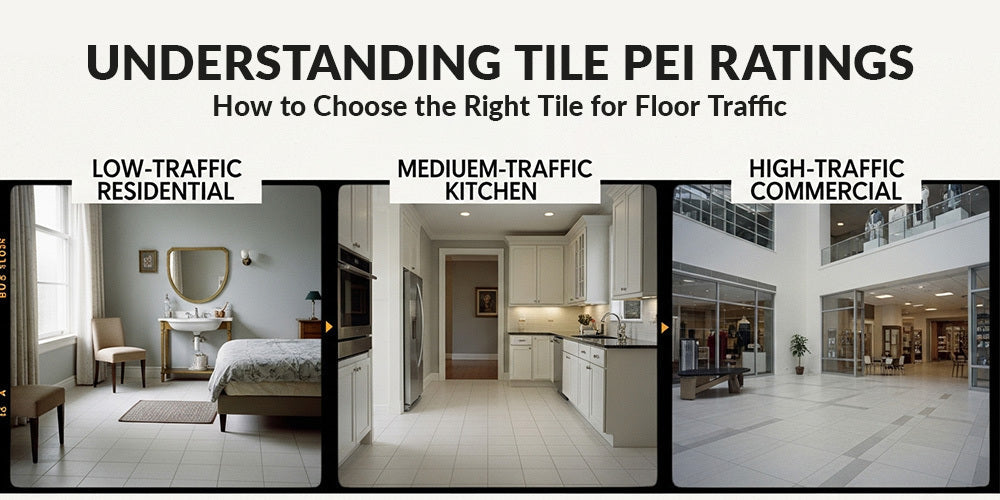
When selecting tile, most buyers focus on color, size, or finish. But one technical detail often overlooked plays a major role in how a tile performs over time: the PEI rating. Choosing a tile without understanding its PEI rating can lead to premature wear, surface scratching, and costly replacements, especially in high-traffic areas.
PEI ratings help determine how well a tile surface withstands abrasion from foot traffic. Whether you’re choosing tile for a bathroom, kitchen, hallway, or commercial space, understanding PEI ratings allows you to match the tile to real-world use instead of relying on appearance alone.
This guide explains what tile PEI ratings mean, how they apply to residential and commercial floors, and how to select the right rating based on traffic levels.
What Is a Tile PEI Rating?
PEI stands for Porcelain Enamel Institute, the organization that developed the abrasion rating system used for glazed tile. A tile’s PEI rating measures how resistant its glazed surface is to wear caused by foot traffic.
It’s important to note that:
- PEI ratings apply only to glazed tiles.
- They measure surface wear, not structural strength.
- Unglazed porcelain tiles do not use PEI ratings.
In simple terms, the PEI rating tells you how much traffic a tile can handle before its surface shows visible wear.
Why PEI Ratings Matter for Floor Traffic

Every floor experiences friction. Shoes, dirt, sand, pets, and furniture movement all contribute to surface abrasion. Over time, low-rated tiles in high-traffic areas lose their finish, appear dull, or show visible scratches.
Matching PEI ratings to traffic levels helps ensure:
- Longer-lasting appearance.
- Reduced maintenance issues.
- Better resale value.
- Fewer replacements.
For contractors and property owners, PEI ratings are a practical tool to prevent flooring failures.
The Tile PEI Rating Scale Explained

PEI 0
- Not suitable for floors.
- Designed for wall use only.
Common uses:
- Wall tiles.
- Backsplashes.
- Shower walls.
Never install PEI 0 tiles on floors.
PEI 1
- Very light traffic.
- Barefoot or soft footwear only.
Best for:
- Bathroom walls.
- Decorative wall applications.
PEI 1 tiles should not be used on floors.
PEI 2
- Light residential traffic.
Suitable for:
- Bathroom floors.
- Low-traffic bedrooms.
Not recommended for kitchens or entryways.
PEI 3
- Moderate residential traffic.
Ideal for:
- Living rooms.
- Hallways.
- Kitchens with moderate use.
This is a common choice for general home flooring.
PEI 4
- Heavy residential traffic.
- Light commercial use.
Best for:
- Kitchens.
- Entryways.
- Retail spaces.
- Offices.
PEI 4 tiles offer strong long-term performance.
PEI 5
- Heavy commercial traffic.
Designed for:
- Shopping centers.
- Restaurants.
- Airports.
- Public buildings.
PEI 5 tiles are built for maximum abrasion resistance.
Choosing the Right PEI Rating by Room
Bathrooms
Bathrooms typically require PEI 2 or PEI 3 tiles for floors. Moisture resistance and slip rating are also important factors.
🔗https://floorscenter.com/collections/bathroom-tile
Kitchens
Kitchens experience constant foot traffic, spills, and debris. PEI 3 or PEI 4 tiles perform best here.
🔗https://floorscenter.com/collections/kitchen-tile
Living Rooms & Hallways
Moderate to high traffic makes PEI 3 or PEI 4 the safest choice.
🔗https://floorscenter.com/collections/living-room-flooring
Entryways
These are high-impact zones exposed to dirt and grit. PEI 4 is strongly recommended.
Commercial Spaces
Retail stores, offices, and restaurants generally require PEI 4 or PEI 5 tile, depending on traffic volume. In areas such as Washington, DC, tracked-in dirt, rain, and winter deicing materials can increase surface wear. Consulting a commercial flooring company in DC can help property owners select the appropriate rating based on the conditions and traffic level of each space.
PEI Ratings vs Other Tile Performance Factors
PEI ratings are important, but they are only one part of tile selection.
Slip Resistance
A high PEI rating does not guarantee slip resistance. Bathrooms and wet areas need appropriate slip ratings.
Porcelain vs Ceramic
Porcelain tile flooring generally outperforms ceramic tile flooring in durability and moisture resistance.
Tile Thickness
Thicker tiles may handle impact better, but still need the correct PEI rating for surface wear.
Common Tile Mistakes Caused by Ignoring PEI Ratings
Many flooring issues happen because PEI ratings weren’t considered.
Common mistakes include:
- Installing wall tiles on floors.
- Using low-PEI tile in kitchens.
- Choosing glossy tiles for high-traffic zones.
- Prioritizing appearance over performance.
These mistakes often result in surface damage within a few years.
How Contractors Use PEI Ratings
Contractors rely on PEI ratings to:
- Match tile to traffic load.
- Meet commercial standards.
- Reduce callbacks.
- Protect warranties.
In offices, shops, and restaurants, PEI ratings are often required to meet performance expectations.
How Floors Center Helps You Choose the Right Tile
Floors Center offers a wide range of floor tiles, wall tiles, porcelain tile flooring, ceramic tile flooring, and commercial-grade options with clear specifications.
Customers benefit from:
- Tile options for residential and commercial use.
- Guidance based on traffic level.
- Consistent availability across categories.
- Nationwide delivery.
By clearly organizing tiles by application, Floors Center helps buyers choose tiles that perform as expected long after installation.
Conclusion
PEI ratings are one of the most important yet overlooked factors in tile selection. Choosing the right PEI rating ensures your tile floor maintains its appearance and performance under real-world traffic conditions.
By matching traffic level to tile rating and considering room use, slip resistance, and material type, you avoid costly mistakes and extend the life of your flooring investment.
With the right information and the right supplier, selecting the correct tile becomes a confident decision rather than a guess.
FAQs
Q) Can PEI 3 tile be used in kitchens?
A) Yes, for moderate use. Heavy-use kitchens benefit from PEI 4.
Q) Is the PEI rating important for wall tiles?
A) No. PEI ratings apply only to floor use.
Q) Are porcelain tiles always PEI 5?
A) No. Only glazed porcelain tiles receive PEI ratings.
Q) What PEI rating is best for commercial floors?
A) PEI 4 or PEI 5, depending on traffic level.
Q) Can I ignore PEI ratings if the tile is thick?
A) No. Thickness does not replace surface wear resistance.