

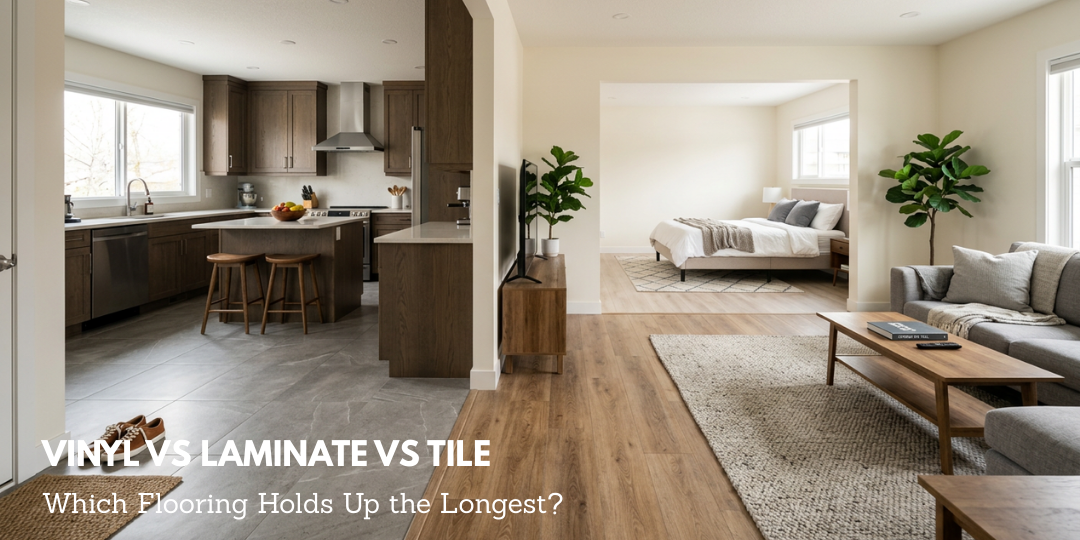
Choosing new flooring is not just about appearance. It is about longevity, maintenance, and how well the material performs under real-life conditions. Many homeowners narrow their options down to three popular categories: vinyl, laminate, and tile. All three can look similar at a glance. All three are widely available. But they do not perform the same over time.
The real question most buyers are asking is simple: which flooring lasts the longest?
Durability depends on several factors, including moisture resistance, wear layers, installation quality, and daily traffic. In this guide, we break down how vinyl flooring, laminate flooring, and tile flooring compare in lifespan, maintenance, structural strength, and long-term value, so you can make a decision that holds up for years.
Understanding Flooring Lifespan: What Really Affects Durability

Before comparing materials, it’s important to understand what determines how long a floor lasts.
Flooring longevity is influenced by:
- Traffic level.
- Exposure to moisture.
- Subfloor preparation.
- Installation method.
- Maintenance routine.
- Product quality.
A properly installed floor made from durable materials can last decades. A poorly installed one can fail within a few years regardless of material type.
Now let’s compare each option in detail.
Tile Flooring: The Long-Term Performer

When it comes to pure longevity, tile flooring, especially porcelain tile flooring, often leads the category.
Why Tile Lasts
Porcelain and ceramic tiles are fired at high temperatures, creating a hard, dense surface. Porcelain tile, in particular, has extremely low water absorption and high compressive strength.
Tile resists:
- Scratches.
- Moisture.
- Heavy furniture.
- High foot traffic.
In residential environments, well-installed tile flooring can last 20 to 50 years.
Ceramic Tile vs Porcelain Tile
Ceramic tile flooring performs well in most indoor areas. Porcelain tile flooring is denser and better suited for:
Natural stone tile can also last decades, though it may require sealing and additional maintenance.
What Shortens Tile Lifespan
Tile rarely fails because of surface wear. Most failures happen due to:
- Poor subfloor preparation.
- Lack of expansion joints.
- Inadequate mortar coverage.
- Cracked grout allowing moisture penetration.
When installed correctly, tile offers unmatched structural longevity.
Vinyl Flooring: The Moisture-Resistant Contender
Vinyl plank flooring and luxury vinyl tile have grown significantly in popularity because they combine durability with flexibility and moisture resistance.
How Long Does Vinyl Last?
High-quality vinyl plank flooring can last 15 to 25 years in residential environments. Commercial-grade products may last longer under controlled maintenance.
Modern rigid core and waterproof vinyl flooring resist swelling, making them ideal for:
Vinyl does not absorb moisture like wood-based materials.
Why Vinyl Performs Well
Vinyl flooring includes a wear layer that protects against scratches and stains. The thickness of this wear layer significantly affects lifespan.
Advantages include:
- Resistance to water damage.
- Softer underfoot than tile.
- Lower risk of cracking.
However, vinyl can dent under heavy furniture and may show wear over time in high-traffic areas.
What Limits Vinyl Longevity
Vinyl flooring can be affected by:
- Sharp objects.
- Extreme temperature fluctuations.
- Low-quality installation.
- Thin wear layers.
It does not crack like tile, but once the wear layer deteriorates, replacement is usually required.
Laminate Flooring: The Budget-Friendly Option
Laminate flooring has improved considerably in recent years, particularly with waterproof laminate advancements.
How Long Does Laminate Last?
Laminate typically lasts 10 to 20 years, depending on quality and exposure to moisture.
It performs well in:
- Living rooms.
- Bedrooms.
- Home offices.
Laminate features a protective top layer over a high-density fiberboard core.
Strengths of Laminate
Laminate flooring offers:
- Scratch resistance.
- Realistic wood appearance.
- Affordable pricing.
- Easy installation.
For dry areas with moderate traffic, laminate performs reliably.
Where Laminate Struggles
Traditional laminate is vulnerable to moisture infiltration. If water penetrates seams and reaches the core, boards can swell.
Even waterproof laminate has limits based on manufacturer's exposure ratings.
Moisture control is critical for long-term performance.
Side-by-Side Comparison
|
Feature |
Tile Flooring |
Vinyl Flooring |
Laminate Flooring |
|
Average Lifespan |
20–50 years |
15–25 years |
10–20 years |
|
Water Resistance |
Excellent (especially porcelain) |
Excellent (waterproof options) |
Moderate to good (waterproof versions vary) |
|
Scratch Resistance |
High |
Moderate to high |
Moderate |
|
Comfort Underfoot |
Firm |
Softer |
Moderate |
|
Installation Difficulty |
Higher |
Moderate |
Moderate |
|
Repairability |
Individual tiles replaceable |
Often requires plank replacement |
Plank replacement |
This table highlights that tile generally leads in lifespan, followed by vinyl, then laminate.
High-Traffic Performance
If your home experiences heavy foot traffic from children, pets, and frequent guests durability matters more than appearance.
Porcelain tile flooring handles repeated impact without denting. Vinyl performs well with thicker wear layers. Laminate can show wear patterns over time in entryways and hallways.
For high-traffic homes, tile offers the longest structural lifespan.
Moisture Exposure and Longevity
Bathrooms, kitchens, and basements present constant moisture risk.
Porcelain tile flooring offers near-total surface moisture resistance. Waterproof vinyl also performs reliably in these areas.
Laminate, even waterproof varieties, require careful seam protection and quick cleanup.
Moisture exposure significantly influences long-term performance.
Comfort and Practicality
Tile is extremely durable but firm underfoot. Vinyl offers more flexibility and shock absorption. Laminate provides moderate cushioning.
Comfort may influence room selection:
- Tile: kitchens, bathrooms, entryways.
- Vinyl: family rooms, basements.
- Laminate: bedrooms, living areas.
Longevity must be balanced with comfort.
Maintenance Requirements
Tile requires:
- Routine sweeping.
- Damp mopping.
- Occasional grout sealing.
Vinyl requires:
- Regular cleaning.
- Avoiding abrasive tools.
Laminate requires:
- Minimal water exposure.
- Dry mopping.
Maintenance consistency directly affects lifespan.
Subfloor Preparation Matters for All Three
Regardless of material, poor subfloor preparation shortens the lifespan.
Uneven or flexible subfloors can cause:
- Cracked tile.
- Vinyl seam separation.
- Laminate joint failure.
Professional installation and proper leveling protect longevity.
Cost vs Long-Term Value
Tile flooring often carries higher upfront costs but offers decades of performance.
Vinyl flooring provides a balance between affordability and durability.
Laminate flooring offers budget-friendly installation but may require earlier replacement.
When evaluating lifespan per dollar spent, porcelain tile often provides the strongest long-term value in high-traffic environments.
Which Flooring Truly Holds Up the Longest?
If pure structural longevity is the priority, porcelain tile flooring generally lasts the longest.
If moisture resistance with moderate comfort is preferred, high-quality vinyl plank flooring performs very well.
If affordability is the main factor and moisture exposure is limited, laminate flooring can provide dependable service.
The best choice depends on how the space is used.
Final Takeaway
Vinyl, laminate, and tile each offer distinct advantages. However, they differ significantly in how long they hold up under real-world conditions.
Tile leads in lifespan and structural durability. Vinyl offers strong moisture resistance with moderate longevity. Laminate provides cost-effective performance in dry areas.
Choosing the right flooring means considering traffic, moisture exposure, maintenance expectations, and long-term value.
Longevity is not just about material it is about matching the product to the environment.