

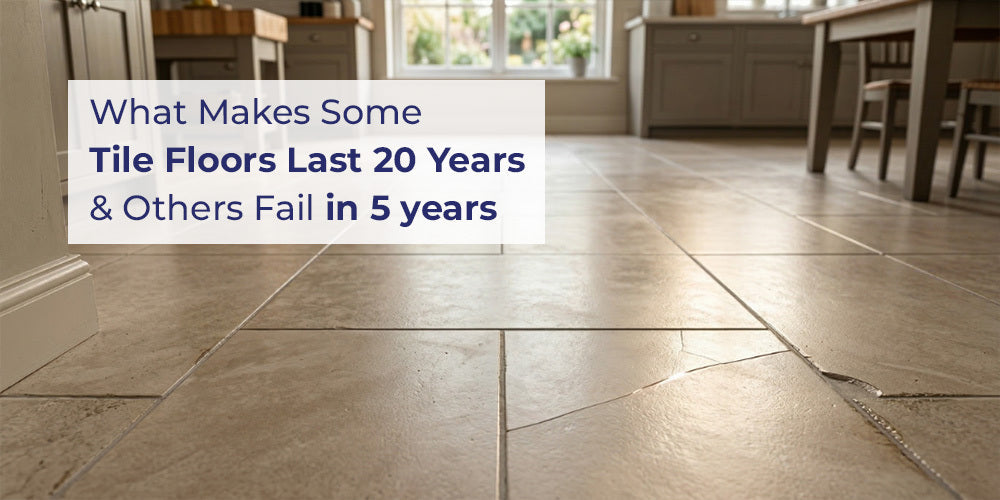
Tile flooring has a reputation for durability. Many homeowners install tile expecting it to last for decades, and in many homes, it does. Yet in others, tiles crack, grout crumbles, and floors loosen far earlier than expected. The difference between a tile floor that lasts 20 years and one that fails in five often has less to do with luck and more to do with installation quality, material selection, and environmental factors.
Understanding why tile longevity varies can help homeowners avoid costly replacements, prevent structural damage, and make better flooring decisions from the start.
This guide explains the real reasons some tile floors stand the test of time while others break down prematurely.
Tile Longevity Depends on More Than Just the Tile
Many homeowners assume tile durability depends only on the tile material itself. In reality, a tile floor functions as a complete system made of multiple layers that must work together.
A typical tile flooring system includes:
- The tile surface.
- Adhesive or mortar.
- Underlayment or backer board.
- Subfloor.
- Expansion joints.
- Grout.
If one layer fails, the entire floor can weaken. Even high-end tile can fail quickly when installed over a weak foundation.
Long-lasting tile floors are usually the result of careful preparation, proper installation techniques, and suitable material choices.
The Subfloor: The Hidden Foundation That Determines Lifespan
The subfloor is the structural base beneath your tile. It supports weight, absorbs movement, and keeps the surface stable. When subfloors are weak or improperly prepared, tiles experience stress that leads to cracking and loosening.
Common Subfloor Problems That Shorten Tile Lifespan
Flexing and movement
Tile is rigid. Wood subfloors naturally expand and contract with temperature and humidity changes. Excess movement causes tiles and grout to crack.
Uneven surfaces
If the surface isn’t level, pressure concentrates on high points, leading to stress fractures.
Moisture damage
Water intrusion can weaken plywood subfloors, causing tiles to shift and adhesives to fail.
Professional installers reinforce subfloors, use cement backer boards, and apply crack-isolation membranes to prevent these issues.
A strong foundation often determines whether tile lasts decades or begins failing within years.
Installation Quality: Precision Determines Performance

Tile installation is not simply placing tiles in mortar. It requires precise spacing, correct adhesive application, and proper curing conditions.
Poor installation is one of the leading causes of early tile failure.
Installation Mistakes That Reduce Tile Lifespan

Insufficient mortar coverage
Tiles need full support underneath. Hollow spots allow tiles to flex and crack under pressure.
Incorrect adhesive type
Different tiles require specific mortars. Using the wrong one can weaken bonding.
Improper curing time
Walking on tiles too early disrupts adhesion and alignment.
Lack of expansion joints
Buildings naturally shift. Without expansion gaps, pressure builds, and tiles crack or lift.
Experienced installers follow strict preparation and curing guidelines to ensure structural stability.
Tile Material Quality Matters More Than Appearance
Not all tiles are manufactured to the same performance standards. Some tiles are designed for decorative walls, while others are engineered to withstand heavy foot traffic.
Key Material Differences
Density and composition
Porous tiles absorb moisture, which weakens the structure over time.
Manufacturing standards
Higher-quality tiles are fired at higher temperatures, making them harder and more durable.
Wear rating
Tiles rated for floors are tested to handle impact, abrasion, and foot traffic.
For example, porcelain tile is denser and less porous than ceramic tile, making it more resistant to moisture, scratches, and heavy loads.
Using wall-grade tiles on floors is a common mistake that leads to premature cracking.
Environmental Conditions Play a Silent Role
Tile flooring responds to environmental stress, even if homeowners don’t notice the gradual impact.
Temperature Fluctuations
Materials expand and contract as temperatures change. Repeated cycles can weaken adhesive bonds and create tension beneath tiles.
Moisture and Humidity
High humidity can cause subfloors to swell, while dry conditions may cause contraction. These shifts place stress on rigid tile surfaces.
Heavy Traffic and Impact
Homes with pets, children, and constant foot traffic place more stress on floors. Dropped objects, furniture movement, and concentrated weight loads can shorten tile lifespan.
Proper material selection and installation techniques help floors adapt to environmental stress.
Grout and Joint Integrity: The Shock Absorbers of Tile Floors
Grout is not just a decorative filler. It stabilises tile placement and distributes pressure across the surface.
Causes of Grout Failure
- Poor mixing ratios.
- Inadequate sealing.
- Excess moisture exposure.
- Structural movement.
When grout weakens, tiles lose lateral support and begin shifting. Loose tiles crack more easily under weight.
Flexible, properly sealed grout extends tile floor longevity by absorbing minor structural movement.
Maintenance Habits Influence Tile Lifespan

Even well-installed tile floors can deteriorate faster without proper care.
Harmful Maintenance Practices
- Harsh chemical cleaners can erode grout and dull tile surfaces.
- Standing water seeps into grout lines and weakens adhesives.
- Dragging heavy furniture creates surface fractures.
Protective Maintenance Habits
- Clean spills promptly.
- Use pH-neutral tile cleaners.
- Install furniture pads.
- Reseal grout periodically.
Routine care prevents gradual deterioration and preserves both appearance and structural integrity.
Early Warning Signs of Tile Failure
Tile floors rarely fail suddenly. They usually show warning signs years in advance.
Watch for These Signals
- Hairline cracks in tiles.
- Loose or hollow-sounding tiles.
- Cracked or powdering grout.
- Uneven surfaces.
- Moisture seepage.
Addressing these early can prevent full-floor replacement.
Professional Installation vs DIY: A Longevity Gap
DIY tile installation may appear cost-effective, but small technical errors can significantly shorten floor lifespan.
Professional installers understand:
- Load-bearing requirements.
- Moisture control systems.
- Proper adhesive selection.
- Structural movement allowances.
- Subfloor reinforcement techniques.
Professionals install tile as a system, not just a surface. This systemic approach dramatically increases lifespan.
Why Some Tile Floors Easily Reach 20 Years
Long-lasting tile floors typically share these characteristics:
- Reinforced, level subfloors.
- High-density, floor-rated tiles.
- Proper expansion spacing.
- Full mortar coverage.
- Moisture protection layers.
- Professional installation.
- Consistent maintenance.
When these elements align, tile floors can remain stable and attractive for decades.
Why Other Tile Floors Fail Within 5 Years
Premature tile failure often results from:
- Weak or flexible subfloors.
- Poor adhesive bonding.
- Incorrect tile type selection.
- Lack of expansion joints.
- Moisture infiltration.
- Installation shortcuts.
- Heavy impact stress.
These factors create internal stress that leads to cracking, loosening, and surface damage.
Long-Term Value: Installation Quality Saves Replacement Costs
Tile flooring is a long-term investment. Cutting installation costs often leads to higher replacement expenses later.
A properly installed tile floor:
- Requires fewer repairs.
- Maintains appearance longer.
- Handles heavy use.
- Increases property value.
- Reduces maintenance costs.
Durability is built beneath the surface.
Choosing Long-Lasting Tile Flooring
Homeowners should consider:
- Tile rating: Ensure tiles are approved for floor use.
- Moisture resistance: Important for kitchens and bathrooms.
- Surface strength: Impact resistance matters.
- Slip resistance: Especially for wet areas.
- Professional installation: Ensures system integrity.
Consulting flooring experts helps homeowners avoid costly mistakes.
Conclusion
The difference between a tile floor that lasts 20 years and one that fails in five is rarely visible on the surface. Longevity depends on structural preparation, installation precision, material quality, and environmental compatibility.
Tile flooring is not just a decorative surface, it is an engineered system that must handle weight, movement, and moisture for years.
When installed correctly and maintained properly, tile floors deliver exceptional durability and long-term value.
Frequently Asked Questions
Q) How long should a properly installed tile floor last?
A) A professionally installed tile floor can last 20 to 50 years, depending on material quality, maintenance, and environmental conditions.
Q) What causes tiles to crack years after installation?
A) Delayed cracking usually results from subfloor movement, temperature fluctuations, moisture damage, or structural settling.
Q) Is porcelain tile more durable than ceramic tile?
A) Yes. Porcelain tile is denser, less porous, and more resistant to moisture and heavy traffic compared to ceramic tile.
Q) Can poor grout cause tile failure?
A) Yes. Weak or cracked grout allows tiles to shift, increasing stress and the risk of cracking or loosening.
Q) Are DIY tile installations less durable?
A) DIY installations can be durable if done correctly, but mistakes in subfloor preparation, mortar application, or spacing often reduce lifespan.
Q) What maintenance helps tile floors last longer?
A) Regular cleaning with mild solutions, sealing grout lines, preventing moisture buildup, and protecting surfaces from heavy impacts help extend floor life.
1 comment
HRM Flooring
Great article! I really liked how you explained that tile durability depends on the whole system, not just the tile itself. Many people ignore the importance of subfloor and proper installation, which actually plays a huge role in long-term performance.