

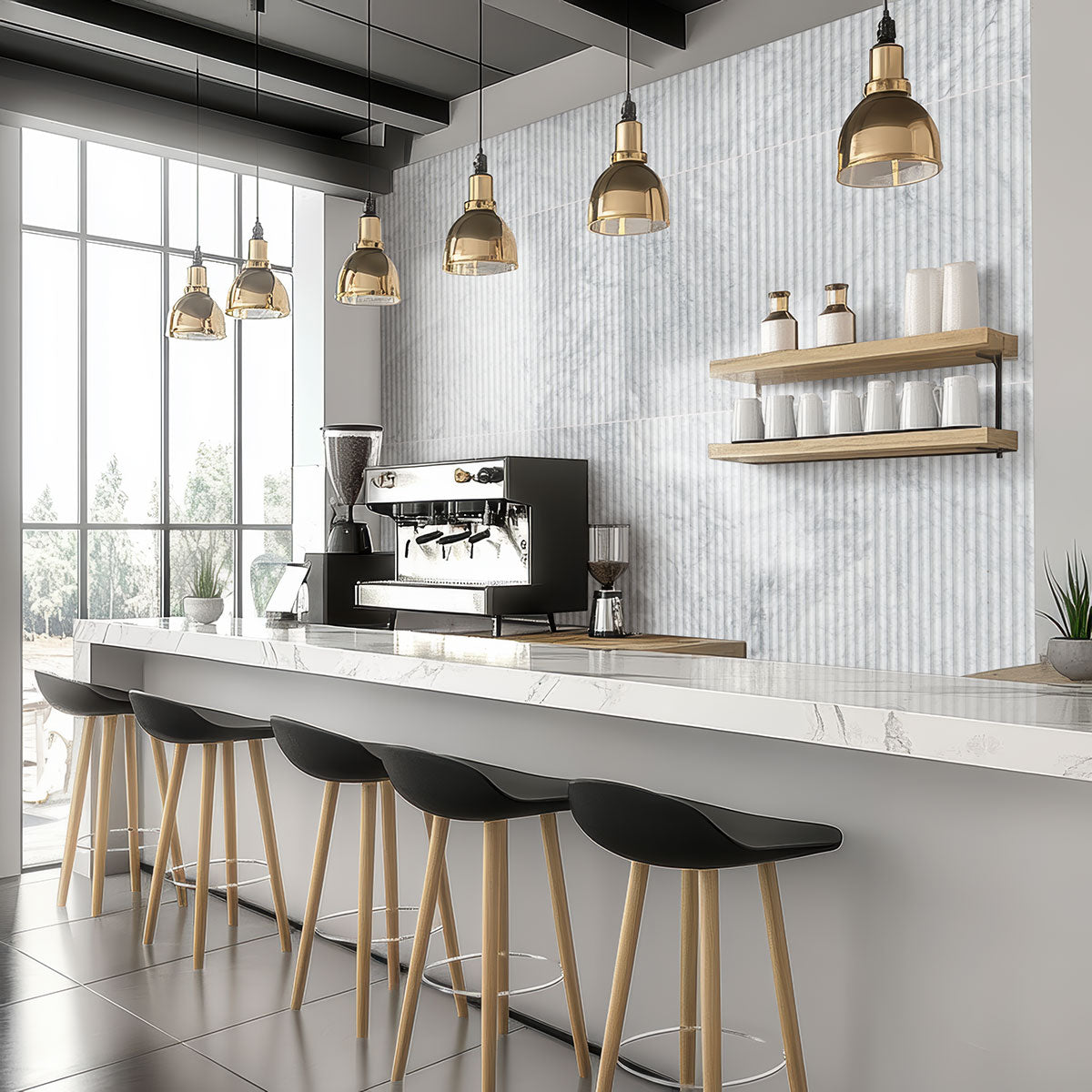
Fluted Tile
26 products
Showing 25 - 26 of 26 products
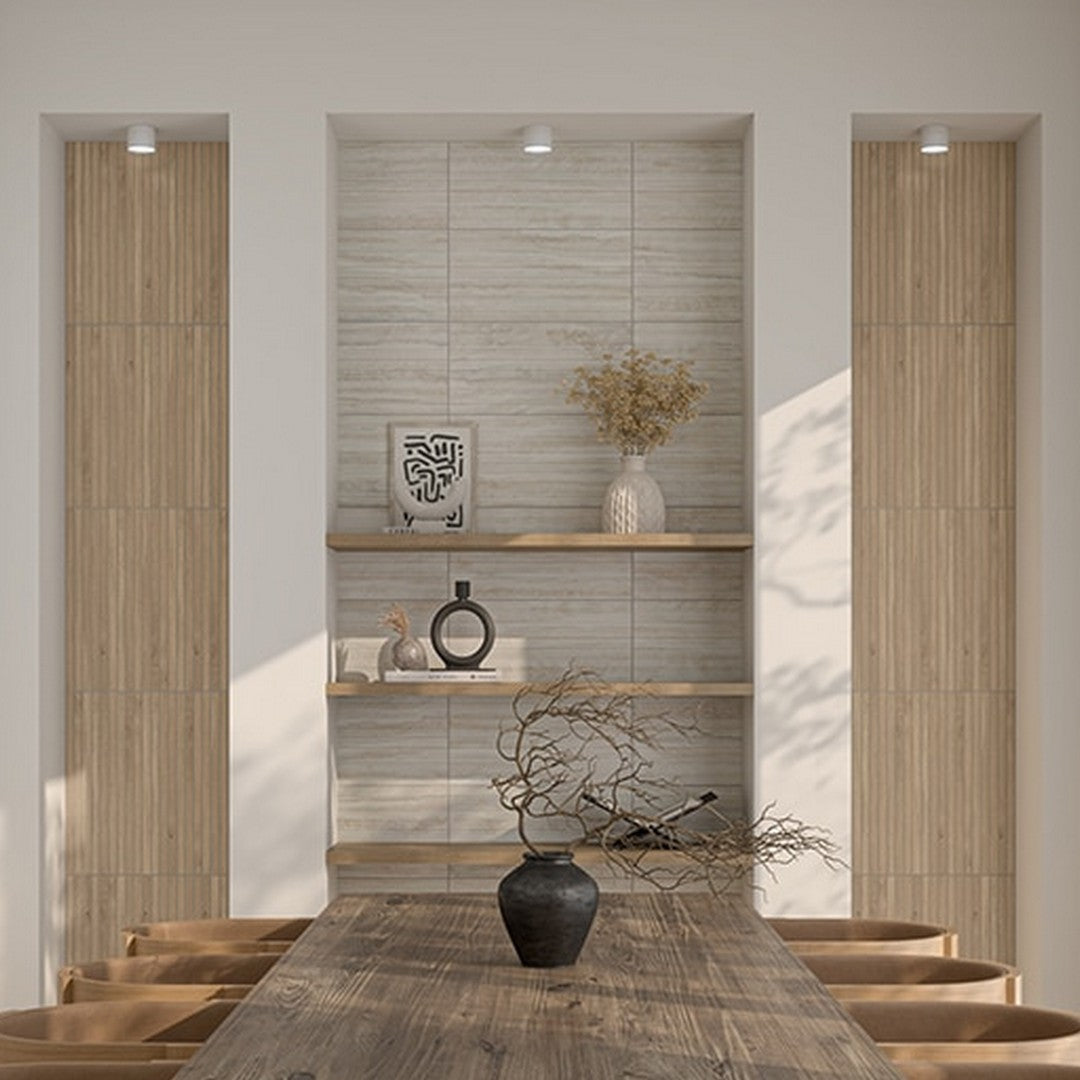
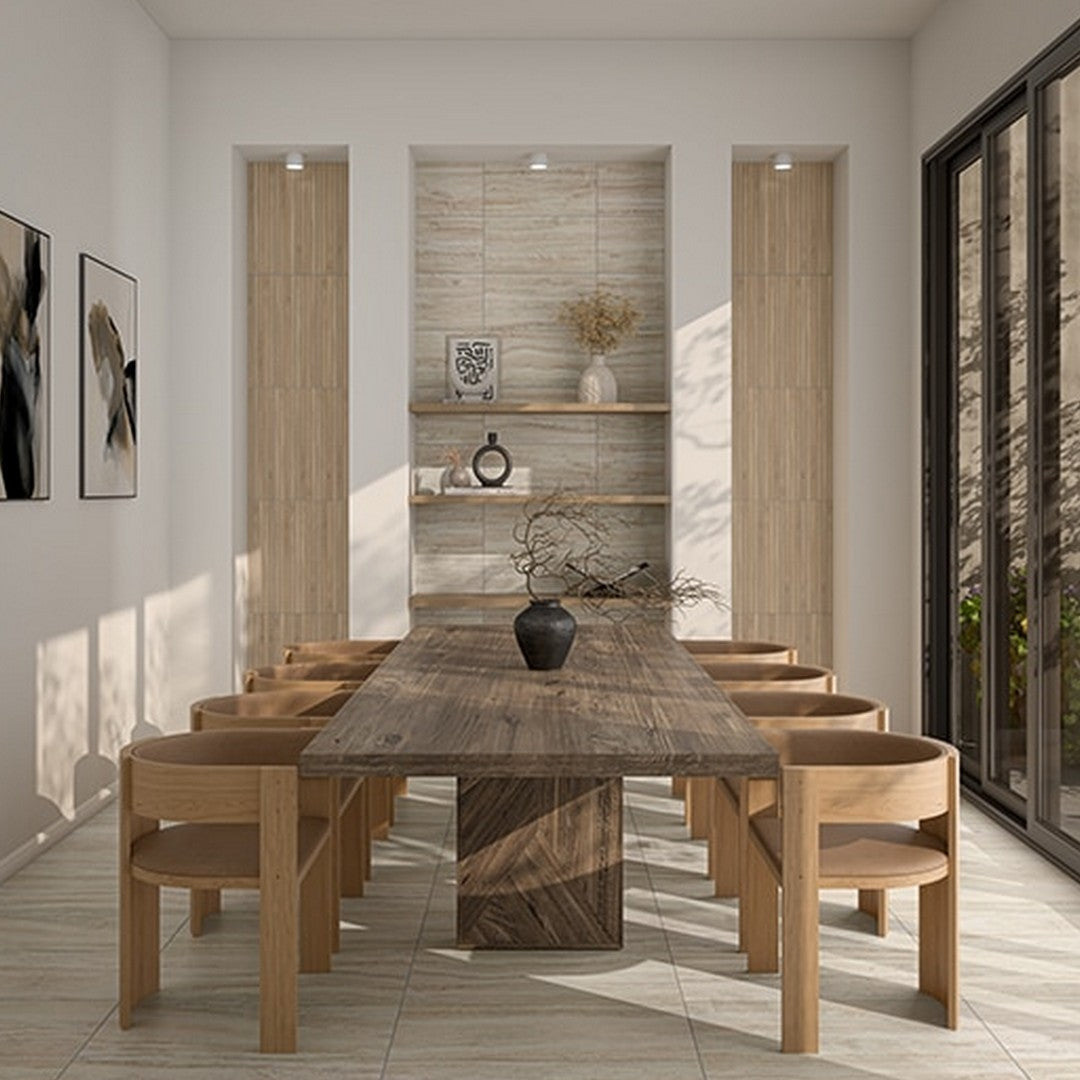
 Daltile Calligo 12" x 24" Matte Ceramic Microban Fluted Wall Tile
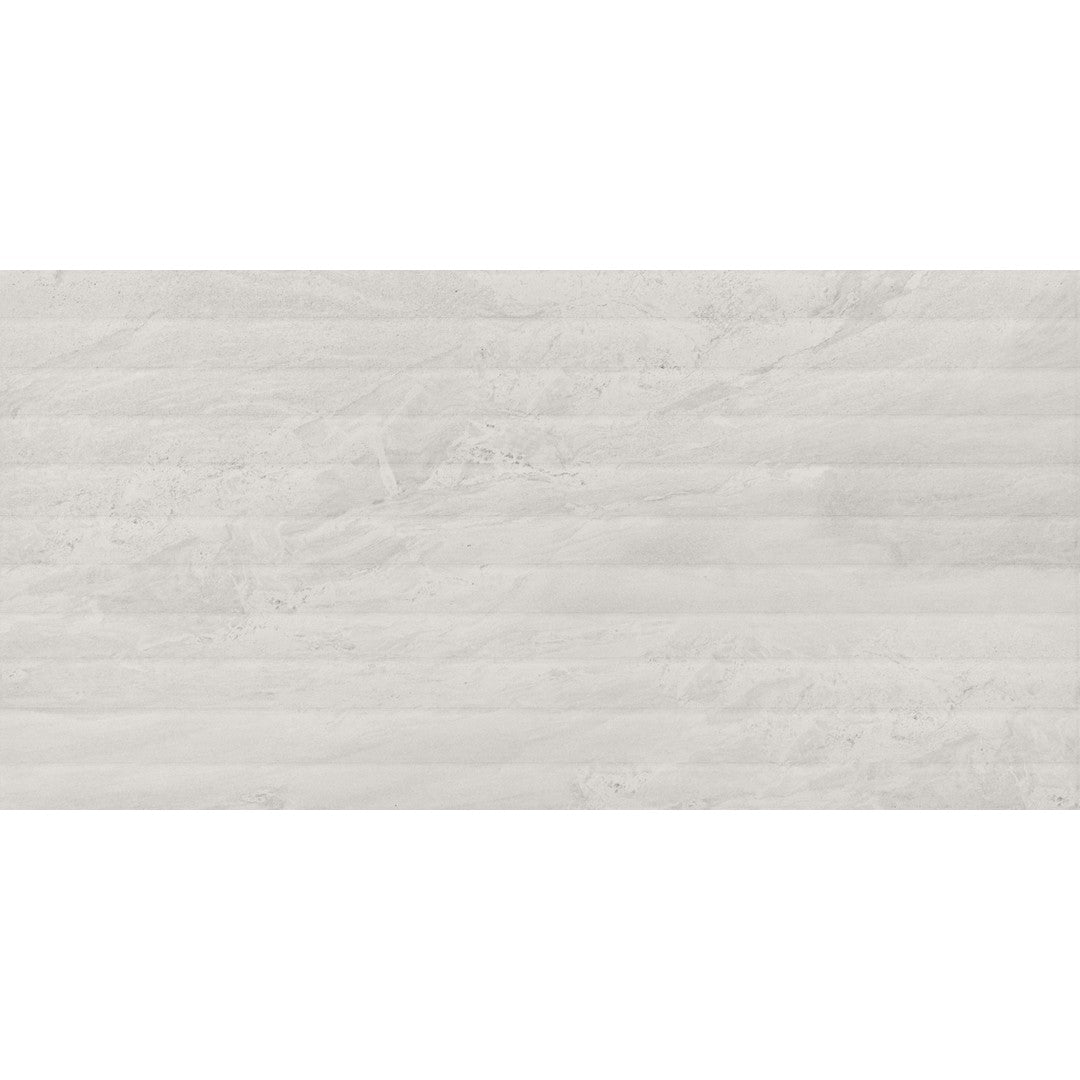 Daltile Bryne 12" x 24" Satin Ceramic Fluted Wall Tile
Fluted Tile for Walls, Showers, Backsplashes, and Accent Spaces
Fluted tile adds texture, shadow, and depth to surfaces that would otherwise look flat. Instead of a smooth tile face, fluted tile has raised lines, ribs, grooves, or reeded details that create a more architectural wall finish.
This collection includes fluted tile options for bathroom walls, shower walls, kitchen backsplashes, fireplaces, accent walls, vanity walls, and commercial feature areas. You can find styles from brands such as American Olean, Bedrosians, Daltile, Emser Tile, Jeffrey Court, Marazzi, Mir Mosaic, MSI Surfaces, and Tesoro, with options in ceramic, porcelain, marble, limestone, travertine, and natural stone.
Fluted tile is mostly chosen for walls and decorative surfaces because its texture changes how light moves across the room. It can make a simple wall feel more finished, add interest behind a vanity, bring depth to a backsplash, or create a modern feature wall without using heavy patterns or bold colors.
What Makes Fluted Tile Different?
Fluted tiles are different from regular wall tiles because the surface is not flat. They have raised ribs, straight grooves, or reeded lines that create texture across the wall. This texture changes how the tile looks under light, especially in bathrooms, showers, backsplashes, fireplaces, and feature walls.
A flat tile mainly depends on color, size, finish, and layout. A fluted tile adds another layer: shadow. Even in a simple white, beige, gray, or natural stone shade, the ribbed surface gives the wall more depth and movement.
Fluted tile is often chosen when a space needs texture without a loud pattern. It can make a bathroom wall feel taller, a backsplash feel more detailed, or a fireplace wall feel more architectural.
Fluted Tile vs Plain Tile
- Plain tile gives a clean, smooth surface. It works well when you want a simple wall, easy visual flow, or a background surface that does not attract too much attention.
- Fluted tile creates more texture and shadow. The raised ribs make the wall feel more designed, even when the color is neutral. It is a stronger choice for accent walls, vanity walls, shower walls, fireplace surrounds, and backsplashes where the tile is meant to be noticed.
- Choose plain tile when you want a clean and quiet surface. Choose fluted tile when you want the wall to have more depth, structure, and visual interest.
Fluted Tile vs Wave Tile
Fluted tile and wave tile are both textured wall tile styles, but they do not create the same look.
- Fluted tile has straight ribs, grooves, or reeded lines. It feels more structured, vertical, and architectural. It works well when you want clean lines, height, and a more tailored surface.
- Wave tiles have softer curves, raised waves, ripple patterns, or flowing 3D movement. They feel more relaxed and fluid, often used when the wall should look softer, spa-like, or more decorative.
Fluted Bathroom and Shower Tile
Fluted tile is popular in bathrooms because it gives plain walls more depth. It can be used behind a vanity, around a bathtub wall, on a shower wall, or as a feature section inside the bathroom.
For shower walls, product suitability matters. Not every fluted tile should automatically be used in wet areas. Some ceramic and porcelain fluted tiles may work well on shower walls when rated for that application. Natural stone options like marble, limestone, and travertine may need more care, sealing, and proper installation because stone is more porous than porcelain or ceramic.
If you are choosing fluted tile for a bathroom or shower, check the material, finish, cleaning needs, and product specifications before buying.
Fluted Backsplash Tile
Fluted tile can make a kitchen backsplash feel more designed than a flat subway tile or plain ceramic tile. The grooves create texture behind countertops, sinks, open shelves, and range areas.
A fluted backsplash works best when the surface is chosen with cleaning in mind. In light-use areas, a textured backsplash can look beautiful and add depth. Behind heavy cooking zones, grooves may need more frequent cleaning because residue, oil, and splashes can settle into textured surfaces more easily than flat tile.
For easier maintenance, many buyers choose glossy ceramic or porcelain fluted tile for backsplashes because the surface can be easier to wipe compared with some natural stone textures.
Ceramic, Porcelain and Natural Stone Fluted Tile
Different fluted tile materials do not perform the same way.
Ceramic fluted tile is often used for decorative walls, backsplashes, bathroom walls, and colorful wall designs. It is a good option when the goal is a stylish wall surface with glossy, matte, or textured finishes.
Porcelain fluted tile is usually chosen when buyers want a more durable and moisture-resistant option. Some porcelain fluted tiles may also be suitable for floors, exterior spaces, shower floors, or pool areas, but only when the product specifications allow it.
Marble fluted tile gives a luxury look with natural veining and depth. It works well for feature walls, fireplaces, vanity walls, and premium bathroom spaces, but it usually needs more maintenance awareness than porcelain.
Limestone and travertine fluted tile create a warmer, softer natural stone look. These materials are beautiful, but they need proper sealing, cleaning, and care because natural stone can absorb moisture and stains more easily.
Natural stone fluted tile is best for buyers who want real material variation and architectural texture, not the lowest-maintenance surface.
Where Fluted Tile Works Best
Fluted tile works best in spaces where texture can be seen and appreciated. It is especially useful on vertical surfaces because the grooves catch light and create shadow.
Good places to use fluted tile include bathroom vanity walls, shower walls, powder rooms, kitchen backsplashes, fireplace surrounds, living room feature walls, entry walls, hotel walls, restaurant walls, salon walls, and commercial reception areas.
It is also useful when a room feels too plain, but you do not want a bold pattern. Fluted tile can add interest while keeping the color palette calm and clean.
FAQs
Q) What Is Fluted Tile and Where Should You Use It?
A) Fluted tile is a textured tile with raised lines, grooves, ribs, or reeded surface detail. It is usually used on walls, backsplashes, shower walls, bathroom walls, fireplaces, vanity walls, and accent spaces. Some fluted tiles may also be suitable for floors, outdoor areas, or pool applications, but only when the product is rated for those uses.
Q) Fluted Tile vs Flat Tile: Which Works Better for Bathroom Walls?
A) Flat tile works better when you want a simple, easy-clean wall with minimal texture. Fluted tile works better when you want the bathroom wall to feel more designed, dimensional, and architectural. For vanity walls and shower feature walls, fluted tile can add depth. For areas that need very easy cleaning, flat tile may be more practical.
Q) Can You Use Fluted Tile in a Shower?
A) Yes, some fluted tile can be used on shower walls if the product is suitable for wet areas. Porcelain and ceramic options are often more practical for shower walls than porous natural stone, but every product should be checked before installation. For marble, limestone, travertine, or natural stone fluted tile, sealing and maintenance are more important.
Q) Is Fluted Tile Hard to Clean?
A) Fluted tile can take more attention to clean than flat tile because the grooves and raised lines can hold dust, soap residue, or cooking splashes. Glossy ceramic and porcelain fluted tiles are usually easier to wipe than rough natural stone textures. In kitchens and showers, choose the finish carefully and clean the grooves regularly.
Q) Best Places to Use Fluted Tile in Modern Homes
A) The best places to use fluted tile are bathroom feature walls, shower walls, kitchen backsplashes, fireplace surrounds, powder rooms, vanity walls, entry walls, and living room accent walls. It works well in modern homes because it adds texture without needing a loud color or busy pattern.