

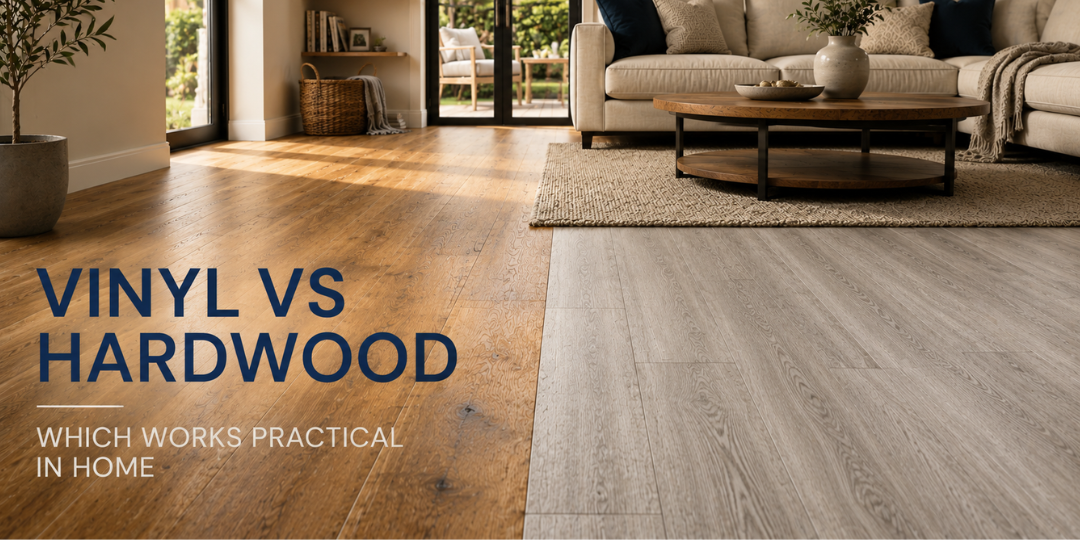
Choosing flooring for a family home is rarely just about appearance. Parents think about scratches from toys, spills in the kitchen, pet activity, cleaning routines, moisture exposure, and long-term durability. Flooring in active households must handle daily life without becoming difficult to maintain or expensive to repair.
This is why many homeowners find themselves comparing two of the most popular flooring options on the market today: hardwood flooring and vinyl flooring.
Both materials offer strong visual appeal and long-term value, but they perform very differently in real-world family environments. Hardwood brings timeless elegance and natural character, while vinyl flooring is known for practicality, moisture resistance, and durability.
At Floors Center, we help homeowners compare flooring based not only on style but also on how the material performs over time. Understanding the differences between hardwood and vinyl flooring helps families choose a surface that supports both their lifestyle and design goals.
Why Family Homes Require Practical Flooring
Family homes place unique demands on flooring. Unlike low-traffic spaces, active households create continuous wear through:
- Foot traffic.
- Furniture movement.
- Food and drink spills.
- Pet claws.
- Children’s activities.
- Daily cleaning routines.
The best flooring for a family home must balance:
- Durability.
- Comfort.
- Maintenance.
- Safety.
- Long-term appearance.
This is where the comparison between hardwood and vinyl becomes especially important.
Understanding Hardwood Flooring
Hardwood flooring is made from natural wood and remains one of the most desired flooring options in residential design.
Its appeal comes from:
- Natural grain patterns.
- Warmth and texture.
- Long-term property value.
- Timeless aesthetic.
Hardwood flooring is available in various wood species such as:
For many homeowners, hardwood represents craftsmanship and permanence.
What Makes Vinyl Flooring Different?
Vinyl flooring, particularly luxury vinyl plank (LVP), is engineered to replicate the appearance of hardwood while offering improved practicality in certain environments.
Modern vinyl flooring provides:
- Waterproof performance.
- Scratch resistance.
- Softer underfoot feel.
- Easier maintenance.
- Realistic wood visuals.
Advancements in manufacturing have significantly improved vinyl’s appearance, making it one of the fastest-growing flooring categories for modern family homes.
Durability: Which Flooring Handles Family Life Better?
Durability is one of the most important considerations for households with children and pets.
Hardwood Flooring Durability
Hardwood is durable, but it is still a natural material. Over time, it may develop:
- Scratches.
- Dents.
- Surface wear.
Softer wood species are especially vulnerable in busy homes.
However, hardwood also offers one advantage: it can often be refinished multiple times, extending its lifespan.
Vinyl Flooring Durability
Vinyl flooring is specifically designed for high-traffic environments.
It performs exceptionally well against:
- Scratches
- Pet activity
- Toy impact
- Everyday wear
Many luxury vinyl products include protective wear layers that help preserve surface appearance over time.
For families prioritizing low-maintenance durability, vinyl flooring often performs more consistently in active environments.
Water Resistance and Spill Protection

Spills are inevitable in family homes. Kitchens, dining spaces, bathrooms, and entryways experience constant exposure to moisture.
Hardwood and Moisture
Hardwood flooring is sensitive to water exposure. Excess moisture can cause:
- Expansion.
- Warping.
- Staining.
- Structural movement.
Even small spills left unattended can create long-term damage.
Because of this, hardwood is less practical for moisture-prone areas.
Vinyl Flooring and Moisture Resistance
Vinyl flooring’s biggest advantage is its waterproof construction.
Luxury vinyl plank handles:
- Spills.
- Pet accidents.
- Kitchen moisture.
- Bathroom humidity.
without structural damage.
For households with children or pets, this added protection significantly reduces maintenance stress.
Cleaning and Maintenance Comparison
Family homes require flooring that can be cleaned quickly and efficiently.
Hardwood Maintenance
Hardwood flooring requires more careful maintenance.
Homeowners must:
- Avoid excessive moisture during cleaning.
- Use wood-safe cleaning products.
- Prevent deep scratches.
- Refinish surfaces over time.
While hardwood ages beautifully in many homes, it demands greater long-term attention.
Vinyl Flooring Maintenance
Vinyl flooring is one of the easiest flooring types to maintain.
Routine care typically involves:
- Sweeping.
- Vacuuming.
- Damp mopping.
Its stain-resistant surface simplifies cleanup after spills or everyday messes.
For busy households, this convenience is a major advantage.
Comfort Underfoot

Comfort matters in homes where people spend long hours standing, walking, or playing on floors.
Hardwood Flooring Feel
Hardwood provides a solid and premium feel underfoot. Many homeowners appreciate its warmth and natural texture.
However, hardwood surfaces can feel harder during prolonged standing.
Vinyl Flooring Feel
Vinyl flooring is generally softer and more flexible due to its layered construction.
This provides:
- Better shock absorption
- Reduced foot fatigue
- Increased comfort for children playing on floors
In family homes, this softer feel can improve day-to-day comfort.
Appearance and Design Flexibility
Visual appeal remains a major factor in flooring decisions.
Hardwood Flooring Aesthetic
Hardwood offers authentic natural variation that cannot be fully replicated.
Each plank features:
- Unique grain patterns.
- Organic texture.
- Natural color shifts.
This authenticity contributes to hardwood’s premium appearance.
Vinyl Flooring Design Variety
Modern vinyl flooring offers impressive visual realism while expanding design flexibility.
Vinyl is available in:
- Wood-look finishes.
- Stone-inspired visuals.
- Matte textures.
- Wide plank formats.
This allows homeowners to achieve different aesthetics while maintaining practical performance.
Long-Term Value and Lifespan
Homeowners often compare flooring based on long-term investment value.
Hardwood Flooring Value
Hardwood flooring is widely associated with:
- Higher property value.
- Long-term resale appeal.
- Multi-decade lifespan with proper care.
Because hardwood can be refinished, it may last for decades under the right conditions.
Vinyl Flooring Value
Vinyl flooring generally has a lower upfront cost and lower maintenance expenses.
While it may not offer the same resale perception as hardwood, modern luxury vinyl provides:
- Strong durability.
- Long-term practicality.
- Excellent value for active homes.
For many families, practical performance outweighs traditional resale considerations.
Which Flooring Works Better for Pets and Children?
Households with pets and children need flooring that handles unpredictable activity.
Hardwood Challenges
Hardwood may show:
- Pet claw scratches.
- Toy impact dents.
- Water bowl spills.
Families often need to take extra precautions to preserve the surface.
Vinyl Flooring Advantages
Vinyl performs better against:
- Scratches
- Moisture accidents
- High activity levels
This makes it especially attractive for growing families.
Noise and Acoustics
Noise levels are another practical concern in busy homes.
Hardwood Flooring
Hardwood can amplify:
- Footsteps
- Running sounds
- Furniture movement
Area rugs are often used to soften acoustics.
Vinyl Flooring
Vinyl generally produces less noise due to its softer structure and underlayment compatibility.
This contributes to a quieter indoor environment.
Best Rooms for Hardwood and Vinyl Flooring
Different spaces in a home may benefit from different flooring materials.
Hardwood Performs Best In:
- Living rooms.
- Dining rooms.
- Bedrooms.
- Formal spaces.
Vinyl Performs Best In:
Some homeowners combine both materials strategically throughout the home.
How Floors Center Helps Families Choose Better Flooring
At Floors Center, we understand that flooring decisions are about more than design trends.
Family homes require flooring that supports:
- Everyday activity.
- Long-term durability.
- Moisture resistance.
- Comfort and maintenance needs.
We help homeowners compare flooring based on how materials actually perform in real living environments.
Final Thoughts
Both hardwood and vinyl flooring offer distinct advantages for family homes.
Hardwood provides timeless beauty, natural character, and long-term property value. Vinyl flooring delivers superior practicality, moisture resistance, and low-maintenance performance for active households.
For families prioritizing durability and easier upkeep, vinyl flooring often proves to be the more practical option. However, homeowners seeking authentic natural materials and long-term resale appeal may still prefer hardwood.
The best flooring choice ultimately depends on how the home is used every day—not just how the floor looks when first installed.
Frequently Asked Questions (FAQs)
Q) Is vinyl flooring better than hardwood for families with pets?
A) Yes. Vinyl flooring is generally more resistant to scratches, moisture, and pet-related wear compared to hardwood flooring.
Q) Can hardwood flooring handle kitchen spills?
A) Hardwood can tolerate minor spills if cleaned quickly, but prolonged moisture exposure may cause warping or staining.
Q) Does vinyl flooring look realistic compared to hardwood?
A) Modern luxury vinyl flooring closely replicates natural hardwood textures, grain patterns, and finishes.
Q) Which flooring is easier to maintain in busy homes?
A) Vinyl flooring is typically easier to clean and maintain because it resists moisture, stains, and surface wear.
Q) Is hardwood flooring more valuable for resale?
A) Hardwood flooring is often associated with higher resale value and long-term property appeal.