

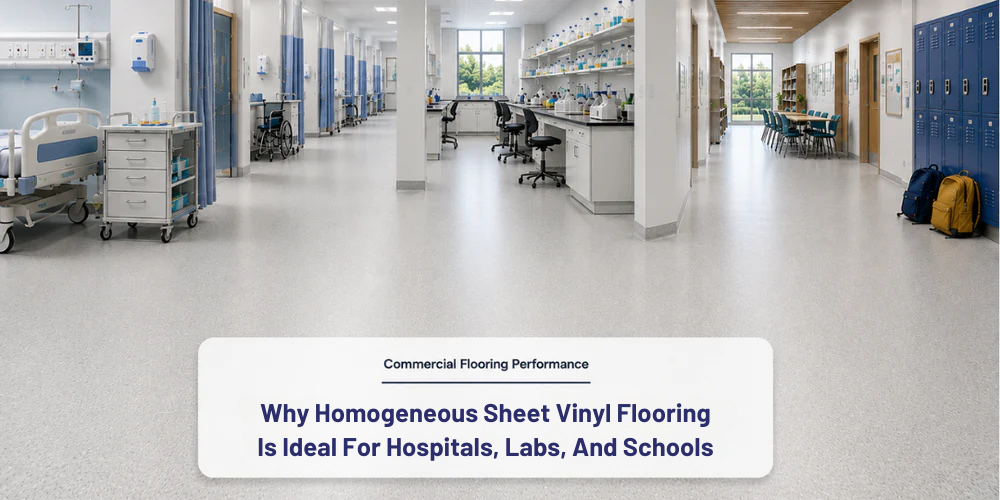
Flooring in commercial and institutional environments is exposed to conditions far more demanding than those found in most residential spaces. Hospitals experience constant equipment movement and strict sanitation requirements. Laboratories require surfaces that resist chemicals and contamination. Schools endure heavy foot traffic, spills, furniture movement, and continuous daily activity.
In environments like these, flooring is not simply a design choice it is a performance system that directly affects hygiene, durability, safety, maintenance, and operational efficiency.
This is why homogeneous sheet vinyl flooring has become one of the most trusted flooring solutions for healthcare facilities, educational institutions, and laboratories. Its seamless construction, durability, and low-maintenance performance make it especially effective in spaces where reliability matters every day.
At Floors Center, we help commercial and institutional buyers select flooring solutions that perform under real-world conditions. Understanding why homogeneous sheet vinyl is widely used across hospitals, labs, and schools helps decision-makers choose flooring that supports long-term functionality and value.
What Is Homogeneous Sheet Vinyl Flooring?
Homogeneous sheet vinyl flooring is a resilient flooring material made from a single, consistent layer of vinyl throughout its entire thickness. Unlike layered flooring systems, homogeneous vinyl maintains the same composition and pattern from the surface down to the base.
This structure provides several important advantages:
- Consistent durability throughout the material.
- Better resistance to wear and scratches.
- Long-term visual consistency.
- Easier restoration and maintenance.
Because the design extends through the entire material, surface wear is far less noticeable over time.
Homogeneous sheet vinyl is commonly installed in large continuous sheets, minimizing seams and creating a smoother, more hygienic surface.
Why Flooring Performance Matters in Commercial Environments
In hospitals, laboratories, and schools, flooring affects more than appearance. It influences:
- Hygiene standards.
- Safety conditions.
- Maintenance costs.
- Acoustic comfort.
- Long-term operational efficiency.
Poor flooring choices can lead to:
- Faster wear and replacement.
- Increased maintenance requirements.
- Higher cleaning costs.
- Safety hazards.
- Disruptions to daily operations.
This is why institutions prioritize flooring materials designed specifically for demanding environments.
Hospitals Require Flooring That Supports Hygiene and Safety

Healthcare environments place extremely high demands on flooring systems. Floors in hospitals must withstand:
- Continuous foot traffic.
- Wheelchairs and hospital beds.
- Medical equipment movement.
- Frequent cleaning with strong disinfectants.
- Exposure to moisture and spills.
Homogeneous sheet vinyl performs exceptionally well under these conditions because of its seamless and non-porous surface.
Seamless Construction Improves Infection Control
One of the biggest advantages of sheet vinyl flooring in hospitals is reduced seam exposure.
Traditional flooring with multiple joints or grout lines can trap:
- Dirt.
- Moisture.
- Bacteria.
- Contaminants.
Homogeneous sheet vinyl minimizes these gaps, helping healthcare facilities maintain stricter hygiene standards.
This makes cleaning and disinfecting more effective while supporting infection control protocols.
Resistance to Chemicals and Cleaning Products
Hospitals use aggressive cleaning agents daily. Flooring must tolerate repeated exposure to disinfectants without deteriorating.
Homogeneous vinyl flooring offers strong resistance to:
- Chemical cleaners.
- Medical disinfectants.
- Surface staining.
- Moisture penetration.
This helps preserve both appearance and structural integrity over time.
Laboratories Need Durable and Contamination-Resistant Flooring

Laboratories require flooring that supports cleanliness, durability, and chemical resistance.
Lab environments often involve:
- Chemical spills.
- Heavy equipment.
- Rolling carts.
- Precision workspaces.
- Strict contamination control.
Homogeneous sheet vinyl performs well because its dense composition resists many of the environmental stresses common in laboratory settings.
Low Porosity Helps Prevent Contamination
Porous flooring materials can absorb liquids and contaminants, creating long-term hygiene concerns.
Homogeneous sheet vinyl’s non-porous surface helps prevent:
- Liquid penetration.
- Bacterial buildup.
- Surface contamination.
This makes it easier to maintain controlled and sanitary environments.
Durability Under Equipment Stress
Laboratory floors experience repeated pressure from:
- Equipment movement.
- Rolling chairs.
- Mobile workstations.
Homogeneous vinyl flooring distributes weight effectively and resists surface wear caused by constant movement.
Its consistent structure also helps maintain appearance even in heavily used work areas.
Schools Need Flooring That Handles Constant Daily Use

Educational facilities experience some of the highest levels of daily foot traffic. Hallways, classrooms, cafeterias, and multipurpose spaces remain active throughout the day.
Flooring in schools must withstand:
- Thousands of footsteps daily.
- Furniture movement.
- Spills and stains.
- Backpacks and carts.
- Constant cleaning routines.
Homogeneous sheet vinyl is particularly effective because it balances durability with maintenance efficiency.
Long-Term Durability Reduces Replacement Costs
Schools often operate under strict maintenance budgets. Flooring replacement can disrupt classes and increase operational expenses.
Homogeneous sheet vinyl offers:
- Long service life.
- Strong wear resistance.
- Reduced maintenance needs.
Because the material remains visually consistent even as the surface wears, it maintains its appearance for many years.
This reduces the frequency of costly flooring replacements.
Noise Reduction and Acoustic Comfort
Noise management is an important factor in educational spaces.
Hard flooring surfaces can amplify:
- Footsteps.
- Furniture movement
- Hallway activity
Many homogeneous vinyl systems provide acoustic benefits that help reduce sound transmission, contributing to a more comfortable learning environment.
Moisture Resistance Is Essential in High-Use Facilities
Water exposure is common in hospitals, schools, and laboratories.
Sources of moisture include:
- Cleaning routines
- Spills
- Weather-related moisture.
- Restroom traffic.
Homogeneous sheet vinyl performs well because it resists water penetration and maintains structural stability in moisture-prone environments.
This makes it a reliable solution for facilities requiring frequent cleaning and sanitation.
Slip Resistance and Safety Performance
Safety is a critical concern in institutional environments.
Flooring must minimize the risk of slips and falls, particularly in:
- Hospital corridors.
- School hallways.
- Laboratory workspaces.
Homogeneous sheet vinyl is available in textured and slip-resistant finishes that improve traction while still allowing easy cleaning.
This balance between safety and maintenance is one reason it remains widely used in commercial spaces.
Easy Maintenance Supports Operational Efficiency
One of the biggest advantages of homogeneous sheet vinyl is its low maintenance requirements.
Routine care generally involves:
- Sweeping.
- Damp mopping.
- Periodic machine cleaning.
Because the surface resists staining and moisture, maintenance staff can clean efficiently without extensive downtime.
In high-traffic facilities, this translates into:
- Lower labor costs.
- Faster cleaning processes.
- Reduced maintenance interruptions.
Design Flexibility for Modern Commercial Spaces
Performance is critical, but modern institutions also care about aesthetics.
Today’s homogeneous sheet vinyl is available in:
- Neutral commercial tones.
- Contemporary patterns.
- Matte finishes.
- Educational and healthcare color schemes.
This allows facilities to maintain professional and visually appealing interiors while prioritizing durability.
How Homogeneous Vinyl Compares to Other Flooring Options
Commercial facilities often compare sheet vinyl with other flooring materials.
Compared to Tile Flooring
Tile is durable but includes grout lines that require maintenance and can trap contaminants.
Compared to Laminate Flooring
Laminate may not tolerate moisture and heavy institutional cleaning as effectively.
Compared to Hardwood Flooring
Hardwood offers visual warmth but is less practical in environments requiring strict sanitation and heavy maintenance.
Compared to Carpet
Carpet provides softness but can trap allergens, moisture, and bacteria in healthcare or lab environments.
Why Floors Center Helps Institutions Choose Smarter Flooring
At Floors Center, we understand that commercial flooring decisions affect long-term operations, maintenance costs, and daily functionality.
We help institutions evaluate:
- Traffic levels.
- Cleaning requirements.
- Moisture exposure.
- Safety expectations.
- Long-term durability goals.
By matching flooring materials to real-world usage, we help customers invest in solutions that continue to perform over time.
Final Thoughts
Homogeneous sheet vinyl flooring has become one of the most trusted solutions for hospitals, laboratories, and schools because it addresses the core challenges these environments face every day.
Its seamless construction, durability, moisture resistance, low maintenance requirements, and hygienic performance make it exceptionally well-suited for demanding institutional settings.
While aesthetics remain important, long-term functionality ultimately determines whether flooring succeeds in high-use environments.
For facilities prioritizing hygiene, operational efficiency, durability, and long-term value, homogeneous sheet vinyl continues to be one of the most practical and reliable flooring solutions available.
Frequently Asked Questions (FAQs)
Q) What is homogeneous sheet vinyl flooring?
A) Homogeneous sheet vinyl flooring is a resilient flooring material made from a single consistent layer of vinyl throughout its thickness, offering durability and long-term wear resistance.
Q) Why is homogeneous vinyl commonly used in hospitals?
A) Its seamless and non-porous surface helps improve hygiene, reduce contamination risks, and withstand frequent cleaning with disinfectants.
Q) Is homogeneous sheet vinyl good for schools?
A) Yes. It handles heavy foot traffic, furniture movement, spills, and daily cleaning efficiently while maintaining durability over time.
Q) How does homogeneous vinyl compare to tile flooring?
A) Unlike tile, homogeneous vinyl has fewer seams and no grout lines, making it easier to clean and maintain in high-hygiene environments.
Q) Does homogeneous sheet vinyl require a lot of maintenance?
A) No. Routine sweeping and damp mopping are usually sufficient, making it a low-maintenance flooring solution for commercial facilities.