

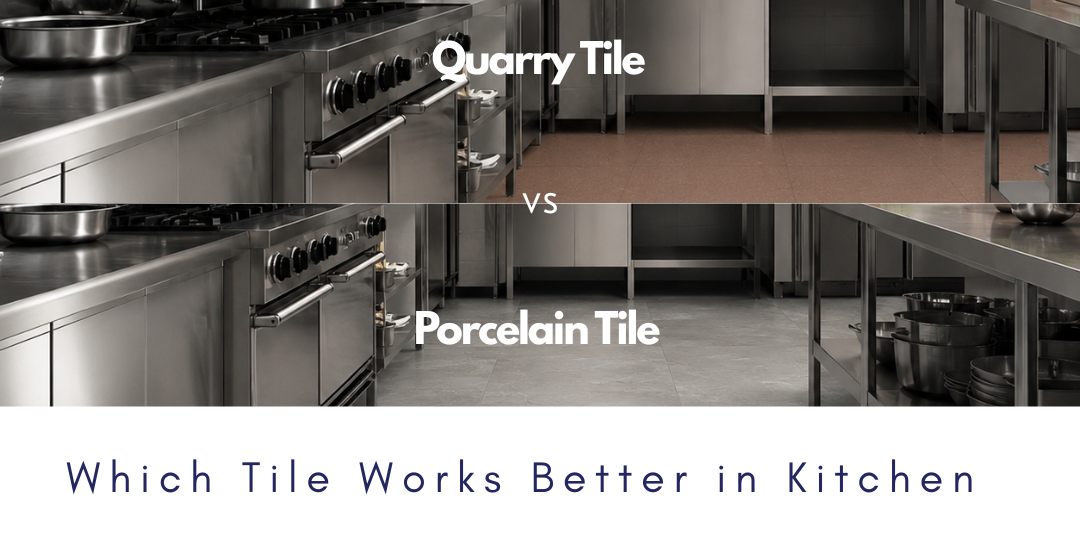
Kitchen flooring does not fail in theory. It fails in the small daily moments: water near the sink, oil around the stove, repeated mopping, dropped utensils, chair movement, and people walking the same path every day.
That is why quarry tile and porcelain tile should not be compared only by appearance. Both are hard, durable flooring materials. Both can work in kitchens. The real difference is how each surface behaves when it is exposed to moisture, grease, cleaning routines, and constant use.
For most residential kitchens, textured porcelain tile is the better all-around choice because it resists water, oil, staining, and daily cleaning with less maintenance. Quarry tile is better when natural grip, rugged use, and a more industrial or rustic surface matter more than stain control and visual consistency.
What is Quarry Tile
Quarry tile is made from natural clay and shale fired at high temperatures. Despite the name, it is not cut from stone quarries. It is a manufactured clay tile known for its dense body, earthy color range, and rougher surface texture.
It has traditionally been used in spaces where function matters more than decoration, such as:
- Commercial kitchens.
- Restaurants.
- Utility rooms.
- Outdoor walkways.
- Rustic residential kitchens.
The appeal of quarry tile is simple: it is tough, naturally grippy, and able to handle harsh use. The trade-off is that it is usually more porous than porcelain and often needs sealing to control staining and moisture absorption.
What is Porcelain Tile
Porcelain tile is made from refined clay fired at very high temperatures. This creates a dense, hard tile with a very low water absorption rate.
In kitchens, porcelain is popular because it offers:
- Strong water resistance.
- Easy cleaning.
- Low maintenance.
- High durability.
- Wide design flexibility.
Porcelain can look like stone, concrete, wood, terrazzo, or a simple matte surface. That makes it easier to match with modern, traditional, or minimal kitchen designs.
The important detail is finish. Porcelain itself is dense and water-resistant, but a smooth or polished porcelain surface can become slippery when wet. For kitchens, matte or textured porcelain usually performs better.
Water Resistance: Which Tile Performs Better?

Water exposure is one of the main reasons kitchen floors need careful material selection. Sink splashes, steam, wet shoes, mopping, leaking appliances, and accidental spills all expose the floor to moisture.
Porcelain Tile
Porcelain tile handles water extremely well because its surface is dense and closed. Liquid stays on top instead of soaking into the tile body. That makes spills easier to clean and reduces the risk of staining, moisture marks, or long-term damage.
Quarry Tile
Quarry tile is also durable, but it behaves differently. Its surface is more open, especially when unsealed. Water can settle into the tile over time if the floor is not properly sealed or maintained.
This does not make quarry tile weak. It simply means the floor depends more on sealing, cleaning habits, and maintenance consistency.
Better choice for water resistance: Porcelain tile
Better choice for wet areas with natural grip: Quarry tile, if sealed properly
Oil and Grease Resistance in Busy Kitchens
Kitchen floors do not only deal with clean water. Cooking oil, grease splatter, sauces, spices, and food residue are more difficult because they can leave marks or create slippery patches.
Porcelain Tile
Porcelain performs well here because oil remains on the surface. It does not easily penetrate the tile, so cleaning is usually straightforward. A mop, mild cleaner, or quick wipe is often enough to remove the spill before it becomes a stain.
Quarry Tile
Quarry tile has better natural grip, but that same textured surface can hold grease and residue more easily. If the tile is unsealed, oil may absorb into the surface and create darker patches over time, especially near cooking zones.
In commercial kitchens, grease buildup is managed through aggressive cleaning routines, effective floor drainage, and properly maintained commercial plumbing systems. In a home kitchen, most people want easier maintenance, which gives porcelain the advantage for daily cleaning.
Better choice for oil resistance: Porcelain tile
Better choice for greasy areas where traction matters most: Quarry tile, with proper sealing and regular cleaning
Cleaning and Maintenance Comparison
A good kitchen floor should not need constant attention to perform well.
Porcelain Tile
Porcelain tile is one of the easiest kitchen flooring materials to maintain. Its dense surface resists water, grease, and most household stains. Routine sweeping and mopping are usually enough. It also does not need regular sealing in the way quarry tile often does.
Quarry Tile
Quarry tile needs more active care. Sealing is usually recommended, especially in kitchens where oil, moisture, and food spills are common. Its textured surface can also trap dirt in busy areas, so deeper cleaning may be needed from time to time.
That maintenance is not necessarily a problem for homeowners who like quarry tile’s rugged character. But it should be understood before installation. Quarry tile is not a “clean once and forget it” surface in the same way porcelain often is.
Lower-maintenance option: Porcelain tile
More maintenance-sensitive option: Quarry tile
Foot Traffic and Long-Term Wear
Both quarry tile and porcelain tile can handle heavy foot traffic. Neither material is weak when properly installed.
Porcelain Tile
Porcelain tile is extremely hard and keeps its appearance consistent over time. It resists surface wear, moisture marks, and staining better than quarry tile. In busy residential kitchens, this makes it a strong long-term option, especially for homeowners who want the floor to look clean and controlled for years.
Quarry Tile
Quarry tile handles traffic well from a structural point of view. It can take heavy use, repeated movement, and rough conditions. But its appearance may change more visibly. Walk paths, cooking areas, and frequently wet zones may darken or develop surface variation depending on sealing and cleaning habits.
That aging can look natural in rustic or industrial kitchens. But for homeowners who want a uniform finish, porcelain is usually safer.
Better for visual consistency: Porcelain tile
Better for rugged, functional wear: Quarry tile
Slip Resistance and Safety
Slip resistance is where quarry tile becomes more competitive.
Porcelain Tile
Porcelain tile can also be slip-resistant, but it depends heavily on the surface finish. A polished porcelain tile may look clean and expensive, but it can become unsafe in a wet kitchen. Matte, textured, or slip-rated porcelain is a much better choice.
Quarry Tile
Quarry tile has a naturally textured surface. This gives it better traction under wet or slightly greasy conditions. That is one reason it has been used for years in restaurants and commercial kitchens.
This is one of the biggest mistakes homeowners make: they choose porcelain for water resistance but ignore surface grip. Water resistance and slip resistance are not the same thing.
Better natural grip: Quarry tile
Best porcelain choice for kitchens: Matte or textured porcelain, not polished porcelain
Design and Aesthetic Flexibility
Porcelain Tile
Porcelain tile offers far more design flexibility. It can imitate marble, limestone, slate, concrete, wood, and handmade tile styles. It also comes in many sizes, including large-format options that reduce grout lines and create a cleaner look.
Quarry Tile
Quarry tile has a narrower design range. It usually comes in earthy tones such as red, brown, gray, and warm clay shades. Its look is more rustic, traditional, or industrial.
That makes quarry tile a strong fit for:
- Farmhouse kitchens.
- Mediterranean-style kitchens.
- Utility-style spaces.
- Rustic interiors.
- Commercial-inspired homes.
Porcelain fits more design directions, including:
- Modern kitchens.
- Minimalist kitchens.
- Stone-look interiors.
- Wood-look flooring layouts.
- Open-plan family kitchens.
If performance and appearance both matter, porcelain gives more control.
Temperature and Comfort Underfoot
Both quarry tile and porcelain tile are hard surfaces. Neither will feel soft underfoot like vinyl, cork, or wood.
Porcelain usually feels smoother, depending on the finish. Quarry tile may feel rougher because of its texture. Both materials can work with radiant heating systems, which helps reduce the cold feel often associated with tile floors.
For kitchens where people stand for long periods, comfort mats near the sink or cooking area can improve daily use.
Which Option Is Better for Residential Kitchens?
The answer depends on priorities.
Choose Porcelain Tile If You Want:

- Maximum water resistance.
- Easier maintenance.
- Modern design flexibility.
- Better stain resistance.
- A cleaner, contemporary look.
Choose Quarry Tile If You Want:

- Industrial-level durability.
- Strong slip resistance.
- Rustic or traditional aesthetics.
- A more textured surface.
For most modern residential kitchens, porcelain tile tends to offer the best balance between durability, maintenance, and design versatility.
Why Floors Center Helps Homeowners Make Better Flooring Decisions
At Floors Center, we help customers evaluate flooring based on real-world performance, not just appearance.
Kitchen flooring must withstand:
- Water exposure.
- Cooking oils.
- Cleaning routines.
- Heavy traffic.
- Long-term wear.
By understanding how different materials behave under these conditions, homeowners can make smarter investments that perform reliably over time.
Final Thoughts
Both quarry tile and porcelain tile offer impressive durability, making them strong choices for kitchen flooring. However, they serve different priorities.
Quarry tile excels in slip resistance and rugged performance, while porcelain tile provides superior water resistance, easier maintenance, and greater design flexibility.
For most residential kitchens, porcelain tile offers a better overall balance between practicality and aesthetics. However, homeowners seeking a more industrial or rustic appearance may still prefer quarry tile for its unique character and traction.
Choosing the right kitchen flooring ultimately comes down to understanding how the material will perform in your daily environment, not just how it looks on installation day.
Frequently Asked Questions (FAQs)
Q) Is porcelain tile more durable than quarry tile?
A) Both are highly durable, but porcelain tile typically offers better water resistance and lower maintenance for residential kitchens.
Q) Does quarry tile need sealing?
A) Yes. Quarry tile is more porous than porcelain and generally requires sealing to improve stain and moisture resistance.
Q) Which tile is easier to clean in kitchens?
A) Porcelain tile is usually easier to clean because its non-porous surface resists grease, stains, and moisture.
Q) Is quarry tile good for residential kitchens?
A) Yes. Quarry tile performs well in kitchens, especially for homeowners who prefer rustic aesthetics and enhanced slip resistance.
Q) What flooring handles kitchen moisture best?
A) Porcelain tile and waterproof vinyl flooring are among the best options for handling moisture in kitchens.