

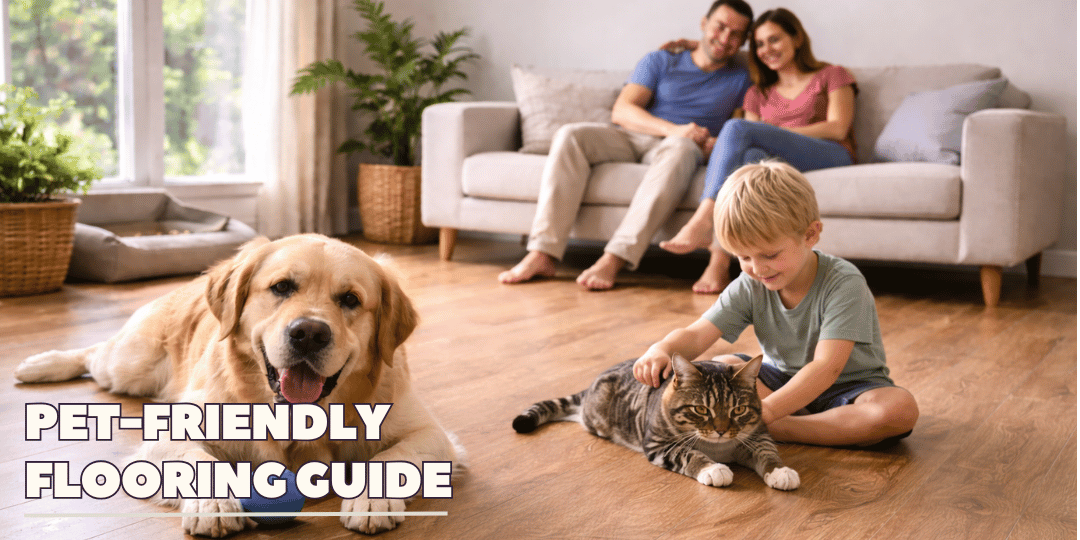
Pets bring energy, companionship, and personality into a home. They also bring scratches, spills, muddy paws, and daily wear that many floors simply are not built to handle. One of the most common mistakes homeowners make is assuming that all flooring materials perform the same under pet activity.
The truth is, some floors deteriorate quickly in homes with dogs and cats, while others hold up for years with minimal issues. Understanding how different materials respond to claws, moisture, and repeated cleaning is essential before installation begins. Choosing wisely from the start can prevent costly repairs and long-term frustration.
This guide explains the common flooring problems pet owners face, the mistakes to avoid, and the best-performing materials for active households.
The Real Flooring Problems Pet Owners Face

Pet owners typically encounter four major flooring challenges.
Scratches from Claws
Dog nails act like sandpaper on softer surfaces. Over time, visible wear patterns appear, especially in hallways and high-traffic zones.
Moisture Damage
Accidents, spilled water bowls, and wet paws allow moisture to seep into seams. If flooring is not properly sealed, subfloors can swell or rot.
Odor Retention
Porous materials absorb liquids. Once moisture penetrates beneath the surface, odor becomes difficult to eliminate.
Slipping Hazards
High-gloss finishes can be slippery for pets, increasing the risk of injury.
Understanding these risks helps narrow down safer flooring options.
Costly Mistake #1 – Choosing Based on Looks Instead of Performance
Many homeowners fall in love with the appearance of hardwood floors or glossy finishes without considering durability.
Traditional solid wood can scratch easily, particularly softer species. While hardwood flooring offers warmth and resale appeal, it requires careful maintenance in homes with active pets. Learn more about performance considerations in the Hardwood Flooring Collection.
Laminate flooring can perform well, but lower-quality versions may swell when exposed to moisture. Reviewing product specifications within the Laminate Flooring Collection ensures better long-term performance.
Performance must come before appearance when pets are involved.
Costly Mistake #2 – Ignoring Waterproof Protection
Not all “water-resistant” floors are waterproof. There is a significant difference.
Water-resistant materials can tolerate minor spills for a short time. Waterproof flooring prevents moisture from penetrating the core layer, protecting the subfloor underneath.
Vinyl plank flooring is one of the most reliable waterproof options available today. Its rigid core construction blocks moisture while offering scratch resistance. Explore options in the Vinyl Plank Flooring Collection.
Porcelain tile flooring is another excellent solution. It is non-porous, highly resistant to moisture, and extremely durable. Review high-performance options in the Porcelain Tile Flooring Collection.
Waterproof protection is critical in homes with pets.
Costly Mistake #3 – Choosing the Wrong Surface Finish
Glossy finishes may look clean and modern, but they reveal scratches and paw prints quickly. Matte finishes hide surface wear more effectively.
Texture also plays a role. Slightly textured tile provides better traction for pets compared to polished surfaces.
The Tile Flooring Collection includes matte and textured finishes suitable for active households.
Surface finish affects both safety and appearance over time.
Best Flooring Options for Homes with Pets

Porcelain Tile Flooring
Porcelain tile is one of the strongest options available. It resists scratches, moisture, and heavy traffic. When properly installed and grouted, it prevents liquid from reaching the subfloor.
It also does not absorb odors, making it ideal for pet homes.
Luxury Vinyl Plank
Luxury vinyl plank combines comfort with durability. It absorbs impact better than tile and remains warmer underfoot. Waterproof cores prevent damage from spills or accidents. It is also quieter than many hard surfaces.
Waterproof Laminate Flooring
Modern waterproof laminate flooring features improved locking systems and sealed cores. It provides the look of wood while offering improved moisture resistance compared to traditional laminate.
Engineered Hardwood
Engineered hardwood performs better than solid wood due to its layered construction. However, it still requires nail maintenance and moisture management.
Pet owners choosing hardwood should prioritize harder species and matte finishes.
What to Avoid in Pet Homes

Certain materials are more vulnerable in active environments.
- Soft solid hardwood
- High-gloss finishes
- Carpet in high-traffic zones
- Poor-quality laminate
- Improper installation
Avoiding these choices prevents long-term problems.
How Floors Center Helps Pet Owners Choose Wisely
Floors Center provides a wide range of tile, vinyl, laminate, and hardwood flooring solutions suitable for different household needs. Detailed product specifications allow homeowners to compare scratch resistance, moisture protection, and finish types before making decisions.
Access to performance-based flooring categories ensures pet owners can select materials that align with daily use demands.
Clear product information reduces guesswork and helps prevent costly installation errors.
Installation Tips for Pet-Friendly Floors
Proper installation enhances durability.
- Use moisture barriers when required.
- Seal grout lines in tile installations.
- Maintain proper expansion gaps.
- Install transition strips between rooms.
Correct installation prevents movement-related damage.
Long-Term Maintenance for Pet Homes
Even the most durable floor requires care.
- Trim pet nails regularly.
- Use mats near entrances.
- Clean spills immediately.
- Use pH-neutral cleaners.
- Avoid abrasive tools.
Preventive care extends lifespan significantly.
Conclusion
Not all flooring materials respond the same way to claws, spills, and daily wear. Choosing flooring for a pet-friendly home requires evaluating scratch resistance, waterproof protection, surface texture, and installation quality.
Porcelain tile flooring and luxury vinyl plank consistently perform well under active conditions. Waterproof laminate and engineered hardwood can also work when properly selected.
Avoiding common mistakes before installation protects both your investment and your home’s comfort.
The right floor makes pet ownership easier, not more stressful.
FAQs
Q) What is the best flooring for homes with dogs?
A) Porcelain tile and waterproof vinyl plank are among the most durable and scratch-resistant options.
Q) Is hardwood a bad choice for pet owners?
A) Not necessarily, but softer species and glossy finishes are more prone to visible wear.
Q) Does vinyl flooring scratch easily?
A) High-quality vinyl plank is resistant to scratches, but lower-grade products may show wear over time.
Q) Is tile too hard for pets?
A) Tile is durable but firm. Area rugs can improve comfort.
Q) What flooring hides pet hair best?
A) Matte finishes and textured surfaces conceal hair and minor debris better than glossy floors.
Q) Do I need waterproof flooring for pets?
A) Waterproof flooring provides better protection against accidents and spills.
1 comment
vishal
Helpful guide for pet owners choosing flooring. Scratch resistance and waterproof protection are often overlooked but matter most for durability. For expert industrial flooring solutions, visit https://biswasrajflooring.in/