

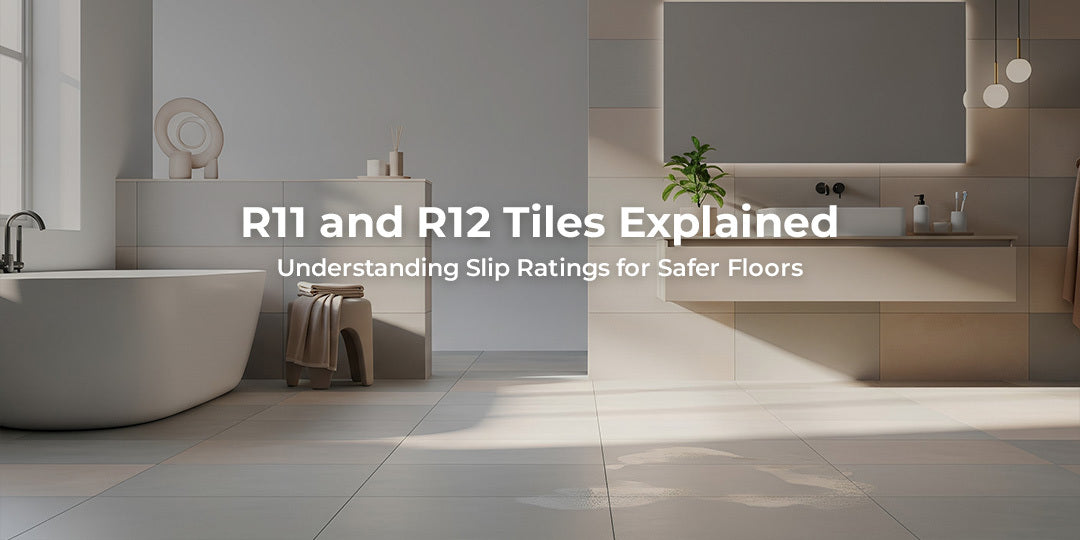
Flooring safety often goes overlooked until it becomes a problem. Whether it’s a kitchen spill, a wet bathroom, or a rainy patio, the right tile surface can prevent accidents and protect your space. That’s where R11 and R12 slip-resistant tiles come in, flooring materials designed to combine grip, durability, and visual appeal.
If you’re planning a remodel or working on a commercial project, understanding what these slip ratings mean will help you make the right choice for each area of your property. This guide breaks down the science behind R-ratings, where R11 and R12 tiles work best, and why they’ve become essential for modern flooring and outdoor design.
What Are Slip Ratings (R-Ratings)?
Slip ratings measure how resistant a tile surface is to slipping, especially when wet or greasy. These ratings come from the DIN 51130 standard, a European test method widely used in the U.S. for both residential and commercial applications.
The test uses a ramp coated with oil, and a person wearing standard shoes walks on it at various inclines. The steeper the ramp before slipping occurs, the higher the R rating. Here’s how it breaks down:
|
Rating |
Slip Resistance |
Typical Use |
|
R9 |
Low |
Dry indoor spaces (living rooms, bedrooms) |
|
R10 |
Medium |
Residential kitchens, hallways |
|
R11 |
High |
Bathrooms, laundry rooms, covered patios |
|
R12 |
Very High |
Outdoor spaces, pool decks, entryways |
|
R13 |
Maximum |
Industrial or heavy-duty commercial use |
For homeowners and designers, R11 and R12 tiles represent the sweet spot, safe enough for wet and outdoor conditions while maintaining design flexibility.
Understanding R11 Tiles
R11 tiles offer excellent slip resistance for indoor and semi-outdoor environments where water exposure is common. They’re usually matte or lightly textured, providing traction without feeling rough underfoot.
Best Areas for R11 Tiles
- Bathrooms and shower floors: Especially where consistent moisture makes surfaces slippery.
- Kitchens: Where cooking oil and spills can create risk.
- Laundry rooms: For added safety around water appliances.
- Covered patios or sunrooms: Spaces that experience humidity or light rain exposure.
Because R11 tiles are easy to clean and not overly abrasive, they’re practical for homes that balance functionality with modern aesthetics.
See options in our Bathroom Tiles Collection and Kitchen Tiles for R11 finishes that fit residential interiors.
Understanding R12 Tiles
R12 tiles take slip resistance a step further. Their surface is more textured and structured, providing a solid grip even under heavy water or outdoor exposure.
These tiles are common in exterior and commercial settings, where surfaces face weather conditions, wet cleaning, or higher foot traffic.
Best Areas for R12 Tiles
- Outdoor patios and pool decks: Ideal for traction around water.
- Outdoor kitchens and barbeque areas: Handles spills and moisture without compromising design.
- Commercial entrances or restrooms: Keep traffic areas safe and compliant.
- Workshops and garages: Offers grip even with oil or cleaning chemicals.
Explore Outdoor Tiles and Porcelain Pavers, many feature R12-rated surfaces perfect for both residential and light commercial spaces.
R11 vs. R12 Tiles: What’s the Difference?
|
Feature |
R11 Tiles |
R12 Tiles |
|
Grip Level |
High |
Very High |
|
Texture |
Matte or fine texture |
Rough or structured surface |
|
Recommended Use |
Indoors and semi-outdoors |
Outdoors, commercial, high-moisture |
|
Comfort Underfoot |
Moderate |
Slightly firm |
|
Cleaning |
Easy |
Requires more attention due to deeper texture |
In short:
- R11: Balance of comfort and safety (best for interiors).
- R12: Maximum traction and safety (best for exteriors).
Always confirm specifications on the manufacturer’s sheet since some R11 or R12 tiles can vary depending on glaze, texture, or finish.
Where Slip-Resistant Tiles Matter Most

Different environments call for different slip ratings. Choosing the correct tile can significantly improve safety and functionality.
Kitchens and Bathrooms
Both are prone to spills and moisture, making them ideal candidates for R11 slip-resistant surfaces. Porcelain or ceramic tiles with this rating provide enough grip without roughness, making cleaning easier.
Visit our Kitchen Tiles Collection and Bathroom Tiles for moisture-ready designs.
Outdoor Patios and Pool Areas
Outdoor tiles, especially R12-rated porcelain pavers, prevent slips when wet from rain or pool water. They’re frost-resistant, color-stable, and weatherproof.
Browse Porcelain Pavers, engineered for both beauty and outdoor endurance.
Commercial Entrances and Workspaces
Offices, restaurants, and retail stores often choose R12 tiles for compliance and safety. They provide a secure surface even with constant foot traffic. For heavy-duty commercial zones or industrial kitchens, R13 may be required.
Explore Commercial Flooring Options to find ADA-compliant solutions for public environments.
Tile Materials with R11 and R12 Slip Ratings
Not all tiles are created equal, materials influence how grip, maintenance, and visual appeal work together.
Porcelain Tile Flooring
Porcelain is the most common material for R11 and R12-rated tiles. It’s dense, water-resistant, and ideal for both interior and exterior spaces. Available in finishes like wood look, stone look, and concrete effect, porcelain tiles maintain traction while offering design flexibility.
Check Porcelain Tile Flooring for indoor and outdoor-rated options.
Natural Stone Tile
Materials like granite, slate, and travertine naturally feature textured surfaces that improve slip resistance. These tiles are popular for patios, entryways, and pool decks. Seal them periodically to preserve grip and color depth.
See Natural Stone Tiles and Granite Tile Countertops for options that blend durability and texture.
Balancing Safety with Aesthetics
Slip-resistant doesn’t have to mean dull. Modern R11 and R12 tiles come in a wide range of textures, finishes, and colors that enhance design without sacrificing traction.
- Wood Look R11 Tiles: Perfect for indoor-outdoor transitions, combining warmth with practicality.
- Matte Porcelain Tiles: Offer subtle grip and reflect less light, making them great for modern kitchens.
- Textured Stone Finishes: Ideal for rustic or natural designs in outdoor patios.
Browse Wood Look Tiles to achieve this balance of design and performance.
Maintenance and Cleaning for R11 & R12 Tiles

Textured tiles need slightly different maintenance routines than polished or glossy tiles. Here’s how to keep them safe and spotless:
- Regular sweeping or vacuuming prevents dirt buildup that reduces traction.
- Use neutral pH cleaners harsh chemicals can wear down surface texture.
- Avoid waxes or polishes, which can make floors slippery.
- For natural stone tiles, apply sealer as directed by the manufacturer.
- Rinse and dry surfaces after deep cleaning to maintain full slip resistance.
A simple routine ensures your R-rated floors stay as safe and attractive as the day they were installed.
Why Buy Slip-Resistant Tiles from Floors Center
Floors Center offers a wide selection of R11 and R12 slip-resistant tiles designed for both residential and commercial use. Whether you’re upgrading a bathroom, designing an outdoor kitchen, or sourcing compliant flooring for a workspace, our catalog provides:
- Extensive materials: Porcelain, ceramic, natural stone, and pavers.
- Nationwide delivery: Fast and reliable shipping across the U.S.
- Sample requests: See color and texture before you buy.
- Expert support: Guidance on installation, grout, and matching trim pieces.
Explore Porcelain Tile Flooring, Outdoor Porcelain Pavers, and Natural Stone Tiles to find slip-resistant designs that fit your project.
FAQs
Q) What does R11 or R12 mean in tiles?
A) These ratings indicate slip resistance. R11 is suitable for indoor wet areas, while R12 offers stronger traction for outdoor or commercial use.
Q) Where should I use R11 tiles?
A) Use them in kitchens, bathrooms, laundry rooms, or covered patios where water exposure occurs but not direct rain.
Q) Are R12 tiles suitable for residential use?
A) Yes. Many homeowners choose R12 tiles for patios, pool decks, and entryways where traction is critical.
Q) Do slip-resistant tiles require sealing?
A) Porcelain and ceramic tiles generally don’t, but natural stone varieties like granite or slate should be sealed to maintain performance.
Q) What’s the difference between R12 and R13 tiles?
A) R12 provides strong slip resistance for homes and light commercial spaces. R13 tiles are designed for heavy-duty industrial areas with extreme moisture or oil exposure.
Q) Are R11/R12 tiles a good choice for elderly family members or aging-in-place homes?
A) Yes. Higher slip ratings reduce the risk of falls on wet or textured surfaces, which matters most in bathrooms and kitchens, the two rooms where falls happen most often for older adults. For broader guidance on making a home safer for aging in place, resources like Harwell Home Care can help with the wider picture beyond flooring