

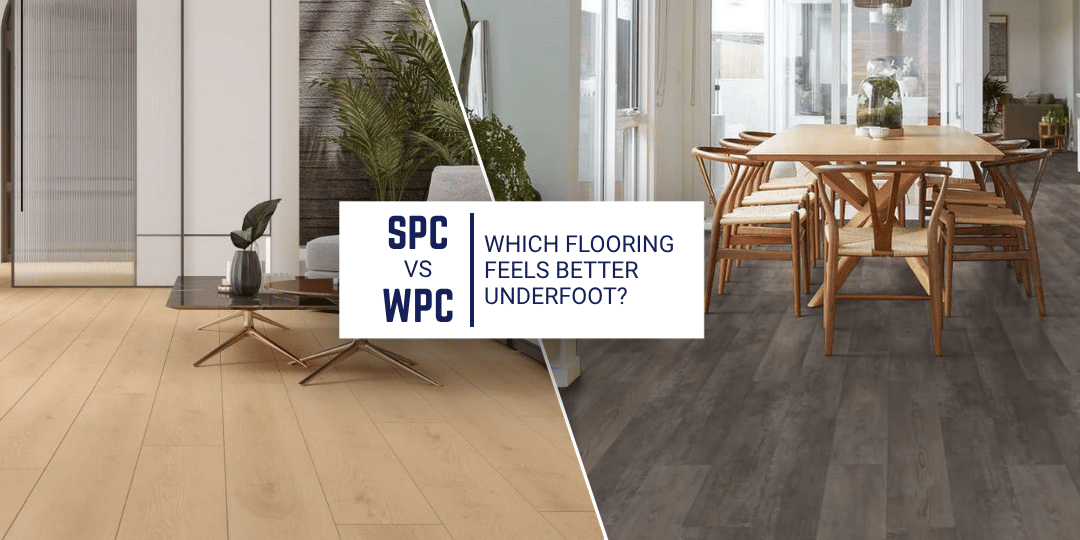
Choosing flooring today is no longer just about appearance. Homeowners are paying closer attention to comfort, sound absorption, durability, and how flooring feels during everyday use. This is especially important in family homes where people spend hours walking, standing, cooking, playing, and moving throughout the day.
Among modern flooring options, SPC flooring and WPC flooring have become two of the most popular choices in the luxury vinyl category. Both are waterproof, durable, and visually appealing, but they feel very different underfoot.
For many homeowners, the real question is not simply which flooring is stronger, but which one feels better to live on every day.
At Floors Center, we help homeowners compare flooring based on real-world performance rather than marketing terms alone. Understanding how SPC and WPC flooring differ in comfort, structure, stability, and daily usability helps homeowners make smarter long-term decisions.
Understanding SPC Flooring

SPC stands for Stone Plastic Composite or Stone Polymer Composite. This flooring is built with a rigid core made primarily from limestone powder and stabilizers.
SPC flooring is known for:
- High density.
- Strong structural stability.
- Waterproof construction.
- Excellent dent resistance.
Its rigid core makes it highly durable in busy residential and commercial environments.
Because SPC flooring is extremely dense, it performs exceptionally well against heavy traffic and impact pressure.
What Is WPC Flooring?

WPC stands for Wood Plastic Composite. Unlike SPC, WPC flooring contains a foamed or expanded core structure that creates a softer and slightly more flexible surface.
WPC flooring is designed to provide:
- Enhanced comfort underfoot.
- Better sound absorption.
- Slight cushioning while walking.
- Warmer surface feel.
Although both SPC and WPC belong to the luxury vinyl flooring category, their internal construction creates very different user experiences.
Why Underfoot Comfort Matters More Than Homeowners Realize
Many people underestimate how flooring comfort affects daily living.
Hard flooring surfaces directly influence:
- Foot fatigue.
- Standing comfort.
- Walking experience.
- Sound levels.
- Indoor warmth perception.
In homes where people:
- Stand in kitchens for long periods.
- Have children playing on floors.
- Walk barefoot frequently.
- Spend significant time indoors.
Underfoot comfort becomes an important practical consideration.
This is one reason homeowners increasingly compare SPC and WPC flooring based on feel, not just appearance.
SPC Flooring Feels Firmer and More Solid
SPC flooring has a rigid and compact structure. When walking on it, homeowners typically notice:
- A firmer surface feel.
- Less cushioning.
- Strong floor stability.
- Minimal movement under pressure.
This firmness creates a highly stable walking surface, which many homeowners associate with durability and structural strength.
In busy homes, SPC flooring performs especially well because it resists:
- Heavy furniture pressure.
- Appliance weight.
- Denting from impacts.
- Subfloor imperfections.
Its rigid core also reduces the likelihood of visible floor movement over time.
WPC Flooring Feels Softer and More Cushioned
WPC flooring provides a noticeably softer walking experience due to its thicker and more flexible core.
Underfoot, WPC flooring generally feels:
- More comfortable.
- Slightly cushioned.
- Less rigid.
- Warmer compared to SPC.
This softer feel makes WPC especially attractive for:
- Bedrooms.
- Living rooms.
- Family spaces.
- Homes where people stand for long periods.
For households prioritizing comfort over maximum rigidity, WPC flooring often feels more pleasant during daily use.
Which Flooring Is Better for Standing Comfort?
One of the biggest practical differences between SPC and WPC flooring appears during extended standing periods.
SPC Flooring
SPC’s dense construction can feel harder underfoot during:
- Cooking.
- Cleaning.
- Long standing tasks.
Although comfortable enough for general walking, it offers less shock absorption.
WPC Flooring
WPC provides more flexibility and cushioning, reducing:
- Foot fatigue.
- Pressure on joints.
- Standing discomfort.
This makes WPC flooring especially beneficial in kitchens and family spaces where prolonged standing is common.
Temperature Feel and Surface Warmth
Flooring temperature perception strongly affects comfort.
SPC Flooring
Because SPC contains a stone-based core, it tends to feel:
- Cooler underfoot.
- More similar to tile or dense laminate.
This can work well in warmer climates but may feel colder in winter conditions.
WPC Flooring
WPC flooring generally feels:
- Slightly warmer.
- Softer during barefoot walking.
- More insulated.
Its foamed structure contributes to a more comfortable surface temperature.
Noise Reduction and Acoustic Performance
Noise control is another major factor in flooring comfort.
SPC Flooring
SPC flooring’s rigid core creates:
- Sharper footstep sounds.
- More sound reflection.
This is especially noticeable in large open-concept homes• High-traffic areas
WPC Flooring
WPC flooring absorbs sound more effectively because of its softer core.
This helps reduce:
- Footstep noise.
- Echoing.
- Furniture movement sound.
For family homes with children or multi-level layouts, quieter flooring can significantly improve comfort.
Durability vs Comfort: The Core Trade-Off
The biggest difference between SPC and WPC flooring is the balance between:
- Structural durability.
- Underfoot comfort.
SPC Flooring
SPC flooring performs exceptionally well in:
- High-traffic areas.
- Homes with heavy furniture.
- Commercial-style environments.
- Areas exposed to impact pressure.
Its rigid core provides excellent stability and dent resistance.
WPC Flooring
WPC flooring focuses more on:
- Softer walking feel.
- Better insulation.
- Acoustic comfort.
- Residential living comfort.
While still durable, WPC is generally less rigid than SPC under heavy pressure.
Moisture Resistance and Waterproof Performance
Both SPC and WPC flooring offer waterproof construction.
This makes them highly suitable for:
- Kitchens.
- Bathrooms.
- Basements.
- Entryways.
Unlike traditional hardwood flooring, SPC and WPC resist:
- Moisture penetration.
- Expansion from spills.
- Water-related warping.
This makes both practical choices for active households.
Subfloor Imperfections and Surface Stability
Subfloor condition also affects flooring performance and comfort.
SPC Flooring
SPC’s rigidity helps bridge minor subfloor imperfections more effectively.
This creates:
- Better structural consistency.
- Reduced movement.
- Improved long-term stability.
WPC Flooring
WPC’s softer core may reflect uneven subfloors slightly more over time if installation preparation is poor.
However, its cushioning helps soften the overall feel during daily use.
Best Rooms for SPC Flooring
SPC flooring works especially well in:
- Kitchens.
- Hallways.
- Entryways.
- High-traffic living areas.
- Homes with pets.
Its durability and dent resistance make it ideal for demanding environments.
Best Rooms for WPC Flooring
WPC flooring performs particularly well in:
- Bedrooms.
- Family rooms.
- Living spaces.
- Areas focused on comfort.
Its softer feel improves overall residential comfort.
Which Flooring Is Better for Family Homes?
For active family homes, the decision often comes down to lifestyle priorities.
Choose SPC Flooring If You Prioritize:
- Maximum durability.
- Dent resistance.
- Heavy traffic performance.
- Structural stability.
Choose WPC Flooring If You Prioritize:
- Softer comfort.
- Quieter interiors.
- Better standing comfort.
- Warmer underfoot feel.
Many homeowners ultimately prefer WPC in residential comfort spaces and SPC in high-impact areas.
Why Floors Center Helps Homeowners Compare Flooring Realistically
At Floors Center, we help homeowners evaluate flooring beyond appearance alone.
We focus on:
- Everyday comfort.
- Long-term durability.
- Acoustic performance.
- Moisture resistance.
- Real-life usability.
Our goal is to help homeowners choose flooring that performs well not only visually, but also physically during everyday living.
Final Thoughts
SPC and WPC flooring are both strong waterproof flooring solutions, but they create very different living experiences.
SPC flooring offers superior rigidity, durability, and dent resistance, making it ideal for high-traffic environments. WPC flooring delivers softer comfort, quieter acoustics, and a warmer underfoot feel that many homeowners prefer in residential spaces.
When choosing between the two, the best option depends less on trends and more on how the home is actually used every day.
For homeowners prioritizing comfort and a softer walking experience, WPC flooring often feels better underfoot. For those focused on maximum structural performance and durability, SPC flooring remains an excellent long-term solution.
Frequently Asked Questions (FAQs)
Q) Which flooring feels softer underfoot, SPC or WPC?
A) WPC flooring generally feels softer and more cushioned because of its foamed core structure.
Q) Is SPC flooring more durable than WPC?
A) Yes. SPC flooring is typically more rigid and resistant to dents, making it highly durable in high-traffic environments.
Q) Which flooring is better for kitchens?
A) Both perform well in kitchens, but SPC flooring offers better resistance to heavy impacts and furniture pressure.
Q) Does WPC flooring reduce noise better than SPC?
A) Yes. WPC flooring absorbs sound more effectively due to its softer and thicker core structure.
Q) Are SPC and WPC flooring waterproof?
A) Yes. Both SPC and WPC flooring are waterproof and suitable for moisture-prone areas.