

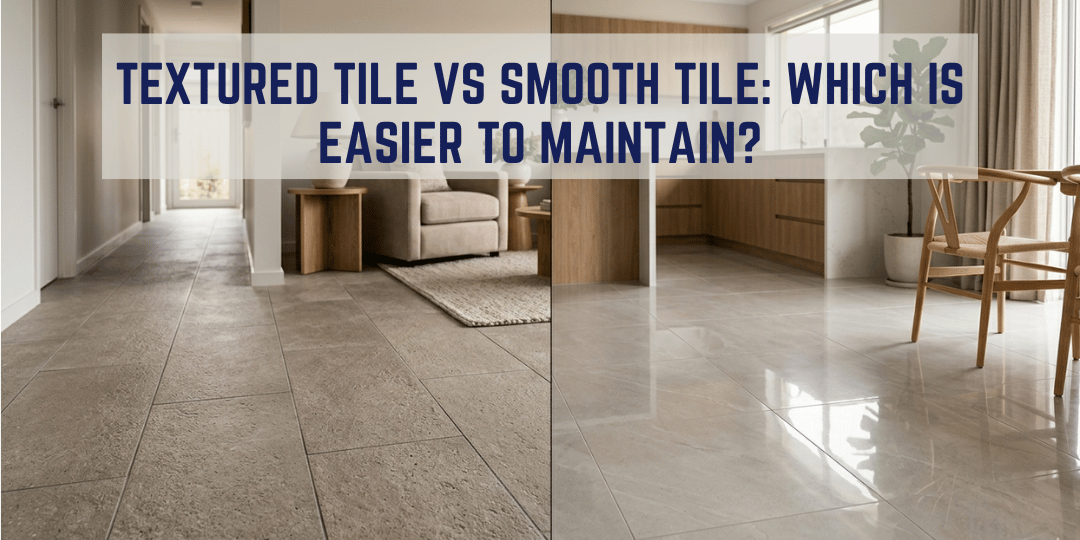
When selecting tile flooring, homeowners often focus on color, size, pattern, and overall appearance. While aesthetics certainly matter, long-term maintenance is equally important. A beautiful floor can quickly become frustrating if it requires excessive cleaning or constant upkeep.
One of the most common questions homeowners ask is whether textured tile or smooth tile is easier to maintain. Both options offer unique benefits, but they perform differently when exposed to everyday conditions such as dirt, moisture, spills, foot traffic, and routine cleaning.
At Floors Center, we help homeowners choose flooring solutions that balance style, durability, and practicality. Understanding the maintenance requirements of textured and smooth tile can help you make a more informed decision for your home.
Understanding Textured Tile
Textured tile features a surface that includes raised patterns, ridges, grooves, or subtle variations designed to mimic natural materials such as stone, slate, wood, or concrete.
Textured tiles are commonly used in:
The primary purpose of texture is to improve traction while adding visual depth and character to a space.
What Is Smooth Tile?
Smooth tile features a flat, even surface with minimal texture. Depending on the finish, smooth tiles may appear matte, satin, polished, or glossy.
Smooth tile is often found in:
- Living rooms.
- Dining rooms.
- Modern kitchens.
- Contemporary bathrooms.
- Open-concept spaces.
Its clean appearance and simplified maintenance make it a popular choice for many homeowners.
Why Maintenance Matters More Than Most Homeowners Realize
Flooring is one of the hardest-working surfaces in a home. Every day it encounters:
- Dirt and dust
- Foot traffic
- Pet hair
- Food spills
- Water exposure
- Cleaning products
Over time, the ease or difficulty of cleaning can significantly impact homeowner satisfaction.
A tile floor that looks stunning in a showroom may feel very different after years of daily use.
How Dirt Behaves on Textured Tile
One of the biggest maintenance considerations with textured tile is how dirt interacts with the surface.
Because textured tiles contain grooves and uneven areas, they can:
- Trap dust particles.
- Hold debris in recessed areas.
- Collect mud near entryways.
- Capture grease in kitchen environments.
This does not mean textured tile is difficult to maintain, but it often requires more thorough cleaning techniques.
Regular sweeping may not always remove debris trapped within textured surfaces.
In high-traffic homes, homeowners may need occasional deep cleaning to maintain appearance.
How Dirt Behaves on Smooth Tile
Smooth tile offers a much simpler cleaning experience.
Because the surface is flat:
- Dirt remains on top of the tile.
- Dust is easier to remove.
- Spills wipe away quickly.
- Routine mopping is more effective.
For busy households, this often translates into less cleaning effort overall.
This is one reason smooth tile is frequently selected for interior living spaces where ease of maintenance is a priority.
Which Tile Handles Kitchen Messes Better?
Kitchens are among the most demanding environments for flooring.
Floors must handle:
- Cooking oils.
- Food spills.
- Water splashes.
- Daily foot traffic.
Textured Tile in Kitchens
Textured tile offers better slip resistance, particularly when floors become wet.
However, textured surfaces may retain:
- Grease residue.
- Food particles.
- Fine dirt.
As a result, cleaning may require additional scrubbing compared to smooth tile.
Smooth Tile in Kitchens
Smooth tile allows spills to remain on the surface, making cleanup easier.
Food and liquids can generally be removed with:
- A mop.
- A damp cloth.
- Standard floor cleaners.
For homeowners focused primarily on maintenance convenience, smooth tile often has the advantage.
Bathroom Maintenance Considerations
Bathrooms introduce unique challenges due to constant moisture exposure.
Textured Tile Benefits
Textured tile excels in bathrooms because it provides better traction when wet.
This helps reduce slip risks and improves safety.
Smooth Tile Considerations
Smooth tile is easier to clean but can become slippery when exposed to water, especially polished finishes.
Many homeowners compromise by choosing:
- Textured floor tile.
- Smooth wall tile.
This combination balances safety and maintenance.
Cleaning Frequency: Textured vs Smooth

The difference between textured and smooth tile often becomes noticeable in cleaning frequency.
Textured Tile
May require:
- More detailed sweeping.
- Occasional scrubbing.
- Specialized brushes for deep cleaning.
Smooth Tile
Typically requires:
- Sweeping
- Vacuuming
- Standard mopping
The overall maintenance routine tends to be simpler.
Stain Resistance Comparison
Tile maintenance is not only about dirt, it also involves stain management.
Smooth Tile
Smooth surfaces generally resist staining more effectively because contaminants remain on the surface.
Common kitchen spills such as:
- Coffee
- Wine
- Juice
- Cooking oils
can often be cleaned before they penetrate grout or surface finishes.
Textured Tile
Textured surfaces can occasionally make stain removal more difficult because liquids may settle into recessed areas. If the tile is natural stone rather than ceramic or porcelain, porosity and sealing also affect stain resistance. Proper natural stone maintenance and protection, including stone-safe cleaning and periodic sealing, can help reduce moisture, oil, and stain absorption.
Grout Maintenance Matters
When discussing tile maintenance, homeowners often focus on the tile itself while overlooking grout.
In reality, grout lines often require more maintenance than the tile surface.
Factors affecting grout cleanliness include:
- Tile size.
- Tile layout.
- Grout color.
- Surface texture.
Large-format tiles with fewer grout lines generally require less upkeep regardless of whether the tile is textured or smooth.
Slip Resistance vs Maintenance
One of the biggest trade-offs between textured and smooth tile involves safety versus cleaning convenience.
Textured Tile Advantages
- Better traction.
- Reduced slip risk.
- Ideal for wet areas.
Smooth Tile Advantages
- Easier cleaning.
- Faster maintenance.
- Cleaner appearance.
The best option often depends on where the tile will be installed.
Best Rooms for Textured Tile
Textured tile is often the better choice for:
- Entryways.
- Mudrooms.
- Bathrooms.
- Outdoor patios.
- Pool surrounds.
These areas benefit from improved traction and durability.
Best Rooms for Smooth Tile
Smooth tile is frequently preferred for:
- Living rooms.
- Dining rooms.
- Kitchens.
- Hallways.
- Open-concept spaces.
The reduced cleaning effort makes it especially appealing in heavily used interior areas.
How Tile Finish Impacts Maintenance
Not all smooth tiles are identical.
Matte Smooth Tile
Offers:
- Easier maintenance.
- Better traction.
- Reduced visibility of dirt.
Polished Smooth Tile
Provides:
- High-end appearance.
- Greater light reflection.
However, it may show:
- Footprints.
- Water spots.
- Smudges more easily.
Homeowners should consider finish type alongside texture when evaluating maintenance needs.
Long-Term Maintenance Costs
Over time, maintenance affects flooring costs just as much as initial installation.
Textured tile may require:
- More frequent deep cleaning.
- Additional labor.
- Specialized cleaning tools.
Smooth tile generally reduces maintenance effort, helping lower long-term upkeep requirements.
For many homeowners, this convenience becomes increasingly valuable over the life of the floor.
Why Floors Center Helps Homeowners Make Better Flooring Decisions
At Floors Center, we help homeowners evaluate flooring based on how it performs in real-life environments not just how it looks in a showroom.
When comparing textured and smooth tile, we consider:
- Daily maintenance expectations.
- Household activity levels.
- Moisture exposure.
- Safety requirements.
- Long-term durability.
Our goal is to help homeowners select flooring that aligns with both their design vision and lifestyle needs.
Final Thoughts
Both textured tile and smooth tile offer excellent durability and design versatility. The right choice ultimately depends on how the space will be used.
If safety and slip resistance are top priorities, textured tile often provides the better solution. If ease of cleaning and low-maintenance performance are more important, smooth tile typically has the advantage.
For many homeowners, the most practical approach is not choosing one over the other throughout the entire home, but selecting each where it performs best.
Understanding the maintenance requirements of both options helps ensure that your flooring continues to look beautiful and function effectively for years to come.
Frequently Asked Questions (FAQs)
Q) Is textured tile harder to clean than smooth tile?
A) Yes. Textured tile can trap dirt and debris within its surface variations, often requiring more detailed cleaning than smooth tile.
Q) Which tile is better for kitchens?
A) Smooth tile is generally easier to clean, while textured tile offers better slip resistance. The best choice depends on your priorities.
Q) Is textured tile safer in wet areas?
A) Yes. Textured tile provides greater traction and is often preferred for bathrooms, entryways, and outdoor spaces.
Q) Does smooth tile show dirt more easily?
A) Some smooth finishes, especially polished tiles, may show footprints, water spots, and dust more visibly than textured surfaces.
Q) Which tile requires less long-term maintenance?
A) Smooth tile typically requires less effort to clean and maintain over time, making it a popular choice for busy households.