

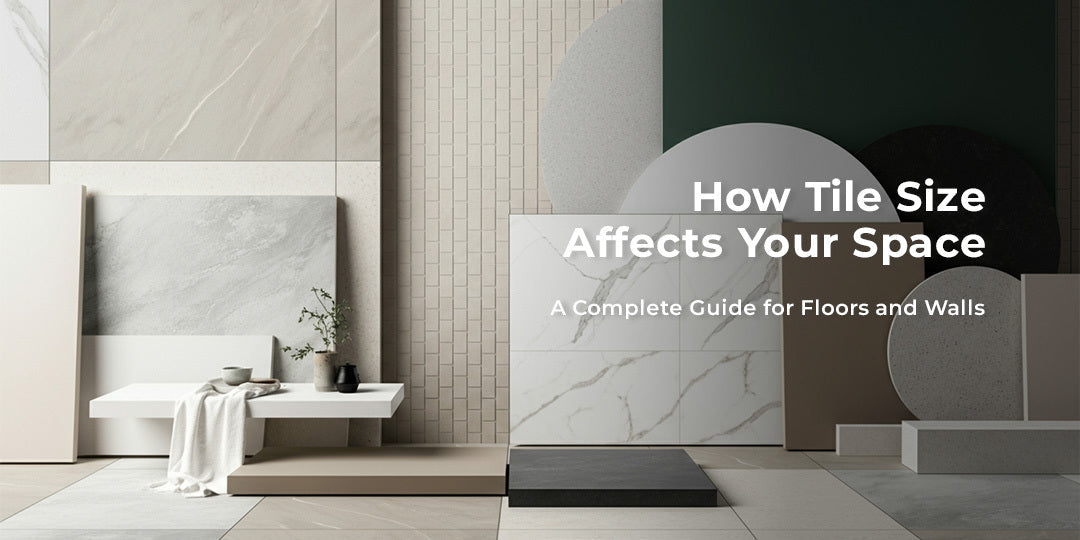
Choosing the right tile isn’t just about color or finish, it’s about size. Tile size influences how big or small a room feels, how easy installation becomes, and how much maintenance your space will require in the long run. A large, open living area can feel sleek and continuous with large-format porcelain tiles, while a compact bathroom might benefit from small mosaic patterns that add detail and grip.
Whether you’re redoing a kitchen backsplash, updating your bathroom floor, or planning wall tiles for an entire room, tile dimensions can dramatically affect the final look and performance of your project.
This complete guide breaks down how tile size impacts space, explains common tile dimensions, and helps you choose the right format for every room, from floor tiles to wall tiles, and from mosaic tile to large format porcelain tile.
Why Tile Size Matters
Tile size isn’t purely aesthetic. It changes how your space functions, how much grout is visible, and even how a room feels to the eye.
- Perception of Space: Large tiles make rooms appear more spacious because there are fewer grout lines. Small tiles can make a room feel busier but often more detailed or cozy.
- Ease of Maintenance: Fewer grout joints mean easier cleaning. Smaller tiles, however, provide better traction in wet areas.
- Installation Cost: Large-format tiles can reduce labor time but require precise leveling. Smaller tiles often take more time to lay due to their quantity.
- Design Continuity: The right tile size can tie walls, floors, and even countertops together for a cohesive flow.
Understanding these principles is the first step to choosing tiles that match your room’s purpose and your design goals.
Common Tile Size Categories
Tile sizes vary widely by type, application, and material. Let’s look at the most common categories you’ll encounter when shopping for floor tiles and wall tiles.
Mosaic Tile (1" × 1" up to 2" × 2")
Best for: Shower floors, bathroom walls, backsplashes.
Why choose it: Mosaic tile brings intricate detail and grip. It’s ideal for curved surfaces or wet environments. Glass, ceramic, and porcelain mosaics add visual texture without overwhelming small rooms
Design tip: In small bathrooms, use light-colored mosaic tile on the walls to reflect light and make the space feel more open.
Standard Tile Sizes (6" × 6" to 12" × 12")
Best for: Kitchens, hallways, laundry rooms, and smaller spaces.
Why choose it: Standard-sized tiles, including ceramic tile and porcelain floor tiles, balance manageability with versatility. They fit easily into most layouts without excessive cutting or waste.
Design tip: Square tiles laid diagonally can visually widen narrow rooms.
Rectangular & Subway Tiles (3" × 6", 4" × 12", 6" × 24")
Best for: Kitchen backsplashes, bathroom walls, accent features.
Why choose it: Rectangular shapes, especially subway tiles, offer timeless appeal. They’re available in glossy tile and matte porcelain tile finishes, making them suitable for both modern and traditional spaces.
Design tip: Laying rectangular tiles horizontally expands a wall; vertical installation draws the eye upward, making ceilings appear higher.
Large Format Porcelain Tile (24" × 24", 24" × 48", or larger)
Best for: Living rooms, open kitchens, large bathrooms.
Why choose it: Large-format porcelain tile has fewer grout lines, creating a seamless, continuous look. It makes spacious rooms feel even grander and small spaces appear less cluttered.
Design tip: Use light-colored large format porcelain tile in compact rooms to make them feel larger, or dark hues in expansive spaces for a cozy effect.
Wood Look Tile (6" × 24", 8" × 48", 12" × 48")
Best for: Living rooms, kitchens, and bathrooms.
Why choose it: Wood look tile mimics the appearance of natural hardwood with the durability of porcelain. It’s ideal for humid areas where real wood might warp.
Design tip: Pair wood look tile with hardwood floor transition strips between wet and dry zones for smooth visual continuity.
Stone Tiles (Varies by material)
Best for: Entryways, bathrooms, fireplaces, and outdoor patios.
Why choose it: Natural stone tiles, including marble floor tile, granite tile, and stone floor tiles, add timeless texture and strength. Each piece is unique, offering natural veining and color variation.
Design tip: Larger stone tiles minimize seams and highlight the natural patterns of the material, while smaller sizes add traction in wet zones.
Porcelain Pavers (24" × 24" and 36" × 36")
Best for: Patios, pool decks, and outdoor walkways.
Why choose it: Porcelain pavers are thicker and more slip-resistant than indoor porcelain tiles. They withstand weather changes, making them perfect for outdoor spaces.
Design tip: Extend indoor flooring outdoors by matching outdoor tiles to indoor porcelain tile flooring for a unified design.
How Tile Size Changes the Look of Your Room

Small Spaces
Small tiles can create visual interest, but too many grout lines may make a tight space feel busier. Large-format tiles help make compact areas appear more open by reducing visual breaks.
Example: In a small bathroom, replace 12" × 12" tiles with 24" × 24" porcelain tiles to double the sense of space.
Large Rooms
In big spaces like open living areas or master suites, large tiles prevent repetitive patterns and keep the design feeling balanced. If the area feels too expansive, using medium-sized tiles or plank tile flooring introduces more definition.
Walls vs. Floors
Wall tiles are often thinner and lighter than floor tiles. For feature walls or showers, wall tiles can be glossy for reflection or matte for subtle sophistication. On floors, stick with slip-resistant finishes like matte porcelain tile or textured natural stone tile.
Grout Color and Layout
Grout color significantly affects how tile size is perceived. Matching grout creates a seamless surface, while contrasting grout emphasizes the tile’s pattern. Large tiles with narrow grout joints appear more contemporary; smaller tiles with thick grout joints look more traditional.
Matching Tile Size to Room Type
Kitchens
Kitchens benefit from easy-to-clean surfaces like porcelain tile flooring or ceramic tile flooring. Standard sizes (12" × 24") or rectangular kitchen tiles work best, especially when paired with backsplash tile in a complementary size.
Bathrooms
Bathrooms need slip resistance and water protection. Mosaic and small floor tiles work well on shower floors, while large format porcelain tiles on walls reduce grout maintenance.
Living Rooms & Open Layouts
Large-format tiles or wood look tile create a seamless, expansive look. For open spaces, wide plank hardwood flooring can also blend beautifully with tile flooring natural stone using transition strips for flow.
Entryways & Mudrooms
Durable materials like granite tile or stone floor tiles handle heavy foot traffic and dirt. Medium-sized tiles (12" × 24") are easiest to maintain.
Outdoor Areas
Porcelain pavers and stone tiles remain the top choices for patios and pool decks. Their size and texture prevent slipping while handling weather exposure.
Choosing Tile Size Based on Style

Your design style plays a big role in determining the right size.
- Modern: Opt for large format porcelain tiles or matte porcelain tile for sleek lines and fewer seams.
- Traditional: Use smaller or medium-sized ceramic tile or mosaic tile for intricate layouts.
- Rustic: Combine stone wall tiles with wood look tile flooring for an earthy character.
- Minimalist: Stick with oversized tiles in neutral shades and minimal grout.
How Floors Center Helps You Choose the Right Tile

At Floors Center, homeowners and contractors can explore a wide variety of tile types, materials, and sizes, all in one place.
- Comprehensive Selection: From floor tiles, wall tiles, and kitchen tiles to bathroom tile, natural stone tiles, and large format porcelain tiles.
- Trusted Materials: Porcelain, ceramic, marble, granite, and natural stone, all verified for quality and performance.
- Easy Shopping: View detailed specs, finishes, and sizes for each product online.
- Expert Support: Whether you’re designing a kitchen backsplash, a full bathroom remodel, or outdoor flooring, Floors Center helps you find what fits your project.
- Nationwide Delivery: Fast, reliable shipping for U.S. homeowners, remodelers, and designers.
No matter your room size or design preference, Floors Center helps you compare, sample, and order with confidence.
Conclusion
Tile size has more influence than most homeowners realize, it affects how a room feels, functions, and flows. Small tiles bring detail and texture, while large-format tiles create spaciousness and modern appeal. Mosaics work for intricate surfaces, and oversized slabs give a clean, continuous look.
When planning your next flooring or wall project, think beyond color and finish. Consider how tile size fits your layout, lifestyle, and maintenance routine.
At Floors Center, you can explore an entire range of floor tiles, wall tiles, bathroom tiles, kitchen tiles, and natural stone tiles to find the right size and style for your space—with the convenience of U.S. delivery and expert guidance.
FAQs
Q) What size tile makes a small room look bigger?
A) Large-format porcelain tiles, especially in light colors, make small rooms feel more open. Fewer grout lines create a seamless surface that visually expands the area.
Q) What tile size is best for bathroom floors?
A) Smaller tiles, such as mosaics, provide better traction in wet areas. For walls and main floors, 12" × 24" porcelain tile flooring works well for a modern look.
Q) Can I use large tiles on walls?
A) Yes, many large-format matte porcelain tiles and glossy tiles are designed for vertical installation. Just ensure proper wall support during installation.
Q) What’s the best tile for outdoor spaces?
A) Porcelain pavers and stone floor tiles are ideal outdoors, they resist weather, fading, and slipping, even in wet conditions.