

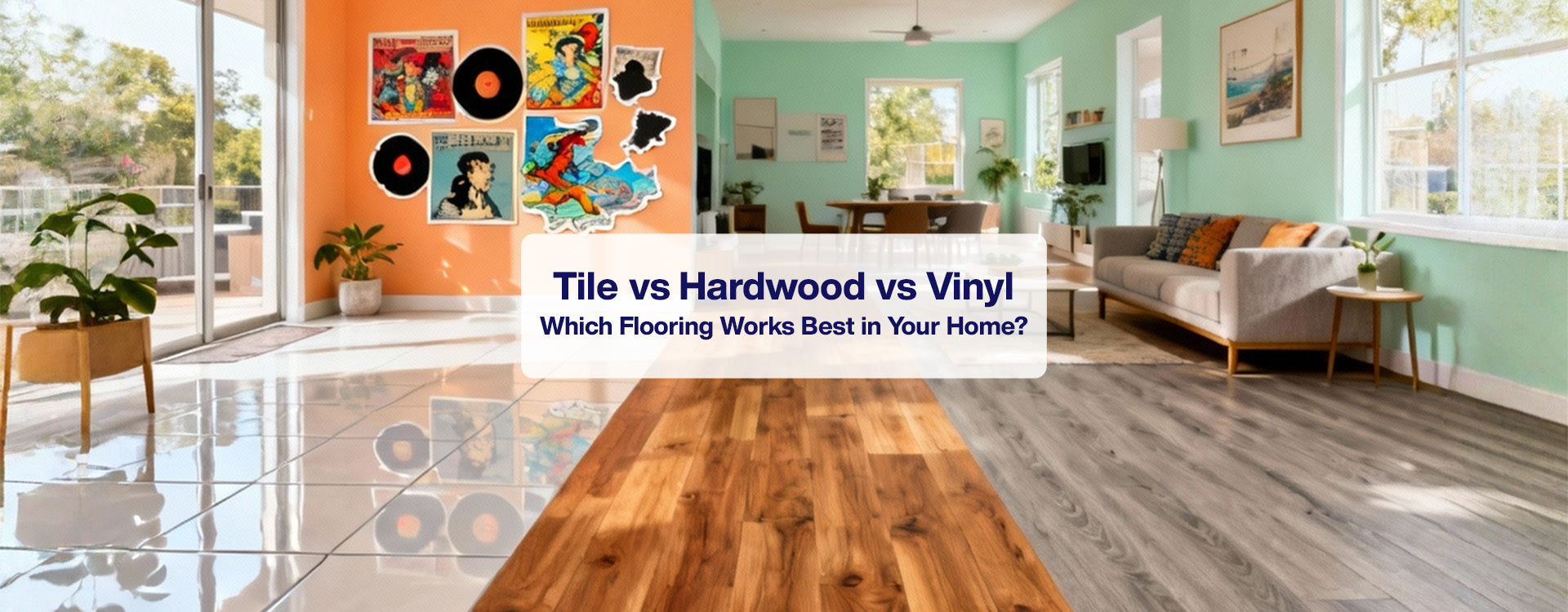
Flooring is more than a surface, it’s a foundation for how you live, work, and relax in your home. The right choice affects daily comfort, cleaning routines, and even resale value. Walk into a kitchen with cool porcelain underfoot, a living room with warm hardwood planks, or a basement fitted with waterproof vinyl, and you’ll feel firsthand how much flooring impacts daily life.
With so many materials available, three categories consistently top the list for U.S. homeowners: tile, hardwood, and vinyl flooring. Each has unique strengths and trade-offs. Tile offers durability and water resistance, hardwood brings warmth and long-term value, and vinyl provides affordability and resilience in challenging spaces.
This guide compares their pros, cons, and best uses, covering everything from ceramic tile flooring to vinyl plank flooring and wide plank hardwood flooring, to help you decide which option fits your lifestyle and home best.
Tile Flooring

Tile has been a staple in American homes for centuries, prized for its resilience and design versatility. Today, it comes in countless options, from ceramic tile and porcelain floor tiles to marble floor tile and natural stone tiles.
Pros of Tile Flooring
- Durability: Tile resists scratches, dents, and stains better than most flooring.
- Water Resistance: Porcelain tile and ceramic tile flooring are excellent in kitchens, bathrooms, and laundry rooms.
- Design Versatility: Choices include large format porcelain tile, wood look tile, mosaic tile, glossy tile, matte porcelain tile, and even a stone wall.
- Outdoor Use: Porcelain pavers and outdoor tiles extend design to patios and pool decks.
Cons of Tile Flooring
- Cold Underfoot: Tile can feel cool, especially in colder climates.
- Installation Complexity: Professional installation is often required, especially for stone floor tiles or granite tile.
Best Rooms for Tile Flooring
- Kitchens: Kitchen tiles withstand spills, grease, and heavy use.
- Bathrooms: Bathroom tile is virtually unmatched for water resistance.
- Entryways & Mudrooms: Handles dirt, snow, and salt.
- Outdoor Spaces: Porcelain pavers and stone tiles resist weather.
Hardwood Flooring

Few flooring materials are as beloved as hardwood. Whether it’s solid hardwood flooring, engineered hardwood, or hardwood plank flooring, wood adds natural warmth and character to any home.
Pros of Hardwood Flooring
- Warmth & Comfort: Hardwood feels inviting in living rooms and bedrooms.
- Resale Value: Homes with hardwood floors often sell faster and at higher prices.
- Variety: From wide plank hardwood flooring to hardwood flooring transition strips that ensure seamless flow, hardwood adapts to many spaces.
Cons of Hardwood Flooring
- Moisture Sensitivity: Spills can warp or stain wood if not cleaned promptly.
- Maintenance: Requires refinishing over time, and is more vulnerable to scratches than tile.
Best Rooms for Hardwood Flooring
- Living Rooms: Hardwood adds charm and warmth.
- Bedrooms: Ideal for cozy, quiet spaces.
- Dining Rooms: Creates an upscale atmosphere.
Transition Strips: In open layouts, hardwood floor transition strips connect wood to floor tiles or vinyl, protecting edges while creating smooth transitions.
Vinyl Flooring

Vinyl has grown into one of the most practical flooring categories. Options range from sheet vinyl flooring to vinyl plank flooring, luxury vinyl tile (LVT), and waterproof vinyl flooring.
Pros of Vinyl Flooring
- Affordable: More budget-friendly than tile or hardwood.
- Waterproof: Especially true of waterproof vinyl flooring and luxury products.
- Low Maintenance: Resists stains and scratches with minimal upkeep.
- Comfortable: Softer and warmer underfoot than stone or tile.
Cons of Vinyl Flooring
- Resale Value: Doesn’t add as much value as hardwood.
- Potential Denting: Heavy furniture can leave marks.
Best Rooms for Vinyl Flooring
- Basements: Withstands moisture and uneven conditions.
- Bathrooms: A warmer alternative to tile.
- Kitchens: Affordable, waterproof protection.
- Rental Properties: Cost-effective and easy to replace.
Tile vs. Hardwood vs. Vinyl: Direct Comparison
Here’s how the three materials stack up across key categories:
|
Feature |
Tile (Porcelain/Ceramic/Natural Stone) |
Hardwood (Solid/Engineered) |
Vinyl (Plank, LVT, Sheet) |
|
Cost |
Moderate to high (stone, marble) |
Higher upfront |
Lower to moderate |
|
Durability |
Excellent (esp. porcelain & stone tile) |
Good with care |
Good, but less lifespan |
|
Waterproof |
Yes (porcelain, ceramic, stone tile) |
No |
Yes (waterproof vinyl) |
|
Maintenance |
Low, occasional sealing for stone |
Moderate, refinishing needed |
Low, simple cleaning |
|
Comfort |
Hard, cold without rugs/heating |
Warm and natural |
Softer, warmer underfoot |
|
Design |
Huge range: mosaic, wall tiles, wood look tile, large format |
Classic wood grain, wide planks |
Wide variety, wood & stone looks |
|
Resale Value |
High with marble & natural stone tiles |
High |
Lower |
How Floors Center Helps Homeowners Choose
Choosing between tile, hardwood, and vinyl is easier when you can compare them side by side. At Floors Center, homeowners and contractors get:
- Variety: From porcelain tile flooring, ceramic tile flooring, marble floor tile, and natural stone tiles to hardwood flooring, laminate flooring, and vinyl plank flooring.
- Top Brands: Full product specs, including sizes, finishes, colors, and large format porcelain tile options.
- Convenience: Easy online browsing of floor tiles, wall tiles, kitchen tiles, bathroom tiles, and granite tile countertops.
- Delivery Across the U.S.: Reliable shipping for both residential and commercial projects.
- Lifestyle Fit: Whether you’re designing for families, entertainers, or luxury living, Floors Center offers solutions from best selling floor tiles to hardwood plank flooring and waterproof vinyl flooring.
Conclusion
There’s no single “best” flooring material, it depends on your lifestyle, budget, and room requirements. Tile flooring shines in kitchens, bathrooms, and outdoor spaces with its durability and water resistance. Hardwood floors add warmth and value to living areas and bedrooms, while vinyl flooring provides affordable, waterproof performance in basements, kitchens, and rentals.
When deciding, consider durability, comfort, and maintenance needs before price alone. And remember, every material has its place. The right floor will not only improve your daily comfort but also contribute long-term value to your home.
At Floors Center, you can explore tile, hardwood, vinyl, laminate, and stone tile options with delivery across the U.S., making it easy to choose flooring that matches your lifestyle and project goals.
FAQs
Q) What flooring is best for families with kids and pets?
A) Porcelain tile flooring and waterproof vinyl flooring are excellent choices. Both resist scratches, spills, and heavy traffic, making them family- and pet-friendly.
Q) Which flooring is best for bathrooms?
A) Porcelain and ceramic bathroom tiles are the most reliable for wet areas. Vinyl plank flooring also works for bathrooms where warmth underfoot is desired.
Q) Is hardwood flooring worth the investment?
A) Yes. Hardwood flooring increases resale value and offers decades of use. Engineered hardwood and wide plank hardwood flooring are particularly popular.
Q) Is vinyl flooring better than laminate?
A) Vinyl is waterproof and works in basements and bathrooms. Laminate flooring and laminate tile flooring resist scratches and look authentic, but aren’t always waterproof.
Q) Do I need transition strips between rooms?
A) Yes. Hardwood floor transition strips or tile trims protect edges and provide a smooth flow between different flooring types like hardwood and tile.
1 comment
Fit future
Great read! This article offers clear, practical comparisons between tile, hardwood, and vinyl flooring highlighting durability, maintenance, comfort, and cost in an easily digestible way.