

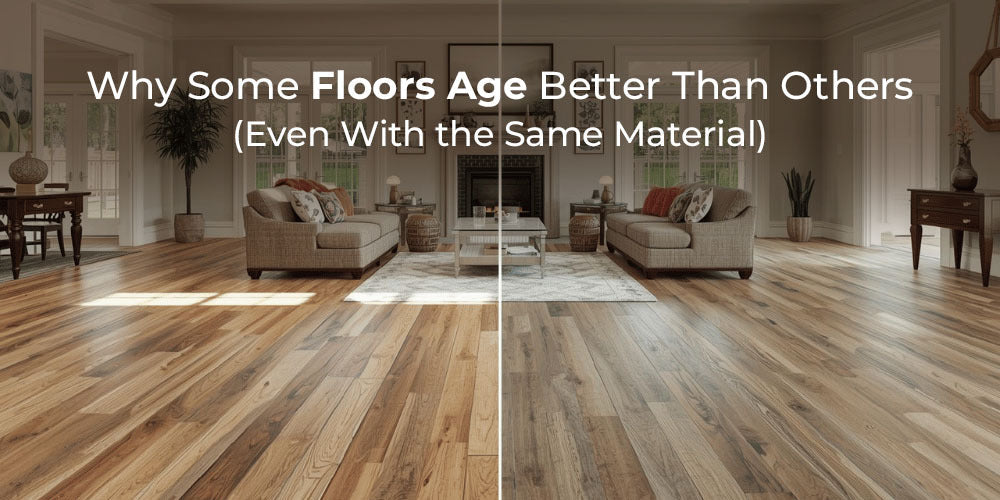
It’s a common surprise for homeowners: two houses install the same flooring material, sometimes even the same product, yet a few years later, one floor still looks solid while the other shows visible wear. Scratches appear faster, boards shift, grout darkens, or surfaces lose their original finish. The question naturally follows, why?
The truth is that flooring longevity is shaped by far more than the material itself. Installation quality, climate, daily use, maintenance habits, and even room layout all influence how a floor ages. Understanding these factors helps homeowners make smarter choices and avoid blaming the material when the real causes are hidden beneath the surface.
This guide explains why some floors age better than others, even when they’re made from the same material, and what homeowners can do to protect their investment.
Flooring Aging Is Not Just About the Material
Many people assume that durability is built entirely into the flooring product. While material selection matters, it is only one part of a much larger equation. Flooring is a system, not a standalone surface.
Two identical floors installed in different homes may experience:
- Different humidity levels.
- Different traffic patterns.
- Different installation conditions.
- Different maintenance routines.
Over time, these differences compound. A floor that starts strong can deteriorate quickly if the surrounding conditions work against it.
Installation Quality Makes or Breaks Floor Longevity

Subfloor Preparation Is Critical
A floor is only as stable as what it rests on. Uneven subfloors, moisture issues, or structural movement cause stress that slowly works its way to the surface.
Poor subfloor preparation can lead to:
- Tile cracking.
- Hardwood cupping or gapping.
- Vinyl buckling.
- Laminate seam separation.
Even high-quality flooring will age poorly if installed over an unstable base.
Expansion Gaps and Movement Allowance
Every flooring material expands and contracts to some degree. When installers ignore movement requirements, stress builds invisibly until it shows as surface damage.
Floors that age well are allowed to move naturally. Floors that age poorly are locked too tightly in place.
Adhesives and Underlayment’s Matter
The wrong adhesive or underlayment may not fail immediately. Instead, it slowly loses performance, leading to:
- Loss of bond strength
- Hollow sounds
- Uneven wear
Correct installation materials are just as important as the flooring itself.
Climate and Environment Play a Bigger Role Than Most People Think

Humidity and Moisture Exposure
Moisture is one of the biggest aging accelerators. Floors in humid environments or moisture-prone rooms experience more stress than floors in stable conditions.
Wood-based products expand and contract with moisture changes. Even waterproof surfaces can suffer if moisture penetrates seams or subfloors.
Temperature Swings and Seasonal Stress
Homes that experience strong seasonal temperature changes place repeated stress on flooring materials. Expansion in summer and contraction in winter can slowly weaken joints and finishes.
Floors that age well tend to be in climate-controlled environments where temperature changes are gradual, not extreme.
Sunlight and UV Exposure
Direct sunlight fades finish and dries out certain materials over time. Rooms with large windows often show uneven aging patterns where exposed areas look different from shaded ones.
How Daily Use Accelerates or Slows Floor Aging
Foot Traffic Patterns
Not all rooms experience wear evenly. Entryways, kitchens, and hallways age faster because they carry the bulk of daily movement.
Floors that age better are often in homes where:
- Traffic is distributed.
- Rugs are used in high-impact zones.
- Shoes are removed indoors.
Furniture Weight and Movement
Heavy furniture, rolling chairs, and frequent rearranging can compress or scratch flooring surfaces. Protective pads and thoughtful placement significantly slow visible aging.
Pets, Kids, and Real Life
Homes with pets and children naturally place more stress on floors. Scratches, spills, and impact are part of daily life. Materials that age well in these homes are those chosen with realistic expectations, not showroom perfection.
Maintenance Habits That Separate Long-Lasting Floors from Worn-Out Ones

Cleaning Methods That Protect Finishes
Floors age better when cleaning routines match the material. Gentle, regular cleaning removes abrasive dirt without damaging protective finishes.
Products That Quietly Damage Floors
Harsh chemicals, abrasive tools, and excess water do long-term damage even if the surface looks fine at first. Many floors age prematurely due to improper cleaning products rather than material flaws.
Why Over-Cleaning Can Be Harmful
More cleaning is not always better. Excess moisture, frequent scrubbing, and aggressive techniques wear finishes faster than light, consistent care.
Why the Same Flooring Ages Differently Room by Room?
A single home often shows different aging patterns across rooms.
- Kitchens face spills, foot traffic, and temperature changes.
- Bedrooms experience minimal wear.
- Entryways collect grit and moisture.
- Basements deal with humidity and temperature instability.
Even identical flooring behaves differently depending on where it’s installed.
How Different Flooring Materials Show Age Over Time

Tile Flooring
Tile typically ages well because it resists moisture and surface wear. When issues occur, they are often related to grout, subfloor movement, or improper installation, not the tile itself.
Hardwood Flooring
Hardwood develops character over time, but it also shows wear more visibly. Floors that age well are those maintained with controlled humidity and proper cleaning.
Vinyl Flooring
Vinyl resists water and stains, but heavy furniture and heat exposure can leave permanent impressions. Floors age best when expansion gaps and temperature limits are respected.
Laminate Flooring
Laminate floors that age well stay dry and clean. Those exposed to moisture or standing water often deteriorate quickly at seams.
Product Quality and Manufacturing Differences
Not all flooring products within the same category are equal. Thickness, wear layers, surface treatments, and core materials vary widely.
Higher-quality products tend to:
- Resist wear longer.
- Maintain surface integrity.
- Handle environmental stress better.
Entry-level options may look similar at first but age differently under real conditions.
What Homeowners Can Do to Help Floors Age Better
Floors that age well are usually the result of smart planning, not luck.
Helpful steps include:
- Choosing flooring suited to the room’s conditions.
- Ensuring professional installation.
- Maintaining a consistent indoor climate.
- Protecting high-traffic areas.
Small decisions made early have long-term effects.
How Floors Center Helps You Choose Flooring That Ages Better
At Floors Center, flooring selection goes beyond appearance. Long-term performance depends on understanding how materials behave over time, how they respond to real household use, and how installation conditions influence aging.
Floors Center offers a wide range of flooring options, including tile, porcelain, ceramic, hardwood, vinyl, and laminate, selected to meet different performance needs across residential and commercial spaces. By providing detailed product specifications, thickness information, and usage guidance, Floors Center helps customers choose flooring that fits both the room and the conditions it will face.
Whether selecting tile for high-traffic areas, hardwood for living spaces, or moisture-resistant options for kitchens and basements, having access to the right information reduces guesswork and prevents premature wear. Flooring that ages well starts with informed choices, not assumptions.
Conclusion
When floors age poorly, the material is often blamed, but the real causes usually run deeper. Installation quality, climate exposure, daily use, and maintenance habits all shape how flooring performs over time.
Two homes can install the same flooring and experience very different outcomes. Floors that age well are those supported by thoughtful planning, realistic expectations, and proper care.
Understanding why floors age differently helps homeowners make smarter choices and enjoy their floors for years instead of replacing them prematurely.
FAQs
Q) Why does my floor look worn faster than expected?
A) Uneven traffic, moisture exposure, or improper cleaning often accelerates visible aging.
Q) Does higher-priced flooring always age better?
A) Not always, but better construction and finishes generally perform longer under stress.
Q) Can installation mistakes show up years later?
A) Yes. Many flooring problems appear gradually rather than immediately.
Q) Do all floors change over time?
A) Yes. Aging is natural, but good planning controls how visible it becomes.
Q) Is maintenance more important than material choice?
A) Both matter. Even the best material ages poorly without proper care.