

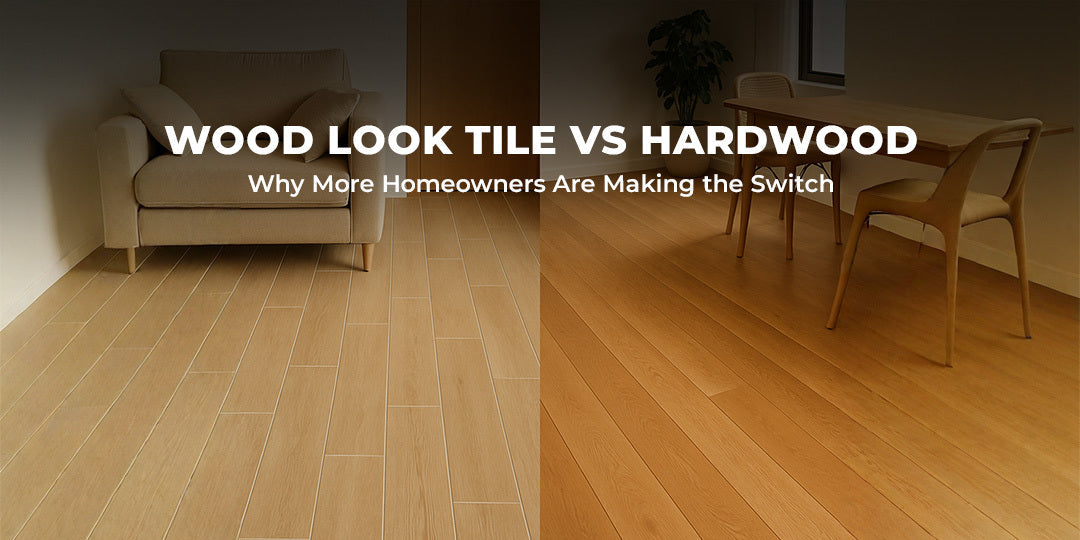
Flooring is the foundation of every home. It defines comfort, shapes design, and influences long-term value. For decades, hardwood was the go-to choice for warmth and elegance, but today, a new contender has gained ground: wood look tile.
Thanks to modern manufacturing, tile now mirrors natural wood with astonishing accuracy, right down to texture, color variation, and plank shape. Homeowners, designers, and builders across the U.S. are choosing it for spaces that need the look of wood with the practicality of tile.
If you’re comparing wood look tile vs hardwood, this guide will help you decide which material better suits your lifestyle, budget, and home environment.
What Is Wood Look Tile?

Wood-look tile is typically made of porcelain or ceramic, designed to replicate the appearance of solid wood or engineered hardwood planks. Advanced digital printing and texturing techniques allow each tile to capture wood grain, knots, and tonal variation, without the upkeep issues of real wood.
You’ll find these tiles in several formats, including plank tile flooring (often 6x36, 8x48, or even larger), making them a direct design alternative to hardwood planks.
Common finishes include:
- Matte and satin textures for a realistic wood feel.
- Polished variants for contemporary interiors.
- R11 slip-resistant surfaces for outdoor or wet-area use.
Because it’s porcelain-based, this flooring works in nearly any setting, from bathrooms to patios, where traditional hardwood would never survive.
Hardwood Flooring: The Classic Benchmark
Hardwood flooring has a legacy unmatched by any other surface. It’s warm, inviting, and can last for generations with proper care. But real wood is also sensitive to moisture, temperature, and impact, factors that often limit where you can install it.
Two main types dominate the market:
- Solid Hardwood: Crafted from a single piece of timber, typically ¾ inch thick. It can be sanded and refinished multiple times.
- Engineered Hardwood: Built from layered plywood and topped with a hardwood veneer. More stable than solid wood, suitable for moderately humid environments.
While both bring natural beauty, neither can handle moisture or spills as effortlessly as porcelain tile flooring that mimics wood’s charm.
Comparing Wood Look Tile vs. Hardwood

Appearance & Design Options
Modern wood look tile flooring rivals hardwood in appearance. Manufacturers reproduce authentic textures, from weathered oak to walnut and hickory finishes. Because the designs are printed, you can choose consistent grain patterns or high variation looks depending on your space.
Hardwood, meanwhile, offers a unique natural character, each board is one of a kind. However, variation between batches and susceptibility to fading can make it harder to match across rooms.
If design consistency, wider color options, and matching floor-to-wall transitions matter to you, wood look tile wins this category.
Durability & Longevity
Porcelain and ceramic tiles are fired at high temperatures, giving them superior density and hardness. They resist scratches, dents, and everyday wear far better than natural wood. Pets, furniture, or kids won’t leave permanent marks as easily.
Hardwood floors, on the other hand, are vulnerable to scuffing and surface damage. Even with protective finishes, foot traffic gradually dulls the surface.
In terms of lifespan, both can last decades, but tile keeps its appearance longer with minimal refinishing.
Verdict: Wood look tile is the more durable option, especially for active households and commercial settings.
Water & Moisture Resistance
This is where tile flooring completely outperforms wood.
- Porcelain tile is nearly waterproof; it won’t swell or warp, even in bathrooms, kitchens, or laundry areas.
- Hardwood absorbs moisture. It expands, contracts, and may develop gaps or cupping in humid climates.
For U.S. regions with seasonal humidity or frequent spills, think Florida, Texas, or coastal states, wood look tile is the safer, low-risk choice.
Maintenance & Cleaning
Maintaining wood look tile is straightforward:
- Sweep or vacuum regularly.
- Mop with mild detergent and warm water.
- No need for sanding, waxing, or refinishing.
Hardwood flooring demands a more cautious approach:
- Use specialized wood cleaners only.
- Avoid water pooling during mopping.
- Refinish every few years to restore luster.
If you prefer a floor that always looks clean and new with minimal effort, tile is your maintenance-friendly solution.
Comfort & Warmth
This is where hardwood has the edge. Natural wood retains ambient warmth and feels soft underfoot. Tile is cooler and harder by nature, though that’s easily offset with area rugs or radiant floor heating systems.
In warmer U.S. climates, many homeowners prefer tile’s cool touch; in colder states, hardwood still feels cozier.
Tip: Installing porcelain plank tile flooring with under-floor heating offers the best of both worlds, comfort and durability.
Cost & Installation
Both materials cover a wide price range depending on species, format, and brand.
|
Feature |
Wood Look Tile |
Hardwood Flooring |
|
Average Cost per sq. ft. |
$4 – $10 |
$6 – $15 |
|
Installation Cost |
Slightly higher (grout & leveling) |
Moderate (nail or glue-down) |
|
Maintenance Cost |
Very low |
Moderate to high |
|
Lifespan |
25–50 years |
30–75 years (refinishing required) |
While hardwood may outlast tile when perfectly maintained, the ongoing refinishing costs add up. Tile is often the more cost-effective long-term investment.
Environmental & Sustainability Considerations
Porcelain tile production has improved dramatically in efficiency, with many brands now using recycled materials and closed-loop water systems.
Hardwood remains renewable if sourced responsibly, but avoid low-grade imports that contribute to deforestation. If sustainability is your priority, look for FSC-certified wood or eco-friendly tile labeled as low-VOC.
Best Rooms for Wood Look Tile vs. Hardwood

Wood Look Tile:
- Bathrooms
- Kitchens
- Basements
- Mudrooms
- Entryways
- Outdoor patios (with porcelain pavers)
Hardwood Flooring:
- Living rooms
- Bedrooms
- Dining rooms
- Hallways
Many homeowners even combine both: tile in high-moisture areas and hardwood elsewhere, connected seamlessly with hardwood floor transition strips for a unified look.
Using Wood Look Tile on Walls

One of the biggest advantages of wood look tile is its versatility, it’s not just for floors. Designers now use it for accent walls, shower surrounds, and fireplace backdrops.
Pair it with Wall Tiles or Mosaic Tile for textural contrast. A reclaimed-wood-look wall tile can bring depth to modern bathrooms or rustic kitchens while remaining easy to clean.
The Rise of Porcelain Plank Tile Flooring
Porcelain planks have evolved beyond imitation. Modern collections feature:
- R11 outdoor finishes for patios and pool decks.
- Large-format planks that mimic reclaimed barn wood.
- Rectified edges for tighter grout lines and seamless installation.
At Floors Center, the Porcelain Tile Flooring range includes both indoor and outdoor options, so you can extend your wood aesthetic from the living room to the backyard.
When Hardwood Still Makes Sense
While wood look tile dominates in practicality, genuine hardwood still has undeniable charm:
- It develops a natural patina over time.
- Can be sanded and refinished multiple times.
- Feels authentic under bare feet.
For buyers who value the tactile, organic quality of real timber and are willing to maintain it, hardwood remains a strong investment.
Design Tips: Blending Tile and Wood Seamlessly
Many modern homes mix materials for function and flow. Here’s how to do it effectively:
Match undertones: Choose similar warm or cool hues between your tile and hardwood.
Use transition strips: Install hardwood floor transition strips between rooms to prevent height gaps and create visual continuity.
Repeat textures: Pair matte wood look tile floors with matte wood furniture finishes for a cohesive design.
Zone open spaces: Tile the kitchen and use hardwood in the living area for both contrast and practicality.
Maintenance Tips for Each Surface
Wood Look Tile:
- • Sweep weekly; mop with pH-neutral cleaner.
- • Reseal grout lines annually.
- • Replace chipped tiles promptly to prevent spreading cracks.
Hardwood Flooring:
- • Keep humidity stable (35–55%).
- • Use felt pads under furniture.
- • Recoat the finish every few years to prevent deep scratches.
For mixed installations, maintain both according to their material requirements, it keeps transitions consistent and flooring lifespan balanced.
Why More Homeowners Are Switching
Wood look tile combines the visual warmth of wood with the strength of porcelain. It’s waterproof, scratch-resistant, and works in nearly every space, from modern condos to coastal homes.
As busy lifestyles demand low-maintenance design, more homeowners are realizing that tile’s durability and design flexibility far outweigh hardwood’s limitations in humid or high-traffic areas.
Why Shop at Floors Center
Floors Center provides homeowners, remodelers, and contractors across the U.S. with:
- A full range of wood-look tile, hardwood flooring, and porcelain tile flooring options.
- Collections from trusted brands known for precision, performance, and consistency.
- Nationwide delivery and expert support for residential and commercial projects.
- Matching Wall Tiles and Porcelain Pavers to complete any indoor-outdoor layout.
Whether you’re upgrading your kitchen, bathroom, or entire home, Floors Center helps you choose materials that align with your lifestyle and design goals.
Conclusion
Choosing between wood look tile and hardwood comes down to balancing authenticity and practicality.
If you value natural warmth and are prepared for maintenance, hardwood remains timeless. But if you need a surface that stands up to water, wear, and time, without losing aesthetic charm, wood-look tile flooring is the smart, modern choice.
From kitchens to living rooms, patios to showers, today’s porcelain planks redefine what wood flooring can be.
FAQs
Q1. Is wood look tile better than hardwood?
A. Wood look tile is more durable and water-resistant, while hardwood offers natural warmth but needs more upkeep.
Q2. Can I use wood-look tile in bedrooms and living rooms?
A. Yes, it works well in both and gives the look of real wood with easier maintenance.
Q3. Does wood look tile need sealing?
A. The tile doesn’t, but grout lines should be sealed once a year to prevent stains.
Q4. Is wood look tile cheaper than hardwood?
A. Yes, it’s usually more affordable to maintain and lasts longer without refinishing.
Q5. Can I mix wood-look tile and hardwood in one home?
A. Yes, many use tile in wet areas and hardwood in dry spaces, connected with transition strips for a clean flow.