

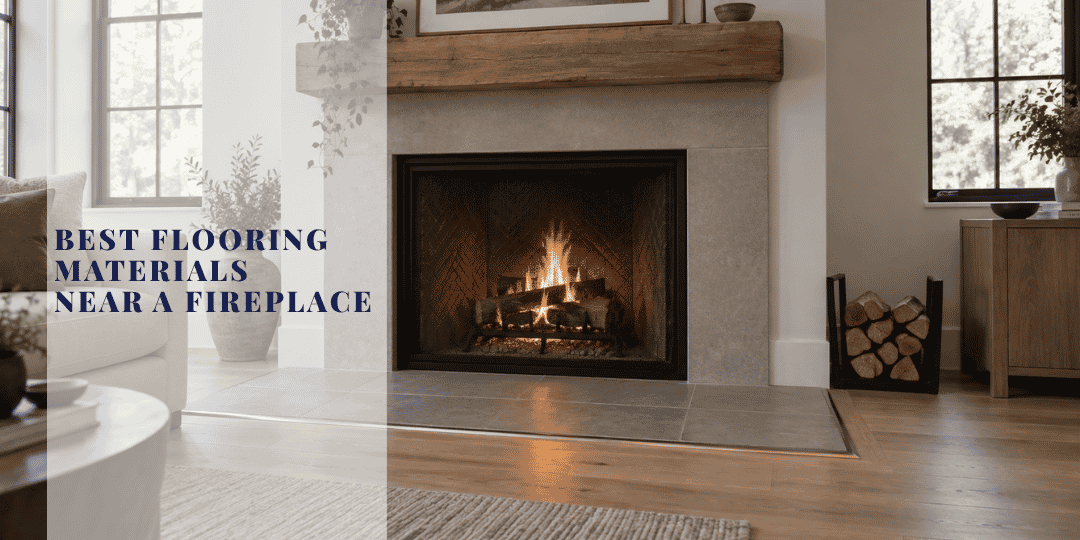
A fireplace can become the visual centerpiece of a living room, but it also creates special flooring requirements. Heat, sparks, embers and concentrated temperature changes can damage certain materials or create a fire hazard when the surrounding area is not properly protected.
Flooring can usually be installed near a fireplace, but the safe material and installation boundary depend on the type of fireplace, its manufacturer’s instructions, the building code adopted in your area and the construction of the hearth.
Noncombustible materials such as porcelain tile, properly selected ceramic tile and natural stone are generally the strongest choices immediately around a traditional wood-burning fireplace. Hardwood, laminate, vinyl, cork and carpet may be suitable beyond the required hearth extension, but they should not replace a required noncombustible surface.
The most important rule is simple: do not choose the flooring or determine its distance from the firebox until you understand the fireplace’s specific clearance and hearth requirements.
Why Does Flooring Near a Fireplace Need Special Planning?
Flooring near a fireplace may be exposed to conditions that do not occur elsewhere in the room.
These can include:
- Radiant heat from the firebox.
- Hot sparks and burning embers.
- Ash and soot.
- Repeated heating and cooling.
- Heavy fireplace screens and tools.
- Cleaning chemicals.
- Wood storage.
- Seasonal expansion and contraction.
- Possible moisture around masonry structures.
A floor may perform well under normal household use but react differently when repeatedly exposed to concentrated heat.
The area directly in front of a wood-burning fireplace requires the greatest protection because logs can shift and sparks or embers may escape when the doors or screen are opened.
What Is the Difference Between Flooring and a Hearth?

The terms are sometimes used interchangeably, but they are not the same.
Fireplace flooring
Fireplace flooring refers to the general finished floor surrounding the fireplace. It may be hardwood, vinyl, laminate, carpet, tile or another material used throughout the room.
Fireplace hearth
The hearth is the noncombustible area at the base of the fireplace. It supports the firebox or sits immediately in front of it.
Hearth extension
The hearth extension projects into the room beyond the fireplace opening. Its purpose is to protect combustible flooring from sparks, embers and heat.
A room may have hardwood or luxury vinyl flooring while still using a properly constructed tile, stone, brick or concrete hearth extension between that flooring and the fireplace opening.
How Much Clearance Is Required Around a Fireplace?

There is no single clearance measurement that applies to every fireplace.
The correct requirement can depend on:
- Masonry or factory-built construction.
- Wood, gas, pellet or electric fuel.
- Firebox opening size.
- Manufacturer and model.
- Whether the unit is listed.
- Hearth construction.
- Local building-code adoption.
- Wall and floor materials.
- Presence of doors or screens.
Masonry fireplace guidance
As a general reference, the 2024 International Residential Code specifies hearth-extension dimensions for masonry fireplaces.
For a fireplace opening smaller than 6 square feet, the hearth extension is generally required to extend at least:
- 16 inches in front of the fireplace opening.
- 8 inches beyond each side of the opening.
For a fireplace opening of 6 square feet or larger, the dimensions generally increase to:
- 20 inches in front.
- 12 inches beyond each side.
These measurements are useful for understanding the concept, but they should not be treated as universal instructions. Local jurisdictions may adopt a different code edition, add amendments or impose different requirements.
Factory-built fireplaces
A factory-built fireplace must generally be installed according to its listing and the manufacturer’s installation instructions. Its hearth-extension requirements may differ from those used for a traditional masonry fireplace. The 2024 IRC specifically directs factory-built hearth extensions to comply with the fireplace listing.
Before installing flooring, locate the exact model number and current installation manual.
Best Flooring Materials Near a Fireplace

Porcelain tile: the best all-around option
Porcelain tile is one of the strongest flooring choices around a fireplace because it is noncombustible, durable and available in many styles.
It can provide:
- Strong resistance to sparks and embers.
- Good performance under ordinary radiant heat.
- Resistance to dents from fireplace tools.
- Easy ash and soot cleanup.
- Low water absorption.
- Wood, stone, concrete and marble-inspired designs.
- A smooth transition into surrounding room flooring.
Porcelain tile is particularly useful when homeowners want the practical qualities of tile without limiting the design to a traditional brick or stone appearance.
However, the tile alone does not create a compliant hearth. The complete assembly—including the substrate, mortar, thickness, insulation and framing—must satisfy the fireplace’s requirements.
Ceramic tile: suitable when properly selected
Ceramic tile may also be used around fireplaces, but the product must be suitable for the intended application.
Not every ceramic tile is approved for floor use. Decorative wall tile may not have the strength required for a horizontal hearth or a frequently walked-on surface.
Before choosing ceramic tile, confirm:
- Floor-use approval.
- Heat suitability.
- Surface durability.
- Recommended installation materials.
- Indoor application requirements.
- Cleaning and maintenance instructions.
A glazed ceramic surface may be easy to clean, but a highly polished or glossy finish can become slippery and may show ash, dust or scratches more clearly.
Natural stone: durable and visually appropriate
Natural stone tile creates a substantial, timeless appearance around fireplaces.
Common options include:
- Granite
- Slate
- Marble
- Travertine
- Limestone
Natural stone is noncombustible, but different stones have different levels of porosity, density, maintenance and staining resistance.
Granite
Granite tile is dense, durable and resistant to scratching. It can create a clean, formal hearth or fireplace surround.
Slate
Slate provides natural texture and a traditional appearance. Its darker colors can help conceal ash and soot, although textured surfaces may require more detailed cleaning.
Marble
Marble tile offers an elegant appearance but may scratch, etch or stain more easily than some other stones. Fireplace cleaners and acidic products should be used carefully.
Travertine and limestone
Travertine and limestone provide soft, warm colors but are relatively porous. Sealing and suitable maintenance may be required.
The stone, setting material and supporting assembly should all be appropriate for the anticipated temperature conditions.
Brick
Brick is a traditional fireplace material because it is noncombustible and visually compatible with masonry fireboxes.
It offers:
- Excellent heat tolerance.
- Traditional character.
- Strong ember resistance.
- A textured, slip-conscious surface.
However, brick and mortar joints can collect ash and may require more cleaning than smooth porcelain tile.
Concrete
Concrete can work well in modern, industrial or minimalist interiors. Precast or poured concrete hearths can create a clean, continuous appearance.
Potential advantages include:
- Noncombustible construction.
- Strong physical durability.
- Custom shapes and dimensions.
- Compatibility with modern interiors.
Concrete can crack, stain or discolor if the mixture, reinforcement, curing and surface treatment are not properly planned.
Can Hardwood Flooring Be Installed Near a Fireplace?
Hardwood flooring can often be installed in a room containing a fireplace, but it should normally terminate outside the required noncombustible hearth or hearth extension.
Wood is combustible. It should not be used as a substitute for required fireplace protection.
Heat and environmental changes may also cause nearby boards to:
- Shrink.
- Develop gaps.
- Dry excessively.
- Discolor.
- Experience finish damage.
- Expand and contract seasonally.
The transition between hardwood and the hearth must allow for the flooring manufacturer’s required expansion space. Wood should not be forced tightly against stone, brick or tile.
A suitable molding, trim profile or flexible joint treatment may be needed, depending on the flooring and fireplace construction.
Can Vinyl Flooring Be Used Near a Fireplace?
Vinyl flooring can be installed in many rooms that contain gas, electric or properly protected wood-burning fireplaces. However, vinyl is not a noncombustible hearth material.
Excessive heat may cause vinyl to:
- Soften.
- Warp.
- Discolor.
- Expand.
- Develop gaps.
- Damage its locking system.
- Release from adhesive in glue-down installations.
Vinyl should remain outside any area where the fireplace instructions or applicable code require noncombustible protection.
Floating vinyl considerations
A floating vinyl plank floor must be able to expand and contract. It should not be trapped beneath a heavy hearth, masonry structure or permanently fastened trim.
When vinyl meets a hearth:
- Maintain the required expansion clearance.
- Do not fasten through the floating planks.
- Use a compatible transition or edge treatment.
- Check temperature limitations in the flooring warranty.
- Follow the fireplace’s clearance instructions.
Can Laminate Flooring Be Installed Near a Fireplace?
Laminate flooring may be used beyond the required hearth extension, but it is not suitable as a substitute for a noncombustible hearth.
Laminate flooring often contains a wood-based core and may be affected by concentrated heat. Possible problems include:
- Edge swelling.
- Surface discoloration.
- Joint movement.
- Drying or distortion.
- Damage to the protective wear layer.
Floating laminate also needs expansion space around fixed masonry, tile and stone structures.
Can Carpet Be Installed Near a Fireplace?
Carpet is combustible and can be damaged quickly by hot sparks or embers. It should not extend into an area requiring noncombustible protection.
Even beyond the hearth, carpet may collect:
- Ash.
- Soot.
- Wood particles.
- Fireplace odors.
- Cleaning residue.
A correctly sized hearth extension provides a protective barrier between the fireplace opening and the carpeted floor.
The carpet edge should be finished securely at the transition so it does not fray, lift or create a tripping hazard.
Can Cork or Bamboo Flooring Be Used?
Cork and bamboo may be used in rooms with fireplaces when installed beyond the required protected area and permitted by their manufacturers.
However, neither should be assumed to be a heat-safe hearth material.
Cork may be vulnerable to:
- Heat damage.
- Indentation from fireplace tools.
- Surface scorching.
- Drying.
- Finish discoloration.
Bamboo is also a combustible, plant-based flooring material. It requires suitable separation from the firebox and the expansion space specified by its manufacturer.
How Fireplace Type Changes the Flooring Requirements
Wood-burning masonry fireplaces
Traditional wood-burning fireplaces present the highest risk of escaping sparks, burning embers and radiant heat.
They generally require a properly constructed noncombustible hearth and hearth extension. Porcelain, stone, brick and appropriate ceramic tile are common visible finishes, but the underlying assembly is equally important.
Factory-built wood-burning fireplaces
Factory-built units must be installed according to their listing and manufacturer instructions. Do not assume that masonry-fireplace dimensions automatically apply.
The manual should identify:
- Required hearth-extension dimensions.
- Thermal-resistance requirements.
- Acceptable floor-protection materials.
- Clearances to combustible flooring.
- Requirements for raised or flush hearths.
Gas fireplaces
Many gas fireplaces produce less direct ember risk than wood-burning units, but their clearance requirements vary.
Some listed gas fireplaces are designed for installation close to combustible materials. Others require noncombustible finishes or specific clearances in front of and around the firebox.
Do not assume that every gas fireplace can sit directly over hardwood, vinyl or carpet.
Electric fireplaces
Electric fireplaces do not burn wood or gas, so they do not produce sparks or embers. This can make flooring selection easier.
However, some electric fireplaces include heaters that discharge warm air. The unit may require clear space around its intake and outlet.
Follow the manufacturer’s instructions regarding:
- Floor placement.
- Ventilation.
- Heater clearance.
- Electrical supply.
- Rugs and carpet.
- Furniture placement.
Wood stoves and pellet stoves
Freestanding wood and pellet stoves have different floor-protection requirements from built-in fireplaces.
They may require a noncombustible floor protector with a specified:
- Width and depth.
- Thickness.
- Thermal resistance.
- Ember-protection rating.
- Clearance around the appliance.
A decorative layer of tile placed directly over combustible flooring may not provide the required thermal protection. The full floor-protection assembly must comply with the appliance listing and local regulations.
Does Tile Alone Make a Fireplace Hearth Safe?
No. A common mistake is assuming that a noncombustible tile automatically creates a safe hearth.
Tile may resist flames and sparks, but heat can travel through it to the materials underneath. A fireplace hearth may require:
- A noncombustible substrate.
- A minimum assembly thickness.
- Specific thermal resistance.
- Correct mortar or adhesive.
- Reinforcement.
- Movement accommodation.
- Suitable support.
- Approved dimensions.
Placing a thin tile directly over plywood or an existing combustible floor may not meet the fireplace’s requirements.
The 2024 IRC requires masonry fireplace hearths and hearth extensions to be constructed of concrete or masonry supported by noncombustible materials and reinforced to carry their own weight and imposed loads. Local adoption and project conditions must still be confirmed. International Code Council: masonry fireplace hearth requirements.
How Should Flooring Meet the Fireplace Hearth?
The transition should appear finished while still respecting the needs of both systems.
Keep the flooring outside the protected area
Do not extend combustible flooring into the required hearth extension merely to create a seamless look.
Maintain expansion space
Floating vinyl, laminate, engineered wood and some other floors require clearance around fixed structures. Follow the product-specific instructions.
Avoid pinning floating floors
Do not fasten the flooring beneath hearth trim or secure the transition through the planks if that prevents natural movement.
Account for height differences
A raised stone or tile hearth may create a noticeable edge. The transition should be designed to reduce tripping risk and protect exposed flooring edges.
Use compatible joint materials
A rigid grout joint between tile and a moving wood or floating floor may crack. An installer may recommend a suitable transition profile or flexible treatment based on the materials and project conditions.
Common Fireplace-Flooring Mistakes
Choosing appearance before checking clearances
A beautiful flooring material is not appropriate if it does not satisfy the required protection zone.
Treating all fireplaces the same
A masonry fireplace, factory-built fireplace, gas insert, electric unit and freestanding stove can have entirely different requirements.
Installing tile directly over a combustible subfloor
The visible tile may be noncombustible, but the complete assembly may still provide insufficient thermal protection.
Forgetting flooring expansion
Floating floors can buckle or separate when trapped against a stone or masonry hearth.
Using polished tile in a walking area
A polished surface may become slippery when wet or dusty. Consider how the hearth connects with normal room traffic.
Assuming “heat-resistant” means code-compliant
A material’s ability to tolerate heat does not prove that the full installation meets fireplace, building-code or manufacturer requirements.
Covering ventilation openings
Flooring, rugs, trim or raised hearth materials should not block air intakes, louvers or heating outlets.
Best Flooring by Fireplace Type
|
Fireplace type |
Preferred nearby material |
Main concern |
|
Wood-burning masonry fireplace |
Porcelain, natural stone, brick or suitable ceramic |
Sparks, embers and hearth dimensions |
|
Factory-built wood fireplace |
Material and assembly specified by the listing |
Model-specific thermal protection |
|
Gas fireplace |
Porcelain, stone or another approved material |
Manufacturer-required clearance |
|
Electric fireplace |
Most compatible flooring outside heater clearances |
Airflow and heater outlet temperature |
|
Wood or pellet stove |
Listed floor-protection assembly |
Ember and thermal protection |
|
Decorative non-heating fireplace |
Most standard flooring materials |
Moisture, transitions and appearance |
Questions to Answer Before Choosing Flooring
Before purchasing flooring for a room with a fireplace, determine:
- What type of fireplace or stove is installed?
- What is its manufacturer and model number?
- Is the unit listed?
- What does its installation manual require?
- Which building-code edition has the local authority adopted?
- Is a hearth extension required?
- What are the required dimensions?
- Does the assembly need a particular thermal-resistance value?
- Is the surrounding flooring combustible?
- Does the flooring require expansion space?
- Will the hearth be flush or raised?
- Who will inspect or approve the work?
If any of these details are unknown, consult the fireplace manufacturer, a qualified fireplace professional and the local building department before installation.
What Is the Best Flooring Near a Fireplace?
For the protected area immediately around a wood-burning fireplace, porcelain tile is one of the best overall finish choices because it combines noncombustible construction, durability, easy maintenance and broad design flexibility.
Natural stone is another strong premium option, while brick creates a traditional appearance. Floor-rated ceramic tile may also work when the product and full assembly are suitable.
Outside the required hearth extension, homeowners may use hardwood, luxury vinyl, laminate, bamboo, cork or carpet when both the fireplace and flooring manufacturers permit them.
The key distinction is that a room’s general flooring does not replace the fireplace’s required noncombustible protection.
Final Thoughts
Flooring can be installed near a fireplace, but safe planning must begin with the fireplace—not the flooring sample.
First identify the fireplace type, model, fuel source, listing and required hearth extension. Then select a flooring material that performs safely within those boundaries.
Porcelain tile, natural stone, brick and suitable ceramic tile are practical choices around traditional fireplaces. Combustible materials such as hardwood, vinyl, laminate and carpet should remain outside the required protected area and be installed with suitable transitions and expansion clearance.
Because fireplace requirements vary by product and location, always confirm the current manufacturer instructions and local building requirements before beginning work.
Frequently Asked Questions
Q) Can vinyl flooring be installed next to a fireplace?
A) Yes, vinyl may be installed outside the required noncombustible hearth or clearance area when permitted by both manufacturers. It should not replace a required hearth extension.
Q) Can hardwood touch a fireplace hearth?
A) Hardwood should terminate outside the protected area and maintain the expansion clearance specified by the flooring manufacturer. A suitable transition may be needed between the wood and hearth.
Q) Is porcelain tile safe around a fireplace?
A) Porcelain tile is noncombustible and generally suitable as a visible fireplace finish. However, the complete hearth assembly must meet applicable thermal, structural and dimensional requirements.
Q) Can laminate flooring go in front of a gas fireplace?
A) It may be allowed outside the fireplace manufacturer’s required clearances. Requirements vary by gas-fireplace model, so its installation manual must be checked first.
Q) Do electric fireplaces need a tile hearth?
A) Many electric fireplaces do not require a traditional ember-protection hearth, but heater, ventilation and floor-clearance instructions still apply. Follow the exact model’s manual.