

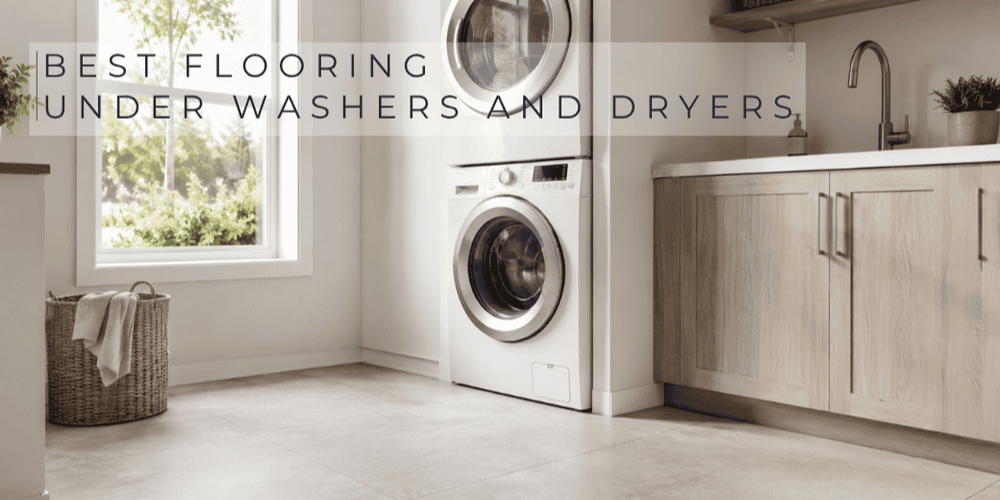
Laundry-room flooring has to deal with challenges that most other floors rarely face. A washing machine can leak, shake during a spin cycle and place considerable weight on a relatively small area. Detergent spills, dryer heat, indoor humidity and the movement of heavy appliances can also affect the floor over time.
The best flooring under washers and dryers should resist water, support heavy appliances, clean easily and remain stable despite vibration. It should also allow the machines to be moved for maintenance without becoming scratched, torn or permanently dented.
For most laundry rooms, porcelain tile is the strongest overall option, while waterproof luxury vinyl flooring offers a more comfortable and budget-friendly alternative. The right choice ultimately depends on the subfloor, installation method, room location and level of leak protection required.
What Does Laundry-Room Flooring Need to Handle?
Water leaks and overflows
A loose supply connection, damaged hose, clogged drain, failing seal or overflowing utility sink can send water onto the floor. A small visible spill is usually manageable; a slow hidden leak beneath a machine is more dangerous because moisture may remain trapped for days.
Heavy appliance weight
Washers and dryers are heavy even before they are loaded. A washer filled with water and wet clothing puts concentrated pressure through its adjustable feet. The floor must resist cracking, compression, permanent indentation and joint separation.
Vibration and movement
An unbalanced washer can shake or move during a spin cycle. Repeated vibration may expose weak joints, loose tiles or installation defects. Flooring cannot correct excessive appliance movement; the machine must also be level and installed correctly.
Detergent spills and maintenance
Detergent, bleach, fabric softener and stain removers may spill. The surface should be easy to wipe clean using products approved for that flooring. It should also tolerate careful appliance movement when service access is needed.
Best Overall: Porcelain Tile

Porcelain tile is generally the best flooring under washers and dryers when moisture protection, durability and long-term performance are the priorities.
- Low water absorption.
- Excellent dent resistance.
- Strong support beneath heavy appliances.
- Easy surface cleaning.
- Resistance to everyday scratches.
- Long service life.
- A wide choice of residential styles.
Unlike wood-based flooring, porcelain does not swell because water briefly reaches its finished surface. A properly installed tile assembly can also handle concentrated appliance weight effectively.
Important limitations
Porcelain tile does not make the entire room waterproof. Water may still reach the assembly through cracked grout, failed perimeter joints, penetrations or installation defects. The subfloor, waterproofing strategy, setting materials and movement accommodation remain important.
A highly polished tile may become slippery when wet. A matte, textured or slip-conscious finish is often more practical in a working laundry room.
Explore Floors Center's porcelain tile collection and compare performance as well as appearance.
Best Comfortable Option: Waterproof Luxury Vinyl

MSI Ashton Rigid Core LVP
Waterproof luxury vinyl is attractive for homeowners who want a softer, warmer and often more affordable surface than porcelain tile. Wood-look planks and tile-look formats also make it easier to coordinate the laundry room with nearby spaces.
- Comfortable underfoot.
- Easy everyday cleaning.
- Good stain resistance.
- Quieter performance than hard tile.
- Realistic wood and stone visuals.
- Simpler installation in some projects.
Waterproof flooring is not a waterproof room
Water can still travel through damaged joints, an incorrectly treated perimeter, openings around pipes or installation defects. A waterproof plank does not automatically create a waterproof floor assembly.
Learn more about how moisture and humidity affect flooring, including what can happen when moisture becomes trapped below the surface.
Can appliances sit on floating vinyl?
This depends on the exact product. Some floating floors permit movable appliances when installed correctly, while fixed cabinetry and other permanent objects may not be allowed to pin the floor. Confirm laundry-room approval, appliance-load guidance, expansion clearance and moving instructions before installation.
Browse vinyl plank flooring at Floors Center
Best Seam-Minimizing Option: Sheet Vinyl
Sheet vinyl can cover a small laundry room with few seams, reducing potential paths for surface water. It is comfortable, relatively quiet and easy to clean.
Its main weakness is physical damage. Heavy appliances can indent or tear the surface, especially when dragged. Use suitable moving equipment and protective panels instead of pulling a machine directly across the floor.
Materials That Require More Caution
Laminate
Water-resistant laminate has improved, but laundry-room suitability remains product-specific. Water entering exposed edges, damaged joints or the perimeter can affect the wood-based core. Use laminate only when the manufacturer approves the environment and all sealing instructions are followed.
Hardwood
Hardwood offers warmth and visual continuity but is less forgiving of appliance leaks. Prolonged water exposure may cause cupping, staining, swelling, finish damage or board movement. Engineered hardwood may be more dimensionally stable than some solid products, but it is still a wood floor.
Carpet, cork and rubber
Carpet can absorb water and conceal leaks, making it a poor choice directly beneath laundry appliances. Cork requires careful sealing and product approval. Rubber can control vibration in utility spaces, but mats may trap moisture or react with certain finishes, so compatibility must be confirmed.
Flooring Comparison
|
Flooring |
Water performance |
Appliance load |
Comfort |
Suitability |
|
Porcelain tile |
Excellent |
Excellent |
Hard/cool |
Best overall |
|
Luxury vinyl |
Very good* |
Good-very good |
Warm/quiet |
Best balanced |
|
Sheet vinyl |
Very good* |
Good; can indent |
Comfortable |
Strong budget choice |
|
Sealed concrete |
Good* |
Excellent |
Hard/cold |
Utility spaces |
|
Ceramic tile |
Good* |
Good |
Hard/cool |
Product-specific |
|
Laminate |
Product-specific |
Good |
Comfortable |
Use caution |
|
Engineered wood |
Limited leak tolerance |
Good |
Warm |
Higher risk |
|
Carpet |
Poor |
Fair |
Soft |
Not recommended |
*Performance depends on the complete installation, not only the visible surface.
If you are still comparing materials, read our tile vs. vinyl vs. laminate durability guide to see how these flooring types differ in lifespan, moisture resistance and everyday wear.
Should Flooring Go Under the Washer and Dryer?
In most finished laundry rooms, flooring is installed across the entire room, including beneath the appliances. This creates a continuous surface and makes future machine replacement easier. The flooring system must still be approved for the appliance loads.
- Appliance and door clearance.
- Dryer ventilation.
- Water and drain connections.
- Floor-drain access.
- Appliance-pan compatibility.
- Future appliance replacement.
- Expansion requirements for floating floors.
Should You Use a Washing-Machine Drain Pan?
A properly sized and supported washing-machine pan may help contain small leaks and direct water toward a suitable drain. It does not replace secure supply connections, correct drain-hose installation, regular inspections or appliance leveling.
Drain arrangements vary by appliance and site. Follow the washer manufacturer's installation instructions and applicable local requirements.
How to Protect the Floor
- Level the washing machine so every foot sits securely on the floor.
- Inspect supply and drain hoses for cracking, corrosion, bulging or loose connections.
- Use an approved appliance pan where suitable.
- Never drag appliances; use proper moving equipment and protective panels.
- Clean detergent and chemical spills promptly with an approved cleaner.
- Install a water sensor near the washing machine for early leak detection.
- Inspect seams, edges, grout and penetrations rather than only the visible surface.
Upstairs and Basement Laundry Rooms
Upstairs laundry rooms
Porcelain tile provides durability, while luxury vinyl offers quieter and more comfortable performance. Because a leak can damage rooms below, reliable plumbing, leak detection and an appropriate containment strategy are just as important as the surface material.
Basement laundry rooms
Evaluate concrete moisture, drainage, past water intrusion and below-grade product approval before installation. Porcelain tile, suitable luxury vinyl and sealed concrete are often practical choices when the slab conditions and manufacturer requirements are addressed.
Final Recommendation
For maximum durability under washers and dryers, porcelain tile is the best overall choice. It performs well beneath heavy appliances, resists surface water and is easy to clean.
For a warmer, quieter and more comfortable room, waterproof luxury vinyl is the best balanced alternative. Sheet vinyl is another practical choice when a small space can be covered with minimal seams.
Whatever material you choose, long-term performance depends on a stable subfloor, correct installation, properly leveled appliances, secure plumbing and early leak detection.
Compare porcelain floor tile, waterproof vinyl flooring and sheet vinyl flooring at Floors Center. Always review the selected product’s installation and appliance-load requirements before ordering.
Frequently Asked Questions
Q) What is the best flooring under a washing machine?
A) Porcelain tile is generally the strongest overall option because it handles surface water, dents and concentrated appliance weight well. Waterproof luxury vinyl is a strong alternative when comfort and budget are priorities.
Q) Can a washer sit on vinyl plank flooring?
A) It can sit on many vinyl products, but approval and installation requirements vary. Confirm the manufacturer's appliance-load and floating-floor instructions.
Q) Can water get under waterproof vinyl?
A) Yes. Water may travel through damaged joints, around the perimeter or through openings near pipes. A waterproof product does not automatically make the entire room waterproof.
Q) Is laminate safe for a laundry room?
A) Only use laminate when the specific product is approved for laundry-room conditions and all perimeter-sealing instructions are followed.
Q) Should flooring be installed beneath laundry appliances?
A) Usually, yes. A continuous installation improves appearance and future appliance replacement, provided the flooring is approved to support the machines.
Q) Is porcelain or ceramic tile better?
A) Porcelain is generally preferred because it is denser and has lower water absorption. Floor-rated ceramic tile can still work when its specifications suit the installation.
Q) How can washer vibration be reduced?
A) Level the machine, confirm every foot is secure, remove shipping bolts where applicable and balance the load. Use only vibration-control products approved by the appliance and flooring manufacturers.