

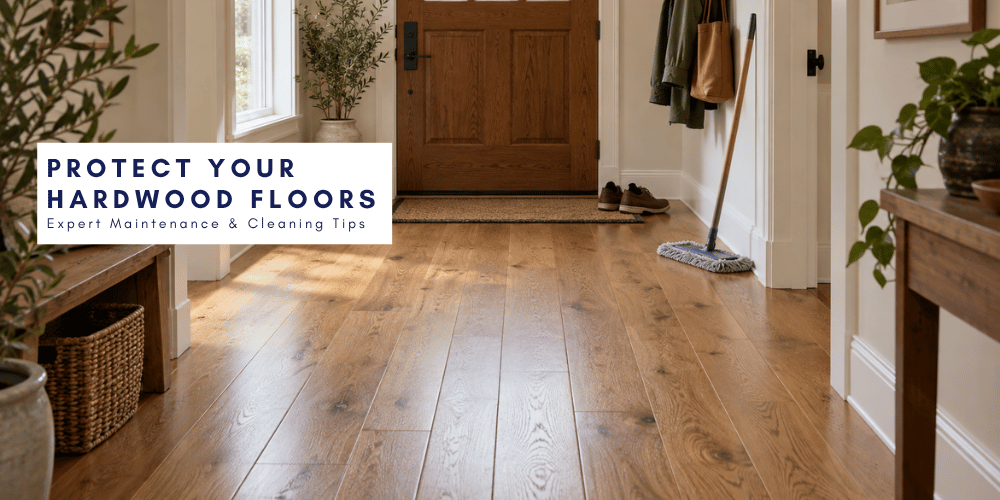
A hardwood floor rarely fails in one dramatic moment. It dulls in the hallway, picks up a white ring under a plant, and shows fine scratches where shoes turn at the kitchen doorway. By the time the boards look tired, grit, moisture, and the wrong cleaner have usually been working on the finish for months.
Most of that wear is preventable. Solid oak, maple, hickory, and walnut, and engineered hardwood, can stay clear for decades if the finish is protected and the room stays in a stable humidity range. The routine below is what we recommend when the goal is a floor that still looks intentional years after installation.
What actually damages a hardwood floor
Three forces do almost all of the early damage: grit, water, and indoor climate.
Grit is the one people underestimate. Sand, soil, pet litter, and driveway salt act like sandpaper every time a shoe or chair leg crosses them. A hard finish can still lose its clarity if that grit sits on the surface. Dry removal, done often, protects more than any cleaner.

Water does not need a flood to cause trouble. A wet mop, a steam cleaner, an overflowing pet bowl, or a weeping plant saucer will drive moisture into seams. Solid hardwood can cup or gap. Engineered hardwood is more stable, but standing water can still cloud the finish or swell a joint.
Climate is the third force. Wood moves as indoor air gets drier or wetter. Most finish makers point homeowners toward roughly 30 to 50 percent relative humidity, with many homes happiest between 35 and 55 percent. Winter heating often drops below that range. Summer humidity can push the other way. Gaps in January and slight cupping in August are often climate stories, not product defects. Learning how environmental stress affects flooring can help you understand whether the change comes from normal seasonal movement or a moisture problem.
Know the floor you are cleaning
Advice only works if it matches the floor. A site-finished solid oak plank and a factory-finished engineered walnut board can look similar and still want different care.
Solid versus engineered
Solid hardwood is one piece of wood, usually 3/4 inch thick, and it can be sanded several times. It also moves more with humidity, so it is a poor choice below grade. Engineered hardwood has a real wood wear layer over a stable core. Many planks in the Floors Center hardwood collection are engineered, including wider boards. The daily clean is the same, but a thin wear layer may only accept a light screen-and-recoat, so protecting the factory finish matters more.

If you are still comparing the two constructions, this solid hardwood vs engineered hardwood guide explains their differences in stability, refinishing potential and suitable rooms.
Polyurethane versus oil or hardwax oil
Most modern residential floors have a film finish such as polyurethane or aluminum-oxide urethane. Water beads on a healthy film finish. Clean these with a pH-neutral cleaner made for polyurethane. Skip oil soap, wax, and vinegar. Soap and wax leave a film that can block a future recoat. Vinegar, used often, can dull a water-based urethane.
Oil and hardwax-oil finishes soak into the wood and feel more matte. Clean them with the soap made for that finish, and refresh with the maintenance oil the manufacturer specifies. A film-finish polish on an oiled floor, or an oil soap on polyurethane, is how floors get sticky or hard to refinish. Drip a little water in a closet if you are unsure. Beading usually means a film finish. Fast absorption usually means oil.
A cleaning routine that actually gets done
The best hardwood routine is short enough to survive a busy week.
Every day, or every other day in quiet rooms
Dry-dust the paths people actually walk: the entry, the route from the garage, the kitchen triangle, and the line a dog takes to a water bowl. A soft broom is fine if you finish with a microfiber pad. If you vacuum, use a hard-floor setting with the beater bar off. A spinning brush bar is one of the fastest ways to scratch a new finish. Wipe spills as they happen. Blot first. A dry towel, then a barely damp cloth with hardwood cleaner if the spot is sticky, is enough.
Once a week
Dust-mop or vacuum the whole floor, including under rug edges. Then damp-mop with a cleaner labeled safe for your finish. The pad should be misted, not dripping.

If you can wring water out of it, it is too wet. Work with the grain, and do not leave the floor looking wet. Two light passes beat one heavy one.
Skip all-purpose sprays, dish soap, steam mops, and homemade vinegar mixes. Steam forces moisture and heat into seams. Soap leaves residue that attracts more dirt, which is why a floor can look duller a week after a deep clean.
Once a month
Look, do not just clean. In the traffic lanes, check whether water still beads. Note white haze, dark edges near exterior doors, and any spot where the wood color, not just the sheen, is showing through. Those are finish-wear signals.
Seasonal protection for real weather
A floor in a climate with a real winter needs a different emphasis in January than in July.
In winter, dry air is the main risk. Run a humidifier if the room drops under about 35 percent. Use walk-off mats so salt and slush stop at the door, and favor dry dust-mopping over damp mopping. In spring, check boards near exterior doors for cloudy finish and replace torn felt pads. In summer, use air conditioning or a dehumidifier, and keep wet shoes at the door. Direct sun can fade darker stain, so sheers on the sunny side are cheaper than a refinish. In fall, clean before the heat comes on, and store spare planks flat indoors.

The small habits that prevent big repairs
Every furniture foot that touches wood needs a soft glide. Replace felt pads when they compress or pick up grit, and use wide glides under heavy pieces. Lift sofas and tables when you rearrange. Dragging a leg can cut a groove. Rugs should have a breathable pad. Rubber-backed mats can discolor a finish, and grit trapped under a rug scratches in a rectangle that shows when you move it.
Pets and hardwood get along if claws are trimmed and the water bowl sits on a lipped mat. Urine can etch through the finish if it is not blotted quickly. In the kitchen, a hardwood-safe cleaner used weekly handles normal grease film. Do not use a steam mop there.If frequent spills or standing water are difficult to avoid, porcelain floor tile or waterproof vinyl flooring may be a more practical choice than hardwood.
Entry matting is the highest-return upgrade most homes skip. A coarse outdoor mat plus an indoor runner long enough for two steps stops a large share of the grit that would otherwise sand the finish. Replace mats when they are loaded.

What not to use, and why the shortcuts backfire
- Steam mops. Heat plus moisture drives water into joints and can cloud or peel a finish.
- Vinegar, baking soda, and ammonia. They are the wrong pH for most film finishes and can leave a haze.
- Oil soaps and furniture polish on polyurethane. Residue builds up and can block a future recoat.
- Wet string mops and buckets of water. Hardwood is damp-cleaned, not washed.
- Abrasive pads and steel wool. They cut the sheen unevenly.
- Wax on a modern factory finish. Wax belongs on floors that were finished with wax, which is uncommon in homes built or refinished in recent decades.
If a floor looks dull, more product is rarely the fix. Residue is often the dullness. The right cleaner, used sparingly, usually restores clarity better than a restorer layered over soap film.
When cleaning is no longer enough
Maintenance protects a finish. It does not replace one that is gone. Recoat when water no longer beads, traffic lanes look consistently dull, or fine scratches have taken the sheen but have not reached bare wood. A screen-and-recoat abrades the existing finish lightly and adds a new coat. In busy homes that often happens every several years, and less often in bedrooms. Sand and refinish when wear reaches bare wood, when there are deep gouges or pet stains in the fiber, or when cupping has not relaxed after humidity is corrected. A thin engineered wear layer may not allow a full sanding, which is why the factory finish is worth protecting early. Before choosing between recoating and sanding, learn what to expect when refinishing hardwood floors.
White haze after a wet cleaning often relaxes as the floor dries. Persistent cloudiness, dark board edges, or a soft feel near a sink or exterior door should be checked before more water is applied.
A simple kit worth keeping
You do not need a shelf of specialty bottles. Keep a microfiber dust mop, a vacuum that can run with the brush roll off, a pH-neutral hardwood cleaner matched to the finish, a few clean pads, felt pads, and a humidity gauge. For an oil or hardwax-oil finish, use that brand’s soap and refresher. Store extra matching planks flat, indoors, and off concrete.
Questions homeowners ask
Q) How often should hardwood be mopped?
A) Damp-mop about once a week in lived-in rooms. Dry-mop traffic paths much more often. A house with dogs and a gravel drive needs more dry cleaning than a shoes-off apartment.
Q) Are engineered floors cleaned differently from solid?
A) The daily method is the same: dry first, barely damp second, no steam. A thin engineered wear layer has less room for sanding later, so finish-safe products matter just as much.
Q) Why do I see gaps in winter?
A) Heated indoor air is dry, and wood shrinks across the grain. Small, even gaps that close in summer are normal. Wide gaps, or gaps with cupping, are a reason to check humidity and look for a moisture source.
Q) Do area rugs ruin the finish?
A) Rugs protect floors if the pad is breathable and you vacuum underneath. Rubber-backed mats and trapped grit are what mark the finish.
Protect the floor you already have
Hardwood stays beautiful when the finish stays intact and the wood stays in a stable room. Dry-mop the paths people walk, damp-mop with a finish-safe cleaner and almost no water, keep humidity in a moderate band, and stop grit at the door. Those four habits prevent most of the dull lanes and scratch fields that send people looking for a refinish too soon.
Maintenance and durability can also vary by wood type. Learn how hardwood species affect durability and performance before comparing oak, maple, hickory and walnut.
If you are choosing a new floor, match the construction to the room. Wider engineered planks handle many main-floor spaces well. Solid hardwood still earns its place above grade when you want the option of future sanding.
If you are choosing a new floor, match the construction to the room. Wider engineered planks work well in many main-floor spaces. Solid hardwood remains a strong choice above grade when you want the option of sanding and refinishing it in the future. Browse solid and engineered hardwood flooring in oak, maple, walnut and hickory at Floors Center, or call 888-541-0501 for help choosing the right construction, wood species and finish for your home.