

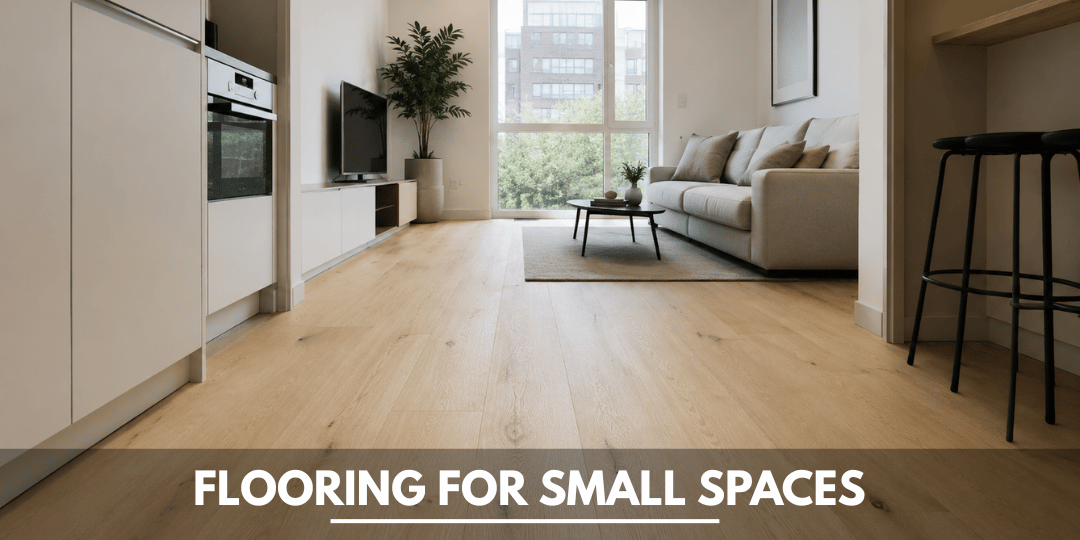
Small spaces present unique design challenges. Whether it’s a compact apartment, a small bedroom, a narrow hallway, a cozy home office, or a modest living room, homeowners often look for ways to create a greater sense of openness without physically expanding the space.
While furniture, lighting, and wall colors all influence how a room feels, flooring is one of the most powerful design elements in determining spatial perception. Because flooring covers the largest continuous surface in a room, it significantly affects how the eye interprets size, flow, and openness.
The right flooring can make a room feel larger, brighter, and more connected. The wrong flooring can visually break up a space, making it feel smaller and more confined.
At Floors Center, we help homeowners select flooring solutions that not only perform well but also enhance the overall perception of a room. Understanding how flooring influences visual space can help you make smarter design decisions, especially when square footage is limited.
Why Flooring Has Such a Strong Impact on Spatial Perception
Most homeowners focus on flooring durability, maintenance, and style, but flooring also affects how the eye travels through a room.
When people enter a space, they subconsciously evaluate:
- Visual continuity.
- Color consistency.
- Surface texture.
- Pattern direction.
- Light reflection.
Because flooring spans the entire room, it acts as a visual foundation. A continuous, uninterrupted floor encourages the eye to move freely throughout the space, creating the impression of greater size.
This is why flooring selection often has a greater impact on room perception than individual furniture pieces or accessories.
Prioritize Visual Continuity Over Contrast
One of the most effective ways to make a small room feel larger is to reduce visual interruptions.
Highly contrasting flooring can create strong visual boundaries that divide a room into smaller sections.
Instead, consider flooring that promotes continuity through:
- Consistent color tones.
- Minimal pattern disruption.
- Seamless transitions.
Luxury vinyl plank, hardwood, laminate, and large-format tile often work well because they create a more unified appearance.
The less visual fragmentation a room contains, the larger it tends to feel.
Choose Lighter Flooring Tones to Enhance Openness
Color plays a significant role in how large a room appears.
Lighter flooring colors reflect more light and help create an airy atmosphere.
Popular flooring tones for small spaces include:
- Light oak.
- Natural maple.
- Soft beige.
- Warm greige.
- Light ash tones.
These colors help:
- Brighten interiors.
- Increase perceived openness.
- Improve light distribution.
Dark flooring can still work beautifully, but in smaller spaces it often creates stronger visual weight, which may make rooms feel more enclosed.
Wide Planks Can Make Small Rooms Feel Larger

Many homeowners assume smaller rooms require smaller flooring planks. In reality, the opposite is often true.
Wide plank flooring typically creates:
- Fewer visible seams.
- Less visual clutter.
- Greater continuity.
Because the eye encounters fewer interruptions, the room feels more expansive.
This design strategy works particularly well with:
Wide plank flooring has become increasingly popular because it contributes to a cleaner and more spacious appearance.
Minimize Busy Patterns and Excessive Variation
While highly detailed flooring can be visually interesting, it may overwhelm smaller spaces.
Excessive variation in:
- Color.
- Grain patterns.
- Contrasting tones.
- Tile layouts.
can create visual noise.
Instead, homeowners should consider flooring with:
- Balanced color movement.
- Consistent visuals.
- Natural transitions.
The goal is to create a surface that supports the room rather than dominating it.
Use Flooring Direction to Influence Room Shape
The direction in which flooring is installed can subtly alter how a room is perceived.
For example:
Running Flooring Lengthwise
Installing planks parallel to the longest wall can help elongate a room visually.
Directing Attention Toward Natural Light
Positioning planks toward windows often encourages visual flow and makes spaces feel more open.
Creating Continuous Movement
Flooring direction should support how people naturally move through the space.
Proper installation orientation often influences perception more than the flooring material itself.
Large-Format Tile Creates a Cleaner Appearance

For homeowners considering tile flooring, large-format tiles can significantly improve spatial perception.
Large-format tiles offer:
- Fewer grout lines.
- Reduced visual interruptions.
- Cleaner sight lines.
This creates a smoother visual field that helps rooms appear larger.
In smaller bathrooms, kitchens, and entryways, large-format tile often outperforms smaller tile designs from a visual perspective.
Consistent Flooring Throughout Multiple Rooms
One of the most effective design strategies for creating a sense of spaciousness is using the same flooring throughout connected areas.
Changing flooring materials between rooms introduces visual breaks that can make spaces feel segmented.
Using a continuous flooring material across:
- Living rooms.
- Hallways.
- Kitchens.
- Dining areas.
helps create a unified appearance.
The eye perceives a larger area because there are fewer transitions interrupting visual flow.
Matte Finishes Often Feel More Natural
Glossy can reflect light dramatically, but excessive shine may highlight imperfections and create visual distractions.
Matte finishes typically offer:
- Softer reflections.
- More natural appearance.
- Reduced glare.
- Better visual consistency.
Many modern flooring designs now favor matte or low-sheen finishes because they support a cleaner and more spacious aesthetic.
Consider Flooring Texture Carefully
Texture influences both appearance and maintenance.
Highly textured flooring may:
- Create additional shadows
- Increase visual complexity
- Make smaller rooms feel busier
Moderate texture often works best in compact spaces because it adds character without overwhelming the room.
This principle applies to:
Balance is key.
Natural Wood Looks Remain Timeless
Wood-inspired flooring continues to be one of the most effective options for small-space design.
Natural wood visuals provide:
- Warmth.
- Continuity.
- Design flexibility.
- Long-term appeal.
Whether homeowners choose hardwood, vinyl, or laminate, wood-inspired flooring generally creates a more expansive appearance than highly patterned alternatives.
Avoid Excessive Flooring Borders and Insets
Decorative borders, contrasting insets, and highly segmented floor layouts may look impressive in large spaces, but they can visually reduce smaller rooms.
Every added boundary creates another visual stop for the eye.
Simpler flooring layouts tend to produce:
- Greater openness.
- Cleaner design.
- Improved spatial flow.
For compact spaces, restraint often produces better results than complexity.
Open-Concept Spaces Benefit from Flooring Uniformity
Open-concept homes rely heavily on visual continuity.
Using one flooring material throughout connected spaces can help:
- Expand perceived square footage.
- Improve traffic flow.
- Create design consistency.
Luxury vinyl plank and hardwood flooring are particularly effective for open layouts because they allow large areas to feel cohesive.
Don’t Overlook Carpet in Certain Small Spaces
Although hard-surface flooring often receives more attention, carpet can still work effectively in some compact rooms.
Modern carpet options can provide:
- Warmth.
- Comfort.
- Acoustic benefits.
For small bedrooms, selecting a lighter-colored carpet with minimal patterning can contribute to a softer and more spacious atmosphere.
Balancing Functionality and Visual Space
A room should not only look larger, it should function well.
When selecting flooring for small spaces, homeowners should evaluate:
- Traffic levels.
- Moisture exposure.
- Maintenance preferences.
- Design goals.
- Long-term durability.
The best flooring choice balances aesthetics with everyday performance.
Why Floors Center Helps Homeowners Make Better Flooring Decisions
At Floors Center, we understand that flooring affects much more than appearance.
We help homeowners evaluate:
- Room dimensions.
- Lighting conditions.
- Traffic patterns.
- Design objectives.
- Long-term usability.
Whether you’re updating a small apartment, a compact bedroom, or an entire home, choosing the right flooring can dramatically improve how a space looks and feels.
Final Thoughts
Small spaces require thoughtful design decisions, and flooring plays a larger role than many homeowners realize.
The right flooring can create visual continuity, improve light reflection, reduce clutter, and make rooms feel noticeably larger. Strategies such as choosing lighter tones, wider planks, large-format tiles, and consistent flooring throughout connected spaces help maximize perceived square footage.
Rather than focusing solely on color or trends, homeowners should consider how flooring influences movement, light, and spatial perception.
When selected carefully, flooring becomes one of the most effective tools for making small spaces feel bigger, brighter, and more inviting.
Frequently Asked Questions
Q) What flooring color makes a small room look bigger?
A) Light flooring colors such as light oak, beige, natural maple, and soft greige typically help reflect more light and create a more spacious appearance.
Q) Are wide planks good for small rooms?
A) Yes. Wide plank flooring creates fewer seams and visual interruptions, which can help small spaces feel larger and more open.
Q) Is tile or hardwood better for small spaces?
A) Both can work well. Large-format tile and wide-plank hardwood flooring are particularly effective at creating visual continuity in compact areas.
Q) Should flooring be the same throughout a small home?
A) Using consistent flooring throughout connected spaces often improves visual flow and makes the home feel larger overall.
Q) Does dark flooring make a room look smaller?
A) Not necessarily, but darker floors can create more visual weight. In smaller rooms, lighter flooring colors generally contribute to a more open and airy atmosphere.