

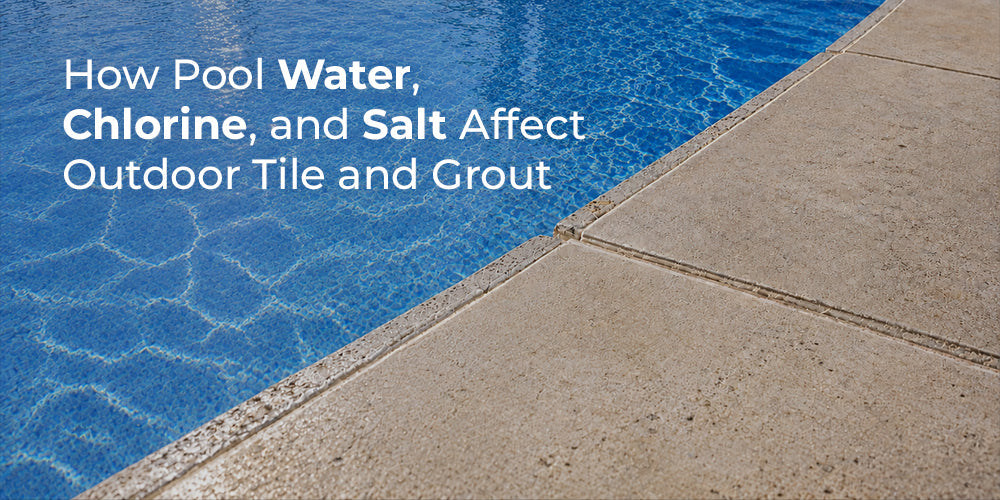
Outdoor pool tiles are exposed to more than water. Chlorine, dissolved salt, changing pH, sunlight, heat, and repeated wet-dry cycles all affect the surface. The tile may remain intact while the grout fades, softens, cracks, or develops white deposits.
The level of damage depends on the tile material, grout type, installation quality, drainage, and pool-water chemistry. Porcelain tile, natural stone, cement grout, and epoxy grout do not respond to pool conditions in the same way.
Understanding those differences helps you choose suitable materials and spot maintenance problems before they become expensive repairs.
Does Pool Water Damage Outdoor Tile?
Clean, chemically balanced pool water does not normally damage high-quality outdoor tiles that have been selected and installed for wet conditions. Problems usually develop when water moves behind the surface, remains trapped in porous materials, or repeatedly evaporates around the pool edge.
Water can enter through:
- Cracked or deteriorated grout.
- Failed movement joints.
- Unsealed porous stone.
- Gaps around drains, coping, and fittings.
- Poorly bonded or hollow-sounding tiles.
- An incomplete or damaged waterproofing system.
Once water reaches the setting bed, it can carry dissolved minerals through the installation. As the water evaporates, these minerals may appear as white deposits on the grout or tile. Persistent moisture can also weaken the bond behind the tile, especially if the wrong adhesive was used or the pool was filled before the installation had cured.
In cold climates, absorbed water creates another risk. Water trapped inside porous tile, stone, grout, or the setting bed expands when it freezes. Repeated freeze-thaw cycles can cause surface flaking, cracked grout, or loose tile.
How Chlorine Affects Pool Tile and Grout
Chlorine is often blamed whenever pool grout deteriorates, but chlorine alone is rarely the full explanation. Concentration, pH, exposure time, cleaning methods, and the type of grout all matter.
Dense porcelain and glass tiles generally tolerate normal chlorinated pool water well when they are specified for submerged use. Cement-based grout is more vulnerable because it is porous and chemically reactive.
Balanced Chlorine Is Different from Chemical Shock
A correctly maintained chlorine level should not rapidly destroy a pool-rated tile system. However, concentrated chlorine products can bleach pigments or attack nearby materials if granules or undiluted liquid are allowed to sit directly on the surface.
Damage is more likely when:
- Chlorine is repeatedly added in one location.
- Pool chemicals are mixed or applied incorrectly.
- Chlorine tablets rest against tile or grout.
- The water remains strongly acidic.
- Harsh chemical cleaning is combined with aggressive brushing.
Acidic water is particularly hard on cement grout. It can gradually dissolve cement compounds, leaving the joints rough, recessed, powdery, or easy to scrape. High-quality epoxy grout usually offers better resistance to pool chemicals and prolonged water exposure than conventional cement grout.
High pH Creates a Different Problem

When pool-water pH and mineral levels remain too high, calcium deposits can form around the waterline, spillways, coping, and grout joints. This scale may look like a rough white or grey crust.
Scale does not always mean that the tile itself is failing. It is usually evidence that mineral-rich water has evaporated and left deposits behind. Even so, heavy scale can make textured tile difficult to clean and may hide early cracks or grout loss.
Avoid attacking the deposit with a strong acid unless the tile and grout manufacturer confirms that the treatment is safe. Acid can etch limestone, marble, travertine, and cement grout while leaving the original water-balance problem unresolved.
What Salt Water Does to Outdoor Pool Tile
A saltwater pool is still a chlorinated pool. The system uses dissolved salt to generate chlorine instead of relying entirely on manually added chlorine products.
Salt does not automatically make a pool more damaging to tile. Dense, low-absorption porcelain and glass are generally suitable when they form part of a correctly designed pool system. The more vulnerable parts are often porous stone, cement grout, metal trims, fixings, and areas where salty water repeatedly splashes and evaporates.
Salt Crystallization in Porous Materials

Saltwater can enter pores in stone and cement grout. When the water evaporates, salt crystals remain. Repeated dissolving and recrystallization can place pressure inside the pore structure.
Over time, this may contribute to:
- Powdering or surface erosion.
- Flaking edges on porous stone.
- White crystalline deposits.
- Loss of grout near the waterline.
- Faster deterioration in frequently splashed areas.
The splash zone can sometimes experience more visible salt-related distress than permanently submerged tile. Submerged material remains wet, while splash-zone surfaces repeatedly absorb water and dry in the sun.
Porous or weak stone requires careful assessment before it is used around a saltwater pool. A sealer may reduce absorption and staining, but it does not convert unsuitable stone into a completely waterproof or salt-proof material.
Salt and Metal Components
Saltwater can also accelerate corrosion when it reaches susceptible metal trims, anchors, drains, or fittings. Rust staining around an edge or fixture may therefore indicate a metal compatibility or waterproofing problem rather than a fault within the tile.
All trims and fasteners should be selected for the intended pool environment. Simply replacing stained grout will not solve corrosion occurring behind the tiled surface.
Tile Material Makes a Major Difference

The words 'outdoor tile' cover materials with very different absorption rates and chemical resistance.
Porcelain Tile
Porcelain tile is usually one of the most dependable options for pool surrounds and many submerged applications. Its dense body and low water absorption help it resist staining, salt penetration, and freeze-thaw damage.
The individual product must still be approved for the intended application. A tile suitable for a pool wall may not provide enough traction for a wet walking surface.
Ceramic Tile
Some ceramic tile is suitable for pools, but not every ceramic product belongs outdoors or underwater. More absorbent bodies can be vulnerable to moisture penetration and freezing conditions.
Check the manufacturer's technical data rather than judging suitability by appearance.
Glass Tile
Pool-rated glass tile resists water and many common pool chemicals. Its reflective surface also works well along waterlines, spillways, fountains, and decorative pool walls.
Glass installation requires careful material selection and complete adhesive coverage. Voids, uneven bonding, and movement-related defects are often more visible behind transparent or translucent glass.
Natural Stone
Natural stone tile varies considerably in porosity and chemical sensitivity. Granite, slate, limestone, travertine, sandstone, and marble should not be treated as though they perform identically.
Calcium-based stones such as limestone, travertine, and marble can be etched by acidic cleaners or poorly balanced pool water. More porous stone may absorb saltwater, develop white deposits, change colour, or experience gradual surface erosion.
Stone should be assessed by its tested properties and intended use, not simply by its commercial name.
Why Pool Grout Cracks, Fades, or Washes Away
Grout is visible, so it often receives the blame for a deeper installation problem. Regrouting may improve the appearance temporarily, but new grout can fail again if the underlying cause remains.
- Poor pool-water chemistry: Prolonged acidic conditions can erode cement grout, while high mineral levels can leave scale and deposits.
- Movement: Pool shells, decks, coping, and adjoining structures move with temperature and moisture changes. Rigid grout should not replace flexible sealant in designated movement joints.
- Premature water exposure: Filling a pool before the mortar and grout have fully cured can weaken the installation.
- Incorrect product selection: Standard interior grout or adhesive may not tolerate permanent immersion, chemicals, sunlight, or outdoor temperature changes.
- Insufficient joint depth: Applying a thin layer of new grout over weak existing material does not create a durable repair.
- Water behind the tile: A waterproofing, drainage, or bond failure can continue damaging the installation even after the surface grout is replaced.
Cement grout can perform well when it is correctly specified, mixed, cured, and maintained. Epoxy grout provides lower absorption and stronger chemical resistance, making it useful for demanding pool environments. It is not a substitute for waterproofing, movement joints, full adhesive coverage, or correct installation.
Warning Signs Around the Pool
Inspect the waterline, steps, corners, coping, drains, and frequently splashed areas. Early symptoms often reveal where water or movement is concentrated.
Look for white deposits, dark permanently damp joints, grout that feels sandy, recurring cracks, rust marks, loose tiles, hollow sounds, flaking stone, or sealant pulling away from joint edges.
A single stained joint may need cleaning. Repeated cracking across the same line is more likely to indicate movement. Several adjacent loose tiles may point to poor bonding or moisture behind the surface.
The pattern matters as much as the symptom.
How to Protect Outdoor Pool Tile and Grout
Keep the water chemistry within the ranges specified by the pool-equipment, tile, grout, and installation-system manufacturers. Test the water regularly rather than waiting for scale, staining, or eye irritation to appear.
Use only compatible cleaning products. Avoid metal brushes and highly acidic cleaners unless the surface manufacturer specifically permits them. Rinse concentrated chemical spills promptly and do not allow chlorine tablets to sit against tile or grout.
Movement joints should remain flexible and unobstructed. If flexible sealant has split, hardened, or detached, replace it with a product approved for the pool environment.
Seal natural stone when recommended, understanding that sealing reduces absorption rather than eliminating it. The correct sealer depends on the stone, finish, location, and whether the surface is submerged.
Choose surfaces according to where they will be installed. Waterline tile, submerged tile, coping, steps, and surrounding pool decks face different conditions. For walking areas, properly rated anti-slip tiles can provide more suitable traction than highly polished or glossy surfaces.
Always confirm that the selected product is approved for outdoor, wet, submerged, or freeze-thaw exposure as required. Slip resistance should be checked for the specific tile and finish rather than assumed from the material name alone.
Most importantly, investigate recurring damage before regrouting. A durable repair begins by correcting water chemistry, movement, drainage, waterproofing, or bond problems.
Frequently Asked Questions
Q) Does chlorine discolour pool grout?
A) It can contribute to fading, especially when grout is exposed to concentrated chlorine or repeated chemical shock. Uneven colour can also result from mineral deposits, algae, moisture, cleaning residues, or inconsistent grout mixing.
Q) Is saltwater worse for tile than chlorine?
A) Not necessarily. Pool-rated porcelain and glass generally tolerate both environments. Salt is more concerning for porous stone, cementitious materials, and incompatible metal components, particularly where water repeatedly evaporates.
Q) do chroline effect pool tiles?
A) balanced amount of chlorine doesn't harm quality porcelain or ceramic tiles, although use of exessive chroline, or poorly dissolved chemicals can effect the overall suroundings of grout, making the damage in stone tiles.
Q) Can pool grout be sealed?
A) Some cement grouts can be sealed if their manufacturer recommends it. A penetrating sealer can reduce absorption and staining, but it will not repair cracks, stop structural movement, or replace a waterproof membrane. Epoxy grout generally does not require the same type of penetrating sealer.
Q) Why is my pool grout turning white?
A) Possible causes include calcium scale, efflorescence, salt deposits, chemical residue, or pigment loss. The deposit should be identified before cleaning because an unsuitable acid treatment can damage cement grout and acid-sensitive stone.
Q) Should cracked pool grout be replaced with more grout?
A) Only if it is a normal grout joint and the surrounding installation is sound. A movement joint should contain an approved flexible sealant, not rigid grout. Repeated cracks require investigation before repair.
Q) How long should new pool grout cure before filling?
A) Cure time depends on the specific grout, temperature, humidity, and installation system. Follow the product manufacturer's written instructions. Filling too soon can affect colour, strength, and long-term durability.